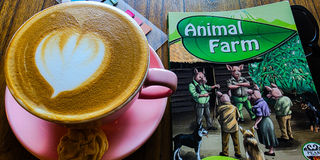
Animal Farm is simple in its storytelling, but its message remains painfully relevant. Orwell uses animals to show how corruption and abuse of power grow.
“All animals are equal, but some animals are more equal than others.” Most people know this infamous quote, but I believe not everyone knows where it comes from. This is from George Orwell's Animal Farm, a classic published in 1945 that is relevant today.
In this political allegory, we meet various animal characters on Manor Farm, starting with Old Major, the beloved oldest pig. One night, he calls a meeting to share his dream of freeing animals from humans, highlighting the oppression, torture, overwork, and underfeeding they endure.
He believes the revolution will happen, might not be in their generation, but it will. To ensure this, he teaches them a revolutionary song that came to him in a dream and urges them to teach it to all animals across England.
“Now, comrades, what is the nature of this life of ours? Let's face it: our lives are miserable, laborious, and short. We are born, we are given just so much food as will keep the breath in our bodies, and those of us who are capable of it are forced to work to the last atom of our strength; and the very instant that our usefulness has come to an end, we are slaughtered with hideous cruelty.”
After three days, Old Major died, and two pigs, Snowball and Napoleon, took up Old Major’s message and began teaching it to the other animals. They talk about freedom, equality, and the life they could build after the uprising. Change is inevitable, especially when people are at a breaking point.
For the animals, that breaking point came when they went days without being fed. A hungry animal is an angry animal. All they needed was one animal to say, “Enough is enough.” In a matter of minutes, Mr Jones was thrown out of the farm. The new dawn is here. The animals are free from human beings.
From here on, Orwell gets into politics after the rebellion, especially when you have a leader like Napoleon, who is selfish and cruel. It started slowly. The name changes from Manor Farm to Animal Farm.
At first, the animals are full of pride. They write seven principles to guide their new life: all animals are equal, no animal shall wear clothes, no animal shall drink alcohol, no animal shall sleep in a bed, and no animal shall kill any other animal. They work together, they eat better, and they believe the farm belongs to all of them.
Nothing special happens at once, but small changes start to appear. The pigs take certain foods for themselves and justify it. They say it is for the good of the farm. The others question these decisions but are easily convinced that they must be misremembering.
Snowball becomes a key leader with new ideas for the farm, including building a windmill to reduce their workload. The animals believe in him. Napoleon does not. Instead of debating him, Napoleon uses force. His dogs chase Snowball away, and suddenly Snowball becomes an enemy. From this moment, Napoleon becomes the leader whose word cannot be challenged.
Through Squealer, Orwell shows how information can be shaped to influence people. The pigs say the farm is doing well, even when the animals are starving. They change past events to fit their narrative. Each time the animals feel something is wrong, they are reminded that Napoleon is always right, unless they want Jones back. When anyone questions him openly, they are executed publicly.
“In the old days, there had often been scenes of bloodshed equally terrible, but it seemed to all of them that it was far worse now that it was happening among themselves. Since Jones left the farm, until today, no animal had killed another animal. Not even a rat had been killed.”
Animal Farm is simple in its storytelling, but its message remains painfully relevant. Orwell uses animals to show how corruption and abuse of power grow. It begins with minor exceptions and ends in complete control. The story will feel familiar to many readers, especially in places where leaders use fear, loyalty, and propaganda to hold on to power. You see how easily reality can be rewritten and how people begin to doubt their own memories when the narrative is shaped and manipulated.
Reading this book today will make you think about the systems we live under and how principles can be altered when no one is allowed to ask questions. It is a reminder that revolutions can fail not because they were impossible, but because those in power choose themselves over the people they claim to serve. It shows why paying attention to small changes matters, because that is where the shift begins.
Jane Shussa is a digital communication specialist with a love for books, coffee, nature, and travel. She can be reached at [email protected].