Muhimbili Orthopaedic Institute Counters amputation claims among bodaboda accident victims
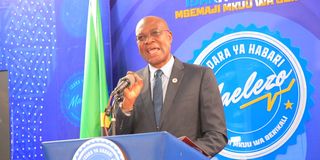
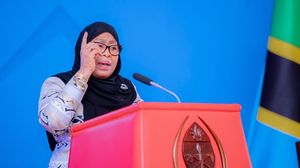
The Muhimbili Orthopaedic Institute (MOI) executive director, Dr Mpoki Ulisubisya, addresses journalists on Monday, March 2, 2026, during a press briefing in Dodoma. PHOTO | HABEL CHIDAWALI
Dodoma. The Muhimbili Orthopaedic Institute (MOI) has clarified why some patients, particularly motorcycle taxi (bodaboda) riders or their passengers, undergo amputations, citing delays in seeking medical attention as the main cause.
The statement was made on Monday, March 2, 2026, by MOI director, Dr Mpoki Ulisubisya, during a press briefing on the institute’s operations.
He said there have been unverified reports suggesting that bodaboda riders with broken limbs are automatically amputated upon arrival at MOI.
Dr Ulisubisya described such claims as misconceptions, emphasising that the institute operates under strict ethical standards and professional oaths.
“The issue is straightforward: when someone is involved in an accident but delays coming to the hospital, part of the limb may have started to deteriorate by the time they arrive,” he said.
“The choice then is between losing the limb or risking the patient’s life. Our priority is always to ensure the patient survives,” he added, dismissing the notion that MOI staff compete to amputate limbs as soon as patients arrive.
He said: “The narrative that MOI is fighting over a limb like a corner kick in football is simply not true.”
Dr Ulisubisya also addressed concerns about the proposed Universal Health Insurance (UHI) fund, warning that covering all conditions, including high-cost surgeries, could make it financially unsustainable within two years.
“Certain treatments, such as brain surgery, require very expensive equipment. Even if member countries procured the devices simultaneously, the cost would remain substantial,” he noted.
Services and patient care
Regarding MOI’s services, Dr Ulisubisya stated that over the past 12 months, the institute treated 180,000 patients, including 500 from outside Tanzania.
Of these, he said 2,300 patients received specialised care, with many benefiting from Artificial Intelligence (AI) technology, particularly in brain and spinal surgeries.
The institute currently admits between 500 and 800 patients at any given time, with the director underscoring that expansion is underway, including a dedicated building for paediatric patients to ensure children are treated separately from adults.
Founded in 1996, MOI has rapidly expanded to offer nine specialised areas of care.
These include spinal fusion for fractured vertebrae, limb salvage procedures, and surgical reconstruction using muscle and bone grafts.
Dr Ulisubisya stressed that MOI remains committed to ethical, professional, and life-saving care, countering misconceptions regarding amputations among bodaboda riders.