So Long a Letter is a critique of the systems that trap women in impossible choices. It interrogates what becomes of women who are taught to endure rather than to leave, and what kind of society is built when girls are denied education, autonomy, and support.
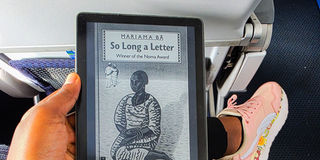
You have been married to your husband, Modou, for 30 years. You have raised 12 children together. Throughout your marriage, you have been a devoted wife and mother. Never in your wildest dreams do you imagine a day when your husband will abandon you and your children to marry a second wife, a girl young enough to be your daughter, and your first daughter’s friend.
You are left in disbelief and utterly broken.
“And to think that I loved this man passionately, to think that I gave him thirty years of my life, to think that twelve times over I carried his child.”
This is the world of So Long a Letter by Mariama Bâ. It is a world shaped by betrayal, loss, endurance, and the quiet struggles of being a woman in Senegal in the late 20th century.
The story unfolds through a long letter from Ramatoulaye to her lifelong friend, Aissatou, who had left Senegal for the United States after facing similar struggles in her own marriage. Through this letter, Ramatoulaye reflects on friendship, love, faith, motherhood, and the choices women make when the foundations of their lives are shaken.
Ramatoulaye and Aissatou have been friends since childhood, through school, love, and loss. They both marry men they love. Mawdo, a doctor, and Modou, a civil servant. Their lives, though closely intertwined, unfold very differently.
The same thing can happen to two people, yet their responses can be radically different. Our values differ. So does our courage to choose what we know, deep down, is right for us.
Aissatou, the daughter of a goldsmith, is rejected by her mother-in-law, who believes she does not deserve to marry into her family’s royal lineage. In retaliation, the mother-in-law arranges for Mawdo to marry her brother’s young daughter. One might expect Mawdo to resist, but he does not. The young girl tempts him, as youth so often tempts men unwilling to confront their own weakness.
After this second marriage, Aissatou and her four sons are no longer considered part of the family. Aissatou does what few women around her believe possible. She gathers her belongings, takes her sons, and leaves to start anew.
But to take such a leap, courage alone is not enough; knowledge matters, too. The novel insists, again and again, on the power of books to offer different perspectives on life and possibility.
“And you left. You had the surprising courage to take your life into your own hands. You set yourself a difficult task, and more than just my presence and my encouragements, books saved you. Having become your refuge, they sustained you. The power of books, this marvellous invention of astute human intelligence. They enabled you to better yourself. What society refused you, they granted.”
Ramatoulaye’s response to betrayal is different. When Modou takes a second wife, she stays. She stays for her children. For the life she knows, for the fear of where she would go, and how she would begin again, which feels heavier than the pain of remaining.
The novel reveals the unequal cost of polygamy. While the men continue with their lives, women’s lives shut down. Ramatoulaye grieves in place. Her marriage is effectively over, her sense of self begins to fracture, and her pain is treated as something she must absorb. Even after Modou’s death, her grief is not given space. His brother’s immediate declaration of marriage makes it clear how little room there is for a woman’s mourning, and how quickly her pain is brushed aside.
Motherhood is another theme Bâ explores with depth and tenderness. Through Ramatoulaye, she exposes the unpaid domestic labour women endure, whether they work outside the home or not. Motherhood, the novel suggests, is not simply about giving birth, but about constant emotional labour, endurance, and sacrifice.
“And also, one is a mother to understand the inexplicable. One is a mother to lighten the darkness. One is a mother to shield when lightning streaks the night, when thunder shakes the earth, when mud bogs one down. One is a mother to love without beginning or end.”
So Long a Letter is a critique of the systems that trap women in impossible choices. It interrogates what becomes of women who are taught to endure rather than to leave, and what kind of society is built when girls are denied education, autonomy, and support.
It is also about female friendship. In writing to Aissatou, Ramatoulaye reaches out to someone who has known her across time, someone who understands her choices. Their friendship does not undo loss, but it offers something important: recognition and acceptance. In telling her story, Ramatoulaye affirms a life beyond marriage and betrayal. The novel suggests that women survive by holding on to themselves and to one another.
Jane Shussa is a digital communication specialist with a love for books, coffee, nature, and travel. She can be reached at [email protected].