There are decisions that we sometimes make when we are too excited but later wonder why we made them in the first place, especially when we are not sure what the end goal of that decision would be.
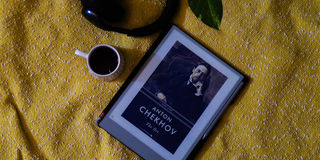
“Which executioner is more humane, he who kills you in a few minutes or he who drags the life out of you in the course of many years?” This is the core question in The Bet, a short story by Anton Chekhov.
The story starts with a group of friends debating which one of the two is better. The friends argue that neither is better and that the government is no God that it should take a life it cannot return when it wants to.
Both have the same goal, to take a life that they didn’t give.
As the conversation continues, one of the young men in the group says that, as much as both are terrible, at least being locked up for life still gives you a chance to live. He argues, “To live anyhow is better than not at all.”
A discussion follows that statement, and the banker decides to place a bet with the young man to live in confinement for five years, and says he will give him two million.
“If you mean that in earnest,” said the young man, “I will take the bet, but I would stay not five but fifteen years.”
There are decisions that we sometimes make when we are too excited but later wonder why we made them in the first place, especially when we are not sure what the end goal of that decision would be.
The young man’s first year in solitary confinement is the toughest.
Imagine not being able to interact with any other human being, let alone any other living thing. You are forced to be with yourself fully, with all that comes with you. The good, the in-between and the ugly. I can’t imagine myself in such a situation, even though I believe that I enjoy my own company, of course with the choice of who I interact with and when.
While there, the young man reads different books, from novels to the science of how things work. There is a year when he decides to read all the classics, and I know there is something about the classics and how they speak about humans and human behaviour, and one can learn so much from them.
They say it is only in solitude that the mind can be calm enough to be receptive to new ideas and concepts. In the sixth year of his confinement, the young man starts to learn new languages. At the end of the sixth year, he learns six new languages without having anyone to teach him. The sheer joy of knowing there’s no limit to what the brain can achieve makes him the happiest prisoner. He tells the banker of his new achievement, “Oh, if you only knew what unearthly happiness my soul feels now from being able to understand them!”
Everything has its own season. For example, there are books I can’t get myself to read, no matter how much I force myself to. It is the same with the young man. In the tenth year, he reads nothing but the gospel. It is rare that people understand the choices one makes, especially because they are unaware of what is going on in one’s internal world.
It is almost time for the young man to come out of solitary confinement. His jailer is hit with the reality that he will soon have to part ways with the two million at stake in the bet.
He thinks to himself, “The one means of being saved from bankruptcy and disgrace is the death of that man.”
Fifteen years is a long time to expect things to stay the same. Two million means something else to the banker than it did years ago. He is now at a crossroads as the end of the bet nears. He knows that if he gives that money away, he will be the person on the other side begging for handouts. Human beings like to preserve themselves and their status quo, and they will do anything to keep it intact.
But the young man has spent so much time alone that he has changed his perspective about life and sourced his happiness from a place within.
This made me think about the need for solitude. Perhaps it is not as bad as people make it out to be. Perhaps having the choice to opt in or opt out would make it easier for us to try it from time to time, to see if we can change our perspectives about life and our attachment to things.
I think about the author’s point about this bet, and as I finished this short story, I concluded that perhaps having a say in the circumstances of our lives determines how we approach them.
Jane Shussa is a digital communication specialist with a love for books, coffee, nature, and travel. She can be reached at [email protected].