By 2050, one in every four people on the planet is expected to be African, making the continent home to the world's largest workforce. Yet those same numbers increasingly raise an uncomfortable question.
Will Africa's demographic surge become the engine of its industrial transformation or the source of deeper unemployment, inequality, and social pressure?
Africa's greatest asset has long been described in numbers: the world's youngest population, vast natural resources and an expanding consumer market.
By 2050, one in every four people on the planet is expected to be African, making the continent home to the world's largest workforce. Yet those same numbers increasingly raise an uncomfortable question.
Will Africa's demographic surge become the engine of its industrial transformation or the source of deeper unemployment, inequality, and social pressure?
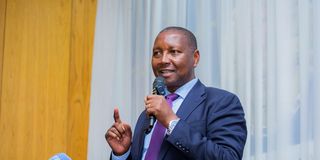
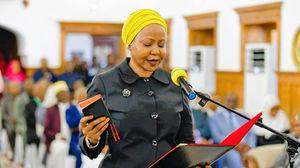
That was the central question posed by Tanzania's Minister for Education, Science and Technology, Prof Adolf Mkenda, during the National Defence College's Second Alumni Convocation in Dar es Salaam on July 21.
Delivering a public lecture on "Global Economic Trends in the 21st Century: Implications for Africa's Development," the economist challenged many of the assumptions that have dominated Africa's development debate for decades.
He argued that the continent's future will be decided less by its natural resources than by the knowledge, skills and productivity of its people.
His lecture, reinforced by the discussant, Prof Samuel Wangwe, evolved into something far bigger than an academic conversation.
It became a compelling case for why education, science, and technology should sit at the centre of Africa's economic strategy in an era increasingly defined by artificial intelligence, geopolitical competition and rapid technological change.
Prof Mkenda's warning comes at a time when Africa's demographic trajectory is unlike that of any other region.
According to the United Nations, the continent's population is projected to grow from about 1.5 billion today to around 2.5 billion by 2050, while Europe and parts of East Asia continue to experience ageing and declining populations.
The African Development Bank estimates that more than 10 million young Africans enter the labour market every year, yet only a fraction secure formal employment.
It was the widening gap between population growth and job creation that concerned Prof Mkenda.
"Population can be a boon or a bane. It can be a blessing or it can become a challenge," he observed.
He argued that every new generation demands more classrooms, more teachers, and more hospitals and, ultimately, more jobs.
“Unless economies expand faster than populations, demographic growth alone cannot produce prosperity,” he warned.
The former economics don at the University of Dar es Salaam said that without corresponding investments, countries risk producing millions of young people who are educated but unemployable, or worse, left without either education or meaningful work.
Using Tanzania as an example, he noted that newly constructed schools often become overcrowded within just a few years because enrolment continues to rise alongside population growth.
That challenge extends well beyond education.
As labour markets struggle to absorb new entrants, many young people remain trapped in low-productivity agriculture or migrate to towns where informal employment offers little escape from poverty.
Human capital is Africa's real natural resource
Throughout the lecture, Prof Mkenda returned repeatedly to one central message: Africa's most valuable resource is not beneath the ground but inside its people.
His argument closely mirrors the findings of the World Bank's Human Capital Index, which measures how much of a child's future productivity is realised through education and health.
The Bank consistently says that countries investing heavily in human capital experience faster productivity growth and higher long-term incomes.
Globally, nations with the highest human capital scores, including Singapore, Finland, Japan, South Korea and Switzerland, are also among the world's most competitive knowledge economies.
Prof Mkenda believes Africa should draw a straightforward lesson from that experience.
"The most critical dimension is education, more than health, more than employment opportunities. We need Africa to invest—not wait, action—to invest in human capital," he stressed.
South Korea, he noted, established the Korea Institute of Science and Technology in 1966 as part of a deliberate strategy to build an innovation-driven economy.
“China and India similarly invested heavily in sending their brightest students abroad to master advanced technologies before contributing to national development,” he said.
The implication for Africa, he argued, is unmistakable: countries that invest consistently in knowledge eventually become producers of technology rather than consumers of it.
Challenging Africa's development clichés
Perhaps the lecture's most provocative moments came when Prof Mkenda questioned several long-held assumptions about Africa's development.
He argued that simply enlarging markets or promoting continental integration would not, on their own, generate prosperity.
"Unity of weak countries is weakness writ large," he said, urging policymakers to focus first on building productive economies capable of competing globally.
He illustrated the point by comparing countries of vastly different sizes. The Democratic Republic of Congo possesses far greater land and population than Rwanda, yet Rwanda has achieved significantly stronger economic performance per person.
Likewise, Nigeria may be Africa's largest economy, but countries such as Mauritius and Botswana record substantially higher income per capita.
His argument was not against regional integration. Rather, it was a call to replace rhetoric with practical reforms capable of raising productivity, competitiveness and innovation.
Science must move from policy to production
Another recurring theme was Africa's continued dependence on foreign expertise in strategic sectors.
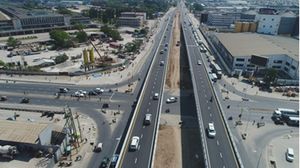
Prof Mkenda questioned why, more than a century after the first railway was built on mainland Tanzania, major infrastructure projects still rely heavily on foreign engineers.
He traced the continent's railway history from Egypt in 1856 and South Africa in 1860 to the Usambara Railway connecting Tanga and Moshi in 1893, before asking why African universities have not yet produced sufficient engineering capacity to independently design and deliver such projects.
His broader point extended beyond railways.
Whether in pharmaceuticals, artificial intelligence, biotechnology or advanced manufacturing, he argued that Africa must move beyond testing technologies developed elsewhere and begin creating its own.
"We need to invest in science and technology, massively," he said. "And we must do this with a belief that, yes, we can."
Preparing for the future
While much of Prof Mkenda's lecture focused on continental challenges, the philosophy is increasingly reflected in Tanzania's own education reforms.
The Education and Training Policy (2023 Edition) marks one of the country's most ambitious attempts to align learning with the demands of an industrial and technology-driven economy.
Among its flagship reforms are the extension of compulsory education from seven to ten years, the introduction of dual pathways at the secondary level, academic and technical, and a stronger emphasis on competence-based learning.
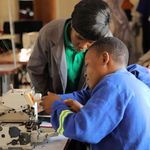
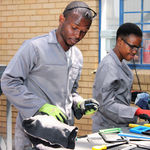
He reminded a house full of military commanders and security experts that the government is constructing Technical and Vocational Education and Training colleges across all districts to provide practical skills for learners from different educational backgrounds.
"We are also reviving polytechnic institutions to strengthen technician-level training after decades in which university degrees became the dominant aspiration," he affirmed.
Prof Mkenda noted that Tanzania has also reintroduced full government scholarships for top-performing science students pursuing engineering, medicine, mathematics, ICT and related disciplines, with the initiative extending beyond national borders.
UNESCO has repeatedly warned that while access to education has improved across Sub-Saharan Africa, the region continues to face a severe learning and skills deficit, particularly in science, mathematics and digital competencies.
For Tanzania, the policy shift therefore represents not only an expansion of access but an attempt to improve relevance by ensuring graduates possess the practical skills increasingly demanded by employers.
If education provides the foundation, science and technology, Prof Mkenda maintained, must become the engine of Africa's next stage of development.
In an era defined by artificial intelligence, quantum computing, biotechnology and advanced manufacturing, countries that merely consume technology risk falling permanently behind those that create it.
Discussant Prof Samuel Wangwe largely endorsed Prof Mkenda's analysis while placing greater emphasis on structural economic transformation.
He highlighted the mismatch between education and employment, saying that while Tanzania has increased the number of university graduates, the country still faces shortages of technicians, artisans and skilled middle-level professionals.
The consequence is that some graduates accept jobs below their qualification level, while employers continue struggling to recruit workers with practical technical competencies.
This reinforces Prof Mkenda’s belief in the importance of expanding vocational education, apprenticeships and closer collaboration between education institutions and industry.