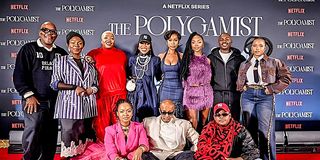
Netflix's latest South African supernovela, The Polygamist, has done something few African dramas achieve in the streaming era, it has escaped the television screen and entered everyday conversation.
Since its release on 12 June, the 22-episode series has dominated social media timelines, sparked heated debates in WhatsApp groups and inspired thousands of viewers across Africa to dissect every decision made by its central characters.
While the title suggests a story centred on multiple marriages, many viewers argue that the show's true subject is not polygamy at all.
Instead, it is a study of power, betrayal, image, loyalty and the devastating ripple effects of one man's choices.
Adapted from Sue Nyathi's bestselling novel, The Polygamist follows wealthy businessman Jonasi Gomora, a self-made CEO whose carefully curated empire begins to crumble as the women in his life uncover the extent of his deception.
At the centre of the storm is Joyce Gomora, his wife and a social media darling whose picture-perfect marriage is revealed to be built on secrets and lies.
As viewers binge-watch the drama, a growing consensus has emerged online: every major character represents a different aspect of modern relationships and family dynamics.
Jonasi Gomora: The face of unchecked power
Jonasi may be the title character, but many fans see him as more than just a cheating husband. He represents a form of masculinity built on control, status and the belief that wealth can solve every problem.
Netflix describes Jonasi as a self-made businessman whose personal life collapses under the weight of his own choices, while critics have noted that the series uses him as a lens through which to examine power and accountability.
His greatest flaw is not necessarily infidelity. It is his refusal to take responsibility for the consequences of his actions.
One viewer wrote on Reddit, "I hate Jonasi. He's a vile, greedy man and the cause of all this."
Another commented, "That man doesn't know boundaries."
The intensity of audience reactions suggests that Jonasi has become more than a fictional villain.
For many viewers, he embodies a familiar archetype, the powerful man who believes the rules apply to everyone except himself.
Joyce Gomora: The cost of protecting appearances
If Jonasi represents power, Joyce represents image.
Throughout the series, Joyce is portrayed as a woman who has invested everything in presenting the perfect family to the outside world.
Her social media presence, her marriage and her public identity are all carefully maintained until the truth begins to emerge.
Many viewers sympathise with her struggle, while others question why she remained in the marriage for so long.
One fan observed, "Joyce and the kids are the biggest victims in this."
Another viewer argued that she became "too concerned about appearance" and allowed her image to cloud her judgement.
This division in audience opinion is precisely what makes Joyce one of the show's most compelling characters.
She reflects the difficult choices many people face when deciding whether to preserve a public image or confront a painful reality.
The women around Jonasi: Different responses to betrayal
The women connected to Jonasi each represent a different response to love, ambition and betrayal.
Matipa embodies desire, ambition and the pursuit of a lifestyle that appears glamorous from the outside.
Essie represents sacrifice and the hidden emotional labour that often goes unrecognised.
Lindani, meanwhile, illustrates how younger and more vulnerable individuals can become entangled in cycles created by older, more powerful people.
Interestingly, viewers remain deeply divided over which woman deserves the most sympathy.
A discussion on Reddit saw one fan write, "I felt sorry the most for Essie," while another responded that Essie had become one of Jonasi's enablers and was equally responsible for some of the consequences.
Rather than offering clear heroes and villains, the series presents women making imperfect decisions within a system largely controlled by one powerful man.
The Children: The real casualties
Perhaps the most overlooked aspect of The Polygamist is its portrayal of the children.
While much of the audience's attention has focused on the romantic drama, many viewers argue that the younger generation are the true victims of the story.
As family secrets unravel, the children are forced to navigate a world shaped by dishonesty, resentment and emotional conflict.
Their experiences highlight one of the show's most important themes, adult decisions rarely affect only the adults involved.
A viewer commenting online noted that although Jonasi's actions eventually catch up with him, "it will still ricochet on the kids".
This idea of generational consequences runs throughout the series and gives the drama emotional weight beyond its headline-grabbing scandals.
Why audiences cannot stop talking about it
Part of The Polygamist's appeal lies in its ability to spark debate rather than provide easy answers.
Viewers continue to argue over who deserves blame, who deserves sympathy and whether certain characters are victims, villains or something in between.
One fan described the show as "messy but good", while another wrote that they watched 20 episodes in a single sitting.
Others joked that the series had them "throwing things at the TV" because of its twists and emotional intensity.
The show's success also reflects a broader appetite for African stories that explore contemporary social realities.
Discussions about marriage, infidelity, gender expectations, status and family responsibility are familiar across the continent, which may explain why audiences have connected so strongly with the characters.
According to critics and viewers alike, The Polygamist has become more than a binge-worthy drama. It has become a cultural conversation.
Ultimately, the series asks a question that continues to divide audiences long after the credits roll: when a family falls apart, who truly pays the price?
For many viewers, the answer is not Jonasi, Joyce or any of the women fighting for his attention.
It is the children left to live with the consequences.