Africa to establish anti-corruption centres as continent loses $125 billion annually
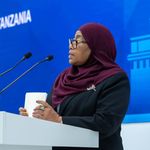
AUABC Chairperson Kwami Edem Senanu (right) and Global Financial Integrity (GFI) Policy Director Philip Nyakundi Gichana sign a memorandum of understanding in Arusha on June 5, 2026, to strengthen cooperation in combating corruption, promoting transparency and addressing illicit financial flows across Africa. PHOTO | BERTHA ISMAIL
Arusha. African countries are set to establish centres of excellence dedicated to combating corruption under a new continental initiative aimed at strengthening transparency, accountability and institutional capacity.
The initiative was unveiled following the signing of a Memorandum of Understanding (MoU) between the African Union Advisory Board Against Corruption (AUABC) and Global Financial Integrity (GFI) in Arusha on Thursday.
The partnership seeks to deepen cooperation in addressing corruption, illicit financial flows and governance challenges that continue to undermine Africa's development.
Speaking during the signing ceremony, AUABC chairperson Kwami Edem Senanu said Africa loses nearly $125 billion every year to corruption, depriving governments of resources needed to finance development priorities.
“Africa loses nearly $125 billion annually to corruption. This represents almost 50 percent of the continent's tax revenues and about 25 percent of its gross domestic product,” he said.
Mr Senanu described corruption as one of the greatest obstacles to Africa's development agenda, noting that it diverts resources from critical sectors including infrastructure, healthcare, education and industrialisation.
“These figures are too significant to ignore. The fight against corruption is a responsibility that belongs to all of us because its impact is felt across governments, businesses and communities,” he said.
He expressed confidence that the partnership with GFI would help accelerate efforts to promote transparency and accountability across the continent and contribute to the aspirations of the African Union's Agenda 2063.
The executive secretary of AUABC, Ms Charity Hanene Nchimunya, said the agreement was the culmination of more than two years of engagement between the two organisations.
She said discussions began in 2024 when GFI approached the board to explore areas of collaboration, particularly in tackling illicit financial flows, strengthening domestic resource mobilisation and improving transparency.
According to Ms Nchimunya, GFI is already implementing programmes in several African countries, including Tanzania, Kenya, Uganda and Zambia, focusing on revenue collection, financial risks linked to gold and critical minerals, and governance issues associated with the green energy transition.
A key component of the partnership will be the establishment of centres of excellence across Africa to support research, innovation, training and the sharing of best practices in anti-corruption efforts.
“The centres of excellence will play a critical role by serving as platforms for innovation, training, research and the sharing of successful anti-corruption practices across the continent,” she said.
The partnership will also promote beneficial ownership transparency by encouraging companies to disclose their ultimate owners, a move intended to make it more difficult for corrupt individuals to conceal illicit wealth through anonymous corporate structures.
Other areas of cooperation include public awareness campaigns, professional integrity programmes, technical support for governments and anti-corruption agencies, as well as knowledge-sharing initiatives involving civil society organisations.
Ms Nchimunya said evidence-based research would be central to the partnership, helping governments design more effective anti-corruption policies and interventions.
The agreement further provides for joint resource mobilisation efforts to secure funding and ensure the sustainability of anti-corruption programmes.
GFI policy director Philip Nyakundi Gichana said corruption had become increasingly sophisticated, requiring anti-corruption institutions to adopt new technologies and innovative approaches.
“Corruption today is not the same as it was in the 1990s. It continues to change, which means we must combine research, technology and innovation to develop effective solutions,” he said.
Mr Gichana said stronger partnerships would be essential in tackling corruption and illicit financial flows, adding that the focus would now shift from commitments to implementation.
“The real work starts now. We have established the framework, and we are ready to implement programmes that will benefit the people of Africa,” he said.