Trump says US, as ‘winner’, could charge for Strait of Hormuz passage

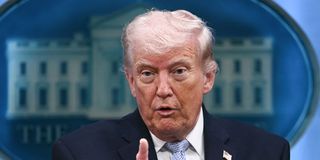
Washington. President Donald Trump has said the United States could impose tolls on ships passing through the Strait of Hormuz once the ongoing conflict with Iran ends, arguing that Washington has emerged as the “winner” of the war — a proposal that could require direct American control of one of the world’s most critical shipping lanes.

Speaking on Monday, Trump suggested that the US might charge vessels for using the narrow waterway, through which roughly a fifth of global oil supplies normally pass, framing the idea as a post-war entitlement.

“We’re the winner. We won,” he said, adding that the United States should be able to benefit economically from securing the route after weeks of fighting.

The remarks signal a dramatic shift in US policy towards international waterways, raising legal and geopolitical questions about whether Washington could — or should — monetise access to a global maritime chokepoint traditionally governed by international law.

Strategic waterway at centre of conflict

The Strait of Hormuz, located between Oman and Iran, is one of the world’s most important energy corridors, handling about 20 percent of global oil shipments.

Since late February, the route has been at the heart of a widening conflict between the United States and Iran, with Tehran effectively halting most shipping traffic through attacks, mines and threats against vessels.

The disruption has sent oil prices sharply higher and rattled global markets, while forcing major exporters to seek alternative routes.

Washington has launched a military campaign aimed at reopening the strait, with Trump repeatedly warning Iran to restore shipping access or face further strikes on key infrastructure.

Proposal raises legal concerns

Analysts say imposing tolls on ships transiting the strait would likely require sustained US military control of the waterway — a move that could be difficult to enforce and controversial under international law.

Under the United Nations Convention on the Law of the Sea (UNCLOS), straits used for international navigation are generally subject to the principle of transit passage, which limits the ability of states to levy charges unless specific services are provided.

Experts warn that any unilateral attempt by the US to charge fees could face strong opposition from major trading nations, many of which rely heavily on the route for energy imports.

Diplomatic efforts continue

Trump’s comments come as diplomatic efforts to end the five-week conflict intensify. A framework proposal, reportedly brokered by Pakistan, envisions a ceasefire followed by broader negotiations, including reopening the strait.

However, Iran has pushed back against pressure to immediately restore shipping under a temporary truce, insisting instead on a permanent settlement and guarantees on sanctions relief.

Economic and geopolitical stakes

The idea of charging tolls underscores the high economic stakes tied to the strait. Even before Trump’s proposal, analysts noted that control of Hormuz could generate billions of dollars annually through transit fees, given the volume of global energy shipments passing through it.

Critics argue that framing the conflict in terms of economic gain risks further escalating tensions in an already volatile region, while complicating efforts to secure a lasting peace deal.

For now, the proposal remains speculative, but it highlights how control of the Strait of Hormuz — long a flashpoint in global geopolitics — could become even more contentious in the aftermath of the war.