Trump touts ‘total access’ Greenland deal as NATO urges allies to boost Arctic security
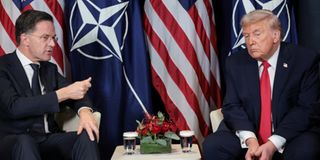
U.S. President Donald Trump holds a bilateral meeting with NATO Secretary General Mark Rutte at the World Economic Forum (WEF) in Davos, Switzerland, January 21, 2026. PHOTO | REUTERS
Davos. U.S. President Donald Trump said on Thursday he had secured what he described as “total and permanent” U.S. access to Greenland under a framework deal with NATO, as the alliance called on its members to strengthen security in the Arctic amid rising competition from Russia and China.
The announcement came as Trump eased earlier tariff threats against Europe and ruled out taking Greenland by force, easing fears of what analysts had warned could become the biggest rupture in transatlantic relations in decades.
European markets rebounded following Trump’s shift in tone, while Wall Street indexes moved closer to record highs. However, uncertainty remains over how much damage has already been done to relations between the United States and its allies.
Details of the proposed agreement remain unclear. Denmark insisted that Greenland’s sovereignty is not up for negotiation, while European Union foreign policy chief Kaja Kallas said relations with Washington had “taken a big blow” in recent days.
Greenland Prime Minister Jens-Frederik Nielsen welcomed Trump’s remarks but said he had not been briefed on the details.
“I don’t know what is in the agreement about my country,” he told reporters in Nuuk, adding that while Greenland was open to cooperation, sovereignty was a “red line”.
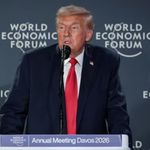
Speaking aboard Air Force One after attending the World Economic Forum in Switzerland, Trump said negotiations were under way on a deal that would be “much more generous to the United States”. He declined to comment directly on sovereignty but said the United States must retain full operational freedom.
Earlier, Trump told Fox Business Network the arrangement would effectively give the U.S. “total access” to Greenland without a time limit.
A source familiar with the talks said NATO Secretary General Mark Rutte and Trump had agreed on further discussions involving the United States, Denmark and Greenland to update a 1951 agreement governing U.S. military presence on the Arctic island. The framework would also seek to block Chinese and Russian investments.
Rutte said NATO military planners would now assess the additional security requirements, expressing hope that implementation could begin in early 2026.
Denmark urges caution
Denmark’s Prime Minister Mette Frederiksen said no negotiations had taken place on Greenland’s sovereignty, describing the situation as “serious” but noting progress in dialogue on strengthening Arctic security.
She called for a permanent NATO presence in the region, including around Greenland.
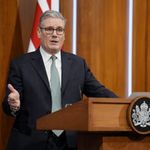
Finnish President Alexander Stubb said allies hoped to finalise a plan to strengthen Arctic security by a NATO summit in July, while British Prime Minister Keir Starmer said the UK was ready to contribute to regional security efforts.
Security and resources
After meeting Rutte, Trump said any agreement should support his plan for a missile defence system while preventing Russia and China from expanding influence in the Arctic.
Rutte said mineral extraction was not discussed, adding that detailed negotiations would continue between Washington, Copenhagen and Greenland authorities.
Under the 1951 agreement, the United States already has the right to build military bases and move freely in Greenland, provided Danish and Greenlandic authorities are informed. The U.S. maintains a base at Pituffik in northern Greenland.
China rejected claims that it poses a threat in the Arctic, calling the accusations “baseless” and insisting its activities comply with international law.
Meanwhile, European Union officials remain cautious despite Trump retreating from tariff threats, with diplomats saying the Greenland episode has shaken confidence in transatlantic relations.
In Greenland’s capital, Nuuk, residents also expressed uncertainty.
“It’s very confusing. One moment we are close to conflict, the next everything seems fine,” said pensioner Jesper Muller.