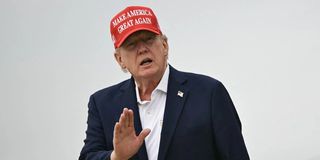
Washington/Dubai. US President Donald Trump has warned countries that provide “any type of lifeline” to Iran that they will face severe economic consequences as Washington seeks to end a war it launched with Israel nearly six months ago.
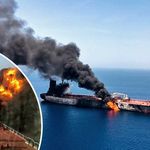
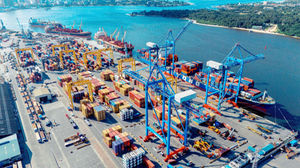
Thousands of people have been killed in the conflict, which has drawn in Gulf countries and disrupted global markets. Iran has also demonstrated its ability to restrict shipping through the Strait of Hormuz, a key global energy route through which about a fifth of the world’s traded oil passed before the conflict began.
The United States and Iran have twice announced ceasefire agreements, in April and June, aimed at restoring the free flow of shipping through the strait and paving the way for an end to the conflict. Both agreements, however, quickly collapsed, while Israel has largely withdrawn from the fighting.
In a social media post on Wednesday, Mr Trump threatened “Economic Warfare and Isolation on an unprecedented scale”, without providing details of the measures he intended to take.
“ANY country that allows its financial institutions, businesses, airports, or government entities to provide any type of lifeline to Iran will itself face TREMENDOUS Economic Consequences,” he said.
Iranian Foreign Minister Abbas Araqchi accused Mr Trump of trying to divert US public attention from domestic economic problems, including record debt and rising interest rates.
He said Washington’s continued reliance on what he described as failed policies would only deepen the crisis and alienate Iranians.
“America’s economic terrorism threatens the global economy and the national sovereignty of countries around the world,” Mr Araqchi said on X.
Mr Trump has yet to achieve the objectives he outlined at the beginning of the war, including dismantling Iran’s nuclear programme, limiting its ability to attack regional rivals and creating conditions for Iranians to overthrow the country’s clerical leadership.
China urges diplomacy
Mr Trump has not specified what measures Washington would impose or named the countries that could face sanctions. His warning could affect US allies that have been involved in efforts to mediate between Washington and Tehran.
Iran has also been negotiating with Oman over arrangements for managing the Strait of Hormuz and has said in recent weeks that an agreement was close.
Mr Trump responded on Monday by warning that he could bomb Oman, a longstanding US security partner, if it “gets in the way”.
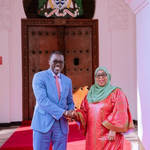
Omani Foreign Minister Badr Albusaidi, speaking after meeting his Japanese counterpart on Thursday, said lasting security in the strait required permanent peace in the region and rejected further escalation.
China, meanwhile, has called for a diplomatic solution.
China buys more than 80 per cent of Iran’s seaborne oil exports, according to 2025 data from analytics firm Kpler. However, further US economic pressure on Beijing could risk retaliation from China, a major supplier of products such as rare earth minerals to the United States.
“Sanctions and pressure will not solve the problem,” Chinese Foreign Ministry spokesman Lin Jian told reporters.
“China calls on all parties concerned to take responsible measures to resolve the issue through political and diplomatic means.”
Iran feels economic strain
Iran entered the war with high inflation, a weakening currency, energy shortages, longstanding sanctions and structural economic weaknesses.
The conflict has added further pressure through damaged infrastructure, disrupted trade, lost production and rising reconstruction costs.
President Masoud Pezeshkian acknowledged the economic toll last week, blaming high inflation on what he described as a US blockade of Iranian ports and sanctions targeting the country’s oil exports.
The conflicting signals from Washington have added uncertainty over the prospects for diplomacy. Mr Trump said on Tuesday that no talks were taking place with Iran, while his son-in-law and special envoy, Jared Kushner, said a day earlier that negotiations were continuing and were “probably more robust” than ever.
Mr Trump is seeking to seize Iran’s stockpile of highly enriched uranium and negotiate a new, more restrictive agreement limiting its nuclear energy and research programmes. The proposed deal would replace the 2015 nuclear agreement from which he withdrew the US in 2018.
Iran, a signatory to the Nuclear Non-Proliferation Treaty, has maintained for decades that its nuclear programme is peaceful.