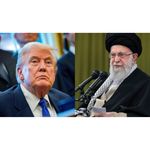
Washington. Military planners at the United States Department of Defense are preparing for the possibility of sustained, weeks-long operations against Iran if President Donald Trump authorises military action, two US officials have told Reuters.
The officials, who requested anonymity due to the sensitive nature of the planning, said such an operation could escalate into a far more serious conflict than previous confrontations between the two nations. Their remarks underline the growing stakes for ongoing diplomatic efforts aimed at easing tensions between Washington and Tehran.
Last week, American and Iranian diplomats met in Oman in an attempt to restart dialogue over Iran’s nuclear programme. The talks came amid an increased US military build-up in the region, a move that has raised fears of possible armed confrontation.
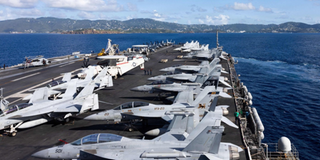
US officials said the Pentagon has ordered the deployment of an additional aircraft carrier to the Middle East. The reinforcement includes thousands of troops, fighter aircraft, guided-missile destroyers and other equipment capable of launching attacks as well as defending against potential retaliation.
Speaking to US service members at a military base in North Carolina on Friday, Trump acknowledged that reaching an agreement with Iran had proved challenging. He suggested that pressure may be necessary to secure a deal, saying at times “fear” is required to resolve disputes.
Responding to questions about the preparations, White House spokesperson Anna Kelly said the president is considering all possible options. She said Trump listens to different viewpoints before making decisions based on what he believes is best for US national security. The Pentagon declined to comment publicly on the matter.
According to the officials, the current planning is broader and more complex than previous operations. While earlier US strikes mainly targeted Iranian nuclear facilities, a prolonged campaign could expand to include state institutions and security infrastructure.
Last year, the US deployed two aircraft carriers during a period of heightened tensions and carried out limited strikes against Iranian nuclear sites. One operation, known as “Midnight Hammer”, involved stealth bombers flying directly from the United States to hit specific targets. Iran’s response at the time was limited, striking a US base in Qatar.
However, defence experts warn that any extended campaign would carry greater risks. Iran is believed to possess a substantial arsenal of missiles capable of targeting US forces and facilities across the region. Retaliatory strikes could trigger a cycle of attacks and counter-attacks, increasing the likelihood of a wider regional conflict.
One official said Washington fully expects Tehran to respond militarily if attacked, potentially leading to prolonged exchanges over time.
Iran’s Islamic Revolutionary Guard Corps has already warned that it could target any US military base if Iranian territory is struck.
The US maintains a strong military presence across the Middle East, with bases in Jordan, Kuwait, Saudi Arabia, Qatar, Bahrain, the United Arab Emirates and Turkey.
Meanwhile, Benjamin Netanyahu of Israel met Trump in Washington this week and stressed that any agreement with Iran must safeguard Israel’s security interests.
Iran has maintained that it is open to negotiating limits on its nuclear programme in exchange for the lifting of sanctions. However, Tehran has ruled out including its missile capabilities in the discussions.