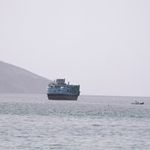
As the United States and Israel went to war with Iran at the end of February, analysts predicted the price of crude oil could hit $150 a barrel or even rise as far as $200, with the fifth of global supply that transits the vital Strait of Hormuz suddenly cut off from world markets.
But, Brent crude futures peaked around $126 - comfortably below 2008's all-time high of $147 - and averaged just $101 a barrel between the start of the conflict on February 28 and June 11 when US President Donald Trump called off strikes on Iran, before briefly retreating to pre-war levels of $70 in early July.
Below are some of the reasons why the oil price hasn't gone crazy. Yet.
The biggest surprise was China, the world's largest oil importer, which had slashed crude imports to the lowest in nearly a decade by June. Fuel exports were curbed, its population started using electric taxis instead of personal cars and its petrochemical sector also reduced volumes.
Chinese oil imports in June 2026
Chinese oil imports in June 2026
2. US. pumps more
The United States, the world's largest oil producer, pumped more crude, with production reaching a record 13.93 million barrels per day by April. It also freed crude from its Strategic Petroleum Reserve as part of a record 400 million-barrel release coordinated by the International Energy Agency in March, helping cushion supply disruptions.
US Strategic Petroleum Reserve falls to lowest level since 1983
US Strategic Petroleum Reserve falls to lowest level since 1983
3. Trump Burns Bulls
US President Donald Trump repeatedly wrong-footed oil market bulls by making statements about peace agreements and the resumption of flows through the Strait of Hormuz.
Bar chart showing 1-minute volumes for Brent and WTI crude futures, in lots from 0630 ET on March 23 to 0745 ET
Bar chart showing 1-minute volumes for Brent and WTI crude futures, in lots from 0630 ET on March 23 to 0745 ET
Oil market liquidity has dropped as many traders have become reluctant to make large bullish bets amid the risk of sudden market reversals.
"Everybody is bullish now, but nobody is long," said Ilia Bouchouev of the Oxford Institute for Energy Studies.
After driving their bullish position in Brent futures to its smallest this year in early July, funds then made their largest addition in six months in the week to July 14, according to data from the ICE exchange on Friday.
However, at around $14.8 billion based on Monday's prices, this position is still more than 50% below late March's six-year peak .
Brent bullish bets shrink from six-year highs
Brent bullish bets shrink from six-year highs
The market is suffering from headline fatigue, which reduces the price impact of fresh announcements, said Saxo Bank head of commodity strategy Ole Hansen.
At first, investors trying to get exposure to all that spending bought into chipmakers, but as that trade has got more crowded, there is another way,
Oil market headline fatigue
Oil market headline fatigue
4. Hormuz flows rebound
Saudi Arabia, the biggest Gulf oil exporter, sharply increased shipments from its Red Sea Yanbu port, helping to offset the loss of barrels via the Strait of Hormuz.
Hormuz shipments briefly restarted in June, easing concerns about crude availability, but dropped again in July as the fighting resumed.
Hormuz crude exports recover briefly in June
Hormuz crude exports recover briefly in June
Strait Of Hormuz vessel traffic rebounded in June
Strait Of Hormuz vessel traffic rebounded in June
5. Ample supply of prompt physical cargoes
Traders say there is ample supply of physical oil, limiting the price reaction to the latest escalation in the conflict. Crude oil differentials in Europe, such as North Sea Forties , that help set the global dated Brent benchmark have fallen to a discount from a record premium in April.
"There is a lot of prompt crude around for now," said veteran trader Adi Imsirovic. "It may not last!"