Deafening noise at markets spark health, order concerns
A section of Karume market in Dar es Salaam, where most of the hundreds of traders operating at the site use speakers to advertise the merchandise.PHOTO | FILE
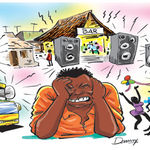
Dar es Salaam. Loudspeakers blaring commercial adverts have become a defining — and increasingly controversial — feature of many markets in Dar es Salaam, raising concerns over noise pollution, public health and communication breakdowns between traders and customers.
While business naturally relies on advertising, what is now unfolding in markets such as Mchikichini (Karume), Ilala, Kariakoo, Manzese and Tandika is being described by users as not promotion, but excessive noise that disrupts daily trading activities.
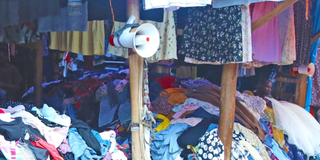
Visitors to these markets are often greeted by recorded announcements played at high volume, promoting shoes, clothes, bags and other goods. The result, customers say, is a chaotic environment where communication becomes difficult and trading interactions are strained.
At Karume Market, Martin Betram said the noise has made normal conversation between buyers and sellers almost impossible.
“There is no clear communication. One person is advertising shoes, another bags and another clothes. In the end, customers lose direction due to confusion,” he said.
He added that customers are often forced to shout or repeat themselves several times to be understood.
“At times, I have to step outside the market just to make phone calls in peace so I can respond to requests from people who sent me to buy goods,” he said.
Betram recounted an incident involving his son, whom he had sent to shop at Karume Market.
“I called him more than six times and thought his phone had been stolen because he was not picking up. When he finally answered, he said he could not hear due to the noise,” he said.
He added that his son later complained of headaches and ear discomfort after spending long hours in the market environment.
Another customer, Mariana Geofrey, said prolonged exposure to the noise leaves her with headaches.
“If I spend a long time in Tandika Market, I am guaranteed to get a headache when I return home,” she said.
“We know it is meant to attract customers, but does it really have to be that loud? It feels like a competition for the loudest speaker,” she added.
She called for greater awareness among traders, saying the practice has become routine despite its impact on customers’ comfort.
A shopper, Zainabu Masha, said noise pollution in markets such as Manzese has become normalised, with little enforcement to control it.
Legal framework on noise pollution Under Section 106(5) of the Environmental Management Act, 2004 (as amended in 2025), it is an offence to produce or allow noise beyond prescribed limits.
The Environmental Management (Noise and Vibration Control) Regulations, 2015 set permissible noise levels depending on area classification — including residential, commercial, industrial, school and hospital zones.
The regulations prohibit noise that may disturb, harm or endanger health, sleep or public peace. The limits are set at 55 decibels during the day in residential and commercial areas and 45 decibels at night.
A 2019 environmental report by the Vice President’s Office (Union and Environment) noted that noise pollution is increasing rapidly in urban areas, with both physical and psychological consequences.
In 2021, then Minister of State in the Vice President’s Office, Dr Seleman Jafo, said economic growth had been accompanied by rising environmental noise and vibration pollution, posing public health risks.
Traders defend use of loudspeakers Some traders argue that loudspeakers have become an essential marketing tool in highly competitive markets.
A second-hand clothes trader at Tandika Market, Juma Hamidu, said the practice emerged to replace constant shouting by traders.
“Business is about advertising. What I do is promote my products through the speaker. I am just trying to earn a living,” he said.
Another trader at Karume Market, Yassin Mussa, said the announcements help attract customers and even communicate prices.
“Sometimes we do not even need to mention prices; customers hear everything through the announcements,” he said.
He added that modern trading conditions have changed and traders have adapted accordingly.
However, other traders say the practice has gone too far.
Joseph Mshana said the noise makes communication with customers extremely difficult.
“At times I cannot hear properly and customers have to repeat themselves. It is not a good situation,” he said.
He added that speakers were previously removed from Karume Market following complaints but later returned.
Mvije Yassin said the noise runs from morning to evening.
“When electricity goes off there is some relief, but otherwise the noise continues all day,” he said.
Market leadership calls for action Tandika Market Secretary Muhrami Simba said the situation has become a serious nuisance, with frequent complaints from customers.
“I once saw a pregnant woman collapse due to noise. This issue needs urgent intervention,” he said.
He added that markets operated effectively in the 1990s and early 2000s without loudspeakers.
“These digital changes have created problems. Traders should consider alternatives instead of relying on speakers. The government should help address this issue,” he said.
Health experts warn of risks Medical experts warn that prolonged exposure to loud noise in markets may lead to serious health consequences.
Ear specialist Khuzema Rangwala of Saifee Hospital said traders and customers are equally at risk.
He said the severity depends on both sound intensity and duration of exposure.
“Anyone exposed to loud noise for six to seven hours continuously may suffer long-term damage,” he said.
He added that prolonged exposure may contribute to heart problems, neurological effects and mental health conditions.
Audiologist Dr Salum Seif said noise in markets is an emerging public health issue that is often overlooked.
“Noise damage does not appear immediately. It begins with discomfort and reduced concentration and may progress to permanent hearing loss,” he said.
Psychologist Yisambi Mbuwi said psychological effects depend on individual perception and tolerance.
Some people may develop anxiety or stress-related conditions, while others may adapt without noticeable effects.
“The impact depends on how a person interprets the environment,” he said.
Register to begin your journey to our premium contentSubscribe for full access to premium content