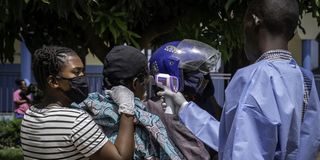
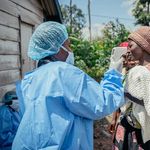
Arusha . East African Community (EAC) health ministers are meeting today and tomorrow in a special virtual session to coordinate a regional response to the ongoing Ebola outbreak in the Democratic Republic of Congo (DRC) and Uganda.
The meeting of the EAC Sectoral Council of Ministers of Health will consider measures to contain the outbreak, which is linked to the Bundibugyo strain of the Ebola virus.
In a statement, the EAC Secretariat said on Monday, June 1, 2026 that the meeting forms part of a series of emergency interventions aimed at strengthening regional preparedness and response efforts.
The current outbreak was officially declared on May 15, 2026. The Bundibugyo strain is considered rare and currently has no approved vaccine or specific treatment.
As of May 26, the DRC had reported 121 confirmed cases, including 17 deaths. The country had also recorded 1,077 suspected cases and 246 suspected deaths.
Uganda had reported seven confirmed cases and one death as of May 25. According to the EAC, the first two confirmed cases involved patients who had travelled from the DRC and sought treatment in Uganda.
The outbreak has largely affected the DRC's Ituri, North Kivu and South Kivu provinces, with Ituri remaining the epicentre. Authorities are concerned about the risk of wider regional transmission due to significant population movements and cross-border trade in the affected areas.
EAC Secretary General Stephen Mbundi said the regional bloc was working closely with member states, the Africa Centres for Disease Control and Prevention (Africa CDC), the World Health Organization (WHO) and development partners to strengthen surveillance, laboratory diagnostics and rapid response systems.
"We are mobilising regional systems and working closely with member states and partners to strengthen surveillance, laboratory diagnostics, infection prevention and control, risk communication and rapid response capacity," he said.
Mr Mbundi said the EAC's objective was to support member states in preventing cross-border transmission while safeguarding public health and economic stability.
The Secretariat is also coordinating the deployment of nine mobile laboratories at strategic border points and entry routes across the region to support rapid testing and disease surveillance.
The laboratories will be stationed in Beni in eastern DRC, Busia in Kenya, Nimule-Elegu on the South Sudan-Uganda border, Kobero in Burundi, Kagera and Kigoma regions in Tanzania, health districts in Rwanda and Bwera Hospital in Uganda.
The initiative is funded by the German government through KfW Development Bank and receives technical support from the Bernhard Nocht Institute for Tropical Medicine.
Meanwhile, the EAC is exploring a regional mechanism to accelerate the approval and registration of Ebola vaccines, treatments and diagnostic tools.
The Secretariat has urged member states to strengthen surveillance at points of entry, improve cross-border coordination, activate emergency preparedness plans and intensify public awareness campaigns.
Register to begin your journey to our premium contentSubscribe for full access to premium content