EACOP reaffirms commitment to education support in Kagera

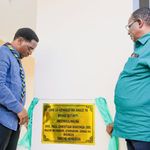
The Community Relations Coordinator from the East African Crude Oil Pipeline (EACOP) project, Mr Theophil Celestine, presents a certificate to one of the Form Six graduates at Bunazi Secondary School in Misenye, Kagera Region recently. PHOTO | COURTESY

Kagera. The East African Crude Oil Pipeline (EACOP) project has reaffirmed its commitment to supporting the education sector as part of its corporate social responsibility (CSR), aligning its initiatives with Tanzania’s Development Vision 2050 and the Sustainable Development Goals (SDGs), particularly Goal 4 on quality education.

Speaking during the Form Six graduation ceremony at Bunazi Secondary School in Misenyi, EACOP Community Relations Coordinator, Theophil Celestine, said the project is committed to complementing government efforts to improve access to quality education.

“The EACOP project is not only about the construction of crude oil infrastructure; it is also about people’s development,” he said.

“We feel obliged to support communities surrounding our project areas through socio-economic development initiatives, while also fully implementing the local content policy,” he added.

As part of its support, EACOP pledged to donate a photocopy machine to assist academic and administrative activities at the school.

The company also said it continues to implement broader social investment initiatives, including support for Project Affected Persons (PAPs) and provision of vocational training through the Vocational Education and Training Authority (VETA).

It has also rolled out the “Keep a Girl in School Initiative – Phase I”, under its Socio-Economic Investment Programme, aimed at improving menstrual health and hygiene management in selected schools along the EACOP corridor in Tanzania.

Bunazi Secondary School Headmistress, Arieth Philemon Munisi, expressed appreciation for the support, saying it contributes to improving the learning environment.

However, she highlighted several challenges facing the school, including lack of a perimeter fence, which she said exposes students to safety risks and vandalism.

She also pointed to the absence of a dining hall, which affects student welfare and limits space for school activities, as well as the poor condition of the kitchen, which she said is no longer adequate for the school’s needs.

In addition, she cited breakdown of photocopiers and printers, which has affected academic administration and increased operational costs. She also noted shortages of sports equipment, limiting students’ participation in physical education and extracurricular activities.

She called on other stakeholders to support efforts to address these challenges.

The graduation ceremony, held at the school grounds, brought together parents, teachers, students and local leaders.

Established in 1998 by the Misenyi Development Association (MIDEA), Bunazi Secondary School was founded by local coffee farmers to promote access to education in the area. It was later integrated into the government system in 2022.

The school currently has 1,332 students—821 girls and 511 boys—from Form One to Form Six. It serves learners from pipeline-affected villages such as Bulfani, Nyabihanga and Kabwoba at Ordinary Level, while Advanced Level students are drawn from various parts of the country.

This year, 104 out of 110 Form Six girls completed their studies, while six students were transferred for various reasons.

The school has 42 teachers among a total staff of 51, supported by matrons, cooks, security personnel and administrative staff.

The East African Crude Oil Pipeline is a 1,443-kilometre project transporting crude oil from Hoima in Uganda to the Chongoleani Peninsula in Tanga, Tanzania. It is jointly owned by TotalEnergies (62 percent), Uganda National Oil Company (15 percent), Tanzania Petroleum Development Corporation (15 per cent) and CNOOC (8 percent).