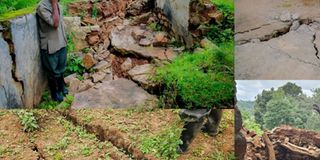
Same. Preliminary findings by geological experts investigating land subsidence in Marieni Village, Chome Ward, Same District in Kilimanjaro Region, have shown the area is unsuitable for human settlement due to its unstable soil structure, which poses a serious risk to residents.
The findings follow a recent assessment conducted after cracks appeared in several houses as a result of ground movement in the village.
So far, 10 households have abandoned their homes, while one church building has been rendered unusable after developing large cracks linked to the shifting ground.
Following the incident, affected residents have moved their families and belongings to temporary shelters provided by relatives and friends as they await the government’s decision on the future of the area.
When The Citizen’s sister newspaper, Mwananchi, visited the village on April 1, 2026, it found one church building abandoned after its walls developed deep cracks, while the floor also showed signs of sinking.
Speaking to Mwananchi on May 14, 2026, the Geological Survey of Tanzania Chief Executive Officer, Mr Ally Samaje, said investigations revealed that the soil layer stretching from the surface to the hard rock beneath is weak and unstable, placing residents’ lives at risk.
He said the area is therefore unsuitable for residential settlement and would instead be more appropriate for agricultural activities because there is no major underground pressure affecting farming operations.
“In the investigation we conducted, preliminary findings show the area has a thick layer of soft soil, while hard rocks are located much deeper underground. As a result, houses are built on unstable soil. When the soil absorbs water, it easily shifts or moves, causing land subsidence and sinking houses,” he said.
Mr Samaje added that the hilly terrain in the area further increases the risk of erosion and land movement.
“The area is more suitable for agricultural activities because there is no major danger in that regard. However, it is unsafe and not advisable for people to continue living and constructing houses there because the soil is unstable,” he added.
He further said the institution had already submitted preliminary findings to district authorities to help inform residents and ensure precautionary measures are taken to avert possible disasters.
“As we continue preparing the final report, precautionary measures must be taken. We have already informed district leaders so they can alert residents and help prevent harm and possible disasters,” said Mr Samaje.
One resident, Ms Marry Godfrey, said villagers remained uncertain about what would happen next and appealed to the government to identify alternative settlement areas should permanent relocation become necessary.
“Where we are now, we still do not know what will happen regarding this area. We have only secured temporary shelter with relatives. What we are waiting for is the government’s statement on whether we will return to our homes or not,” she said.
Another resident, Ms Cathbert Wilfred, said villagers were awaiting the government’s final decision on whether they would be allowed to continue living in the area or be relocated elsewhere.