Government defends Sh62.3 trillion spending, as parliament passes the budget

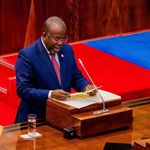
Finance Minister Khamis Mussa Omar responds to issues raised by Members of Parliament during the debate on the 2026/27 Budget in Parliament.  PHOTO | SAID KHAMIS

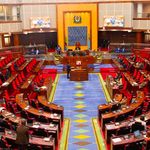
Dar es Salaam. The government on Tuesday June 23, 2026, defended its Sh62.3 trillion budget after seven days of parliamentary debate, as 385 Members of Parliament (MPs), equivalent to 97.99 percent voted in favour.

Responding to issues raised by MPs shortly before the vote, the minister for Finance, Mr Khamis Mussa Omar, said the government was committed to tighter expenditure controls, settlement of supplier arrears and improved revenue collection through tax administration reforms.
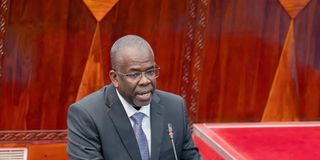
Mr Omar said the government agreed with MPs on the need to strengthen spending controls in line with President Samia Suluhu Hassan’s directives on fiscal discipline and prudent use of public resources.

“The government has been taking various steps to control expenditure, but we acknowledge there is still room to improve oversight and efficiency,” he said.

Efforts would continue, he noted, to reduce non-essential expenditure, including domestic and foreign travel, seminars, workshops and conferences.

The government will also expand the use of information and communication technology systems to improve public financial management.

According to him, a comprehensive budget review will be undertaken to identify savings that can be redirected to priority development projects.

On outstanding payments to contractors and suppliers, Mr Omar said claims worth Sh2.2 trillion had been verified and payments would continue based on available funds.

The government allocated Sh700 billion in the 2025/26 financial year for clearing arrears and has set aside Sh1.2 trillion in the proposed 2026/27 budget for the same purpose.

“Our objective is to ensure timely payment of all verified contractors and suppliers so they can continue implementing projects and supporting economic activity,” he said.

He said that the government was exploring alternative financing mechanisms to accelerate settlement of arrears, with about Sh100 billion expected to be disbursed monthly, subject to cash flow availability.

Addressing concerns about the Medical Stores Department (MSD), Mr Omar said the government had disbursed Sh945.04 billion between 2023 and 2026 to support the procurement and distribution of medicines and medical supplies nationwide.

He acknowledged concerns regarding the Public-Private Partnership (PPP) framework. Although nine PPP projects are currently under implementation, he said the country had yet to fully realise the model’s potential benefits.

He announced plans to review the framework during the coming financial year to improve efficiency, boost investor confidence and enhance value for money.

He said to widen the tax base, the government unveiled measures aimed at formalising the informal sector.

These include a one-year income tax exemption for newly registered businesses and allocation of five percent of local government revenue for construction of markets and business infrastructure to support small traders.

The government also clarified that individuals transitioning into business activities would be required to convert their personal Taxpayer Identification Numbers (TINs) into business TINs to improve compliance and monitoring of economic activity.

One of the most debated budget proposals was the introduction of a five percent excise duty on imported motorcycles.

Mr Omar clarified that the levy would apply only to motorcycles powered by fossil fuels.

“This is intended to align with the government’s push towards cleaner transport technologies such as electric and gas-powered vehicles,” he said.

He added that cleaner transport options offered lower operating costs and would benefit users in the long term.

On tax administration reforms, the minister said proposals to increase fuel import verification fees from 0.5 percent to one percent were still under discussion with the parliamentary Budget Committee.

He also confirmed that the electronic tax stamps contract would be re-tendered, allowing the current supplier and other eligible firms to compete under revised and more transparent conditions.

Regarding the mining sector, Mr Omar said discussions were continuing with the Budget Committee on proposed tax reforms to address revenue concerns while maintaining the country’s competitiveness and attractiveness to investors.

He further explained that the zero-rated Value Added Tax (VAT) policy was intended to promote exports, particularly in sectors such as edible oils and cotton textiles.

On public debt, the government assured MPs that borrowing would continue to be guided by debt sustainability assessments.

Mr Omar said more than 40 per cent of debt-servicing obligations were linked to investments in strategic sectors, including water, energy and railway infrastructure.

“The remaining 25 percent of General Fund resources continues to support debt repayment obligations arising from these same development investments,” he said.

He added that state-owned enterprises seeking to raise capital from financial markets would be required to obtain approval from the minister for Finance to ensure proper oversight of public financial risks.

Five key areas to drive Dira2050

Earlier, the minister of State in the President’s Office [Planning and Investment], Prof Kitila Mkumbo, outlined five key areas expected to drive implementation of the National Development Vision.

These include agriculture, improvement of the business environment, economic growth, a national monitoring system and enhanced use of statistics for performance tracking.

Prof Mkumbo said agriculture remained central to Tanzania’s economic transformation agenda, noting that the sector continued to provide employment and support industrial development.

According to him, 54.2 percent of the workforce is currently engaged in agriculture, livestock and forestry, compared with 10.3 percent in manufacturing and 35.5 percent in services.

He noted that agriculture’s share of employment had declined from 60.4 percent in 2021 to 54.2 percent currently, describing the trend as evidence of gradual structural transformation rather than reduced importance.

“The decline in agriculture’s share does not mean reduced importance. It reflects the need to maintain balance across all sectors to generate more employment,” he said.

Prof Mkumbo stressed that industrialisation efforts would continue to be anchored in agricultural transformation, arguing that sustainable industrial growth depended on strong agricultural productivity.

He also highlighted government efforts to formalise the informal sector to increase its contribution to national income and create decent employment opportunities.

On macroeconomic performance, he said Tanzania’s economy was valued at Sh234.14 trillion in 2025 and noted that the national poverty line for Mainland Tanzania stood at Sh63,164 per household per month.

After members of Cabinet addressed MPs concerns on the budget and the Parliament had sat as a committee to pass through the Finance Bill, a vote was taken.

Speaker Mussa Azzan Zungu announced then the historic passing of the fiscal plan, which saw 385 lawmakers endorse the state estimates while only 8 members opposed the motion.

A total of 393 votes were cast during the voting session with eight MPs saying No to the budget.nds Sh62.3tr spending, as parliament passes the budget