Govt eyes global model for new Mloganzila health hub

Health minister Mohamed Mchengerwa speaks during a recent meeting.  PHOTO | FILE

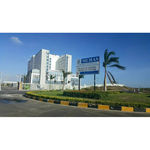
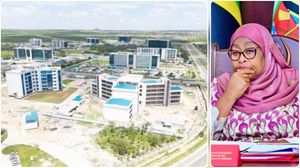
Dar es Salaam. The government plans to develop Mloganzila into a national health and pharmaceutical investment hub, following directives from President Samia Suluhu Hassan to concentrate major health-sector investments in the area.

Health minister Mohamed Mchengerwa said the government has already received instructions from the President to guide investors to Mloganzila, citing the availability of extensive land suitable for large-scale pharmaceutical and medical manufacturing.

“We have received clear directives from President Samia Suluhu Hassan to direct investors to Mloganzila because we have a very large area there,” Mr Mchengerwa said.

“We expect to sit down with the Ministry of Education, the leadership of Muhimbili and Mloganzila to agree on how we can develop it.”

The minister said the government wants to emulate models seen in other countries, where specialised industrial clusters are developed around a single sector.

Under the plan, Mloganzila would be transformed into a health centre hosting research institutions, training facilities and factories for medicines and medical devices.

He said integrating education, research and production would allow students to combine academic learning with practical exposure to modern technology, while supporting innovation and skills development in the health sector.

The initiative forms part of the Pharmaceutical Acceleration Strategy, which aims to fast-track investment in local drug manufacturing by removing structural bottlenecks, including delays in licensing, regulatory approvals and taxation decisions.

However, industry players say policy reforms must go beyond infrastructure to address market access and protection.

The Tanzania Pharmaceutical Manufacturers Association (TPMA) chairperson, Mr Bashiru Haroon, said many local drug factories are operating under heavy debt as imported medicines continue to dominate the domestic market.

“Our market has become a dumping ground for imported medicines that can be produced locally,” Mr Haroon said.

“This has weakened domestic industries, yet we currently contribute only about 10 percent of the national medicine supply.”

He said doubts about the capacity of local manufacturers persist despite improvements in quality and compliance, limiting their participation in public procurement.

Mr Haroon called for reforms at the Medical Stores Department (MSD) to ensure procurement systems favour qualified local manufacturers.

“The entire procurement system for medicines should be aligned with a protection policy for domestic industries,” he said, adding that such measures should be incorporated into the Public Procurement Act and supported by clear regulatory frameworks.

Manufacturers also said local investors should be prioritised in incentive schemes under the Tanzania Special Economic Zones Authority (TISEZA).

They mention domestic manufacturers face a long chain of taxes, levies and fees at the start of production, costs that often delay or discourage investment.

“When a local investor is starting production, the number of taxes and charges becomes a serious obstacle,” he said.

Minister Mchengerwa said the government recognises concerns around protection and incentives and has begun reviewing relevant policies.

He added that strengthening local manufacturing is not only an industrial objective but also a public health priority.

He said substandard and expired medical products remain a risk to public health, noting that promoting quality local manufacturing would help lower medicine costs, stimulate investment and improve health security.