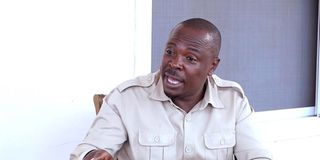
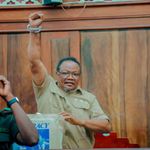
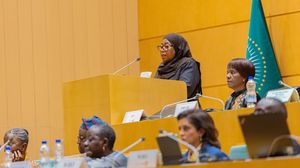
Dar es Salaam. In Tanzania’s political landscape, few figures evoke emotions as strong as Chadema Vice Chairman, John Heche.
As one of the younger politicians shaped by opposition activism, his journey has been marked by turbulence, firm convictions and relentless struggle.
In an exclusive interview with The Citizen’s sister newspaper Mwananchi held on Tuesday, February 10, 2026, at his Dar es Salaam home, Mr Heche spoke candidly about politics and his personal life.
He detailed the pain he has endured in politics, from threats and repeated court cases to hardships that, he says, have strengthened him.
He spoke of the fears his family lives with, the personal costs he has borne and the principles that prevent him from retreating.
“My family has suffered greatly in attempts to silence me politically. My younger brother, Suguta, was killed simply to hurt me,” recounts Mr Heche, his voice steady but laden with pain.
He says eight years ago his brother was stabbed to death while handcuffed, “It was planned. They dumped him. The person responsible was arrested but later released. He is free.”
That is only one of many incidents, Mr Heche also recalls how his mother’s house was demolished.
“While I was a councillor for Tarime Town Ward, my mother’s house was demolished and our belongings thrown outside. We had just lost our father at the time,” he recounts.
“These Chadema politics, the politics of this country, have caused me deep pain. Still, I thank God because what I am doing is right and I cannot turn back, even though the struggle has hurt us,” he says.
He adds that the struggle for political reforms in Tanzania has brought suffering to many, not only Chadema members.
“Some people have been shot in their homes and they are not Chadema members, cadres or supporters. Others have missing relatives and they are not Chadema either. These things should not happen. Politics is not war,” he says.
How family shaped his principles
Mr Heche says his firm political stance was shaped by his upbringing.
He recalls being arrested and rumours circulating that he had been abducted, prompting relatives to demand that police disclose his whereabout, “Our family was built on love.”
“My father had eight wives and 60 children. Yet we lived in unity and love. That is how he raised us.”
He said their father, a livestock keeper, valued justice and detested lies.
Smiling, Mr Heche says: “When I was young, I did not understand why my father insisted on truth. As an adult, I realised truth is powerful. Loving justice and speaking the truth is how I was raised.”
He says those values remain deeply rooted in the family, “That is why I always say we should not cultivate hatred. Hatred breeds revenge.”
Arrests and hardship
Recalling his recent arrest and detention at Mtumba Police Station in Dodoma, Mr Heche says he endured extreme hunger.
“I spent two and a half days without food while in custody. Those who arrested me feared I might die in their hands, so they eventually admitted they were holding me.”
He says at the time, his mother had just returned from India, noting that she travelled straight from the airport in Dar es Salaam to the Central Police Station seeking answers.
“My relatives, Tanzanians and Chadema members stood up for me. Without them, perhaps a different story would be told about me today.”
The legacy he hopes to leave
Despite the hardships, Mr Heche says he hopes that when he leaves politics, he will see Chadema win fairly and form the government.
“Winning is one thing, but not just winning, we must change people’s lives. Many governments fight hard to enter power and forget the people once they get there,” he explains.
He says change begins at family level, where values of justice must be nurtured, citing examples from countries he has visited.
“In the United Kingdom, I once took a taxi late at night. We were alone at traffic lights, yet the driver waited for green. In China and Japan, citizens respect responsibility and consequences. We should reach a point where even families reject corruption,” he says.
Teaching, law and politics
Before entering politics, Mr Heche worked as a teacher in Tarime.
“Teaching is noble work, though people often undervalue it. If not for politics, I would still be a teacher. I also wanted to be a lawyer to defend people’s rights,” says.
He says he resigned after refusing mistreatment from the then Serengeti District Commissioner, “I was the only English teacher in the entire school, but when I faced injustice, I chose to leave.”
Beyond teaching and politics, Mr Heche says he would still pursue work that empowers people through knowledge and justice.
Living with fear
Mr Heche admits political life forces him to live cautiously.
“My family does not fully support my political path. My mother wishes I could quit tomorrow. She supports and prays for me but fears I could be harmed at any time,” narrates.
Still, he has no regrets, “I have never regretted being a politician or serving in Chadema. It is public service, even if it is thankless.”
He recalls witnessing the shooting of Tundu Lissu and seeing others disappear or be detained without charge, “Courage is not the absence of fear. It is overcoming it.”
He sometimes receives warnings that people are trailing him but chooses not to be intimidated.
“These are difficult realities. That is why we fight to change them. Opposition is not hatred. We should debate ideas,” explains Mr Heche.
Mr Heche insists he is not quarrelsome but simply speaks frankly, “I have no problem with individuals. My problem is how the country is governed.”
He encourages honesty among his aides and welcomes criticism, “I believe in genuine democracy. If I am wrong, I apologise.”
Heche ends with a clear call, “Release Mr Tundu Lissu, allow our party to operate freely, and end injustice and abductions.”
He also urges citizens not to remain silent when others are mistreated, “Today it is them. Tomorrow it could be you.”
Register to begin your journey to our premium contentSubscribe for full access to premium content