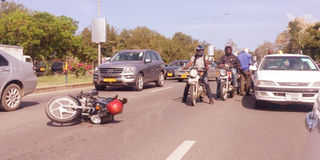
From January to June 2024, a total of 259 motorcycle accidents were reported in the country compared with 216 accidents during the same period in 2023, representing an increase of 43 accidents, or 19.9 percent, according to government statistics. PHOTO | FILE
Dar es Salaam. Despite the government approving motorcycles as a means of public transport, the rapid expansion of the bodaboda industry has increasingly put riders, passengers and other road users at risk.
While the bodaboda business remains an important source of income for many young people and provides a convenient mode of transport for the public, challenges persist in enforcing road safety laws and ensuring riders consistently comply with traffic regulations.
A cross-cutting survey conducted recently by The Citizen across Dar es Salaam revealed widespread violations of the Road Traffic Act [Cap. 168 R.E. 2023].
These included carrying more than two passengers, failing to wear protective gear, especially helmets and ignoring road signs, notably zebra crossings.
Failure to respect zebra crossings has become a chronic problem, with many pedestrians, particularly women and children, reportedly being hit while attempting to cross roads, resulting in severe injuries, fatalities and long-term disabilities.
The survey further found that bodaboda riders frequently flout traffic rules, including running red lights, with observers noting a growing practice of removing side mirrors from motorcycles.
Many riders said removing side mirrors allows them to manoeuvre more easily through narrow streets in suburban areas and perform “lane splitting”.
This involves riding between lanes of slow-moving or stationary vehicles during congestion on major highways.
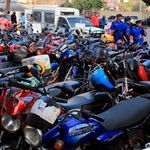
Investigation shows that side mirrors are widely available at bodaboda parking stations, selling for between Sh15,000 and Sh20,000 per pair.
However, road safety experts warn that removing such safety features significantly increases the risk of accidents, as riders lose visibility of vehicles approaching from behind.
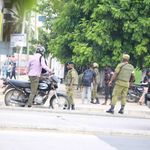
Despite traffic police being assigned to enforce regulations on many roads in Dar es Salaam and other parts of the country, these violations have become increasingly common.
The situation has alarmed road safety stakeholders, who say the trend exposes motorists, pedestrians and commuters to preventable accidents.
The Crime and Traffic Incidents Statistics Report for January–June 2024, jointly prepared by the National Bureau of Statistics (NBS) and the Tanzania Police Force (Tanpol), shows that motorcycles remain among the leading contributors to road traffic accidents.
The report notes that although the government authorised motorcycles for public transport to ease mobility challenges, the sector has been increasingly linked to rising accident rates.
“From January to June 2024, a total of 259 motorcycle accidents were reported in the country compared with 216 accidents during the same period in 2023, representing an increase of 43 accidents, or 19.9 percent,” the report states.
Statistics also show a rise in fatalities. “During the same period, road accident deaths increased by 32, from 191 deaths between January and June 2023 to 223 deaths in the same period of 2024, equivalent to 16.7 percent,” it adds.
Data from the Home Affairs ministry’s 2025/26 budget speech indicates that between July 2024 and April 2025, 1,322 incidents were reported at police stations, down from 1,463 in the same period of 2023/24, a reduction of 141 cases, or 9.6 percent.
Similarly, 1,275 people died in accidents during the same period, compared with 1,408 fatalities in 2023/24, reflecting a decrease of 133 deaths, or 9.4 per cent.
“Some 2,278 people were injured in accidents between July 2024 and April 2025, compared with 2,166 in the same period of 2023/24, an increase of 112 people, or 5.2 percent,” the budget speech notes, highlighting the need to address the challenge despite some improvements.
The document highlights police strategies to curb road accidents, including public education, driver training, infrastructure improvements, strengthened law enforcement and investment in ICT and technology.
The development has intensified concerns among policymakers and road safety advocates, who say urgent interventions are needed to enforce traffic laws, improve rider training and promote the use of protective gear.
They also stress the importance of broader urban transport solutions, including expanding the bus rapid transit (BRT) system and adopting digital traffic management tools, to tackle congestion while improving safety.
The Muhimbili Orthopaedic Institute (MOI) head of research and development, Dr Joel Bwemelo, said the hospital continues to receive large numbers of road crash victims annually, many of whom are involved in motorcycle accidents.
“Our emergency unit receives between 7,500 and 8,000 patients each year. Nearly 60 percent of these cases are related to road traffic crashes,” he told The Citizen during a visit.
Of these, approximately 36 to 40 percent involve motorcycles, including riders, passengers and pedestrians struck by the two-wheelers.
Dr Bwemelo explained that injuries from motorcycle accidents are often more severe than those from other types of collisions.
“When a rider or passenger falls from a motorcycle, the head usually strikes the ground first. This makes head protection crucial,” he said.
He emphasised that wearing helmets is vital to reducing injury severity.
“Patients who wear helmets may still suffer fractures to their arms or legs, but their heads and necks are generally protected. Those without helmets often sustain severe head trauma, which can be fatal or permanently disabling,” Dr Bwemelo warned.
According to him, the most common injuries among motorcycle crash victims are fractures of the arms and legs, as well as head injuries, with 38 to 40 percent requiring surgical treatment.
“Many patients need operations to repair broken bones or manage internal bleeding in the brain. Some require orthopaedic surgery, while others need neurosurgical procedures. The complexity of these cases strains hospital resources,” he said.
Road Safety Ambassadors (RSA) chairperson Godfrey Mlai said despite awareness campaigns, traffic violations among bodaboda riders remain widespread.
“It is not unusual to see a rider ignoring traffic lights or crossing a zebra crossing at the wrong time,” he said.
Mr Mlai explained that motorcycles are a government-approved mode of transport for those without private vehicles, stressing, however, that the service must operate within the framework of traffic laws.
“There are clear regulations governing motorcycle transport. These rules protect both riders and passengers. Non-compliance significantly increases the risk of accidents,” he said.
He noted that the main challenge lies in the behaviour of some riders, who fail to apply knowledge gained during training.
“Many attend training and demonstrate understanding in class, but on the road, they revert to unsafe habits learned from peers,” said Mr Mlai.
Passengers can exacerbate the problem by pressuring riders to travel faster or take unsafe routes to reach destinations quickly.
“Passengers sometimes instruct riders to speed up, take shortcuts, or squeeze through congested traffic. Because riders rely on passengers for income, they often comply,” he said.
As a result, riders frequently ignore red lights or other road signs, raising the risk of collisions and severe injuries.
Mr Mlai said RSA ambassadors engage riders daily, providing guidance on proper road conduct and urging the consistent use of protective gear, including helmets, gloves and suitable footwear.
“Despite these efforts, some riders revert to unsafe behaviour once back on the road. Nevertheless, we remain committed to promoting road safety so that Tanzania becomes safer for all,” he added.
He also expressed concern over a growing trend of removing side mirrors from motorcycles.
“Motorcycles are built to strict safety standards. Side mirrors allow riders to detect vehicles approaching from behind. Removing them reduces awareness and heightens accident risk,” he said.
Mr Mlai warned that a single mistake while riding can have life-changing consequences, including death, disability, or property loss.
Reached for comment, the Police Force said it is strengthening awareness campaigns and inspections to ensure compliance among all road users, including bodaboda riders.
“Providing education is part of our continuous duty to different groups that use the roads. However, as law enforcers, we are also responsible for enforcing various laws, including the insurance law,” said Deputy Commissioner of Police, Mr Lucas Mkondya, insisting that educating road users remains the police’s ongoing top priority.
Register to begin your journey to our premium contentSubscribe for full access to premium content