How climate change threatens tourism and heritage in Tanzania

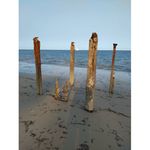
A metal marker installed along the Panza village coastline to measure sea levels. In previous years, seawater did not reach this point. PHOTO | THE CITIZEN REPORTER

Tanga and Pemba. Climate change is no longer a distant projection debated in policy rooms.

Along Tanzania’s coastline and its Indian Ocean islands, it is a lived crisis, steadily erasing land, unsettling graves, and quietly threatening tourism, one of the country’s most sensitive economic sectors.

From Pangani in Tanga Region to Panza Island in Pemba, rising sea levels, coastal erosion, and extreme weather are reshaping both geography and livelihoods.

What is unfolding is not only environmental degradation but also irreversible destruction of ecosystems, cultural heritage, and economic opportunity.

Islands disappearing, heritage fading   

Residents of Pangani recount the fate of Maziwe Island with visible distress.

Once shaded by trees and large enough for fishermen to rest and prepare their gear, the island has now been reduced to a shrinking sandbank.

“There were trees and areas where we kept our fishing tools. Today, nearly a whole acre has become part of the sea,” recalled one fisherman, Mr Mzee Osama.

For decades, Maziwe was both a fishing hub and a natural attraction with tourism potential.

Its disappearance reflects the gradual erosion of coastal assets that sustain livelihoods and local economies.

Communities in Ushongo and surrounding areas say the shoreline has shifted dramatically.

Land that was once several metres inland is now at the water’s edge. Small businesses, food vendors, kiosks, and boat repair spaces have vanished.

Fishing grounds used for boat construction are no longer safe, and some access routes are cut off entirely.

“If nothing is done, even the remaining land will not survive,” said one resident on anonymity.

Tourism under pressure

Tourism is a key pillar of Zanzibar’s economy, contributing up to 30 percent of Gross Domestic Product (GDP) and nearly 80 percent of foreign exchange earnings. Yet it is increasingly under strain.

Beaches that attract visitors are narrowing, while coral reefs, vital for diving and marine tourism, are degrading due to rising sea temperatures and destructive human practices.

Cultural heritage sites, including historic settlements and burial grounds, are also being lost.

In Panza Island, advancing seawater has reached graveyards, exposing remains and forcing repeated reburials.

For communities, this is a profound cultural loss. For tourism, it represents the disappearance of heritage assets that could attract cultural and historical visitors.

Experts say such destruction raises serious human rights concerns, particularly regarding the protection of burial sites and ancestral heritage.

Climate finance and the reality on the ground

Despite global commitments to support vulnerable countries, questions remain about how effectively climate finance is being used.

Tanzania is expected to receive support for adaptation, including coastal protection, but much of the funding is absorbed by planning, consultancy, and administrative systems rather than visible, community-level interventions.

In Pangani and Pemba, residents say they see little evidence of large-scale protective infrastructure such as seawalls or engineered coastal barriers.

“We hear about climate funding, but on the ground we still face the same problems,” said a community member in Panza who declined to be named.

Existing interventions, including small seawalls and mangrove planting, have helped in limited areas but remain insufficient compared to the scale of the threat.

Experts call for stronger transparency, accountability, and prioritisation of frontline adaptation projects that directly protect communities and economic assets.

Environmental degradation compounds the crisis

While climate change drives coastal erosion, local environmental practices have worsened the situation.

Mangrove cutting for lime production, sand extraction, and coral destruction during fishing have weakened natural coastal defences.

Mangroves and coral reefs act as buffers, reducing wave energy and stabilising shorelines, hence their destruction leaves coastal areas more exposed.

Seaweed farming, which provides income for women, has contributed to mangrove depletion, as farmers use wooden pegs sourced from the trees.

“When communities lack alternative livelihoods, they turn to the resources around them,” explains a local leader in Pemba, Mr Shehe Mohamed Makame.

“But in doing so, they unintentionally increase their own vulnerability,” he added.

This cycle reduces resilience, leading to further economic hardship and pressure on natural resources.

For tourism, degraded reefs diminish fish populations and reduce the appeal of marine attractions.

Eroded beaches make destinations less attractive to visitors seeking pristine coastal environments.

Legal gaps and weak enforcement

Tanzania has policies and laws aimed at protecting coastal and marine ecosystems, including the Environmental Management Act of 2004.

These frameworks assign responsibility to national and local authorities to safeguard sensitive environments.

However, enforcement remains weak. Regulations on mangrove cutting, sand mining, and coastal development are inconsistently applied, leaving infrastructure and settlements exposed.

“There are laws in place, but they are not being applied effectively. Without enforcement, the coast remains unprotected,” said an environmental officer in Pemba.

Government and community response

Efforts to address the crisis are underway but limited in scale. On Panza Island, a seawall has been constructed to reduce saltwater intrusion, allowing some farmers to resume cultivation.

Mangrove restoration campaigns have planted thousands of trees in recent years.

Community-led initiatives, including marine conservation networks, also help protect reefs and promote sustainable practices.

Yet these efforts face challenges, including limited funding, technical capacity, and coordination.

Residents say more comprehensive interventions are needed: large-scale coastal protection, relocation planning for high-risk areas, and investment in alternative livelihoods.

A fragile economic future

Tourism supports thousands of jobs, generates foreign exchange, and sustains local businesses.

If coastal erosion continues unchecked, the economic consequences could be severe.

Loss of beaches, marine ecosystems, and cultural heritage sites would weaken the sector, reducing income and employment.

Damage to infrastructure such as roads, markets, and fishing facilities would further disrupt local economies.

Experts warn that without urgent adaptation measures, climate change could reverse development gains and deepen poverty in already vulnerable communities.

A race against time

Across Pangani and Pemba, communities send a consistent message: the sea is advancing, and time is running out.

This crisis is no longer just environmental. It is an economic, cultural, and human rights challenge that requires urgent and coordinated action.

Stronger investment in coastal defences, better management of natural resources, and improved accountability in climate finance are critical.

Without such measures, the slow disappearance of islands, beaches, and heritage sites could accelerate, taking with it not only land but livelihoods, identity, and future opportunities.

As one resident in Pangani warns: “When the sea takes the land, it also takes our future.”