How new agricultural plan seeks balance between farming and nature in Tanzania
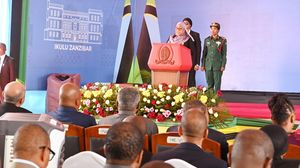
Ministry of Agriculture director of crop development, Dr Yasinta Msogela, speaks during the launch of the five-year Agricultural Sector Environmental Action Plan (ASEAP II) in Dodoma on Thursday, July 9, 2026. PHOTO | RACHEL CHIBWETE
Dodoma. The government said agricultural development must go hand in hand with environmental conservation, noting that implementation of the five-year Agricultural Sector Environmental Management Plan will help protect natural resources, improve production efficiency and strengthen resilience to climate change.
The remarks were made on Thursday, July 9, 2026, by the representative of the Permanent Secretary in the Vice President’s Office, Dr Fred Manyika, during the launch of the second phase of the Agricultural Sector Environmental Action Plan (ASEAP II) in Dodoma.
The launch was jointly organised by the Vice President’s Office (Environment), the Ministry of Agriculture and other stakeholders.
Dr Manyika who is also assistant director for environmental planning, said agriculture, which is the backbone of the national economy, depends heavily on land, water, forests and other ecosystems.
He said sustainable management of these resources was therefore essential for the sector’s long-term growth.
“Agricultural sector development must go hand in hand with environmental conservation and sustainable use of natural resources,” said Dr Manyika.
He said the plan supports the National Development Vision 2050, the Third Five-Year Development Plan, the National Environmental Policy of 2021 and international climate change agreements, including the Paris Agreement.
Dr Manyika commended the Ministry of Agriculture, experts and development partners for collaborating in preparing the plan.
He called on the government, private sector, development partners and citizens to work together in mobilising resources to ensure successful implementation.
Ministry of Agriculture Director of Crop Development, Dr Yasinta Msogela, said preparing the plan was an important step towards building a sustainable agricultural sector that promotes environmental conservation while supporting implementation of the National Development Vision 2050 and the Sustainable Development Goals (SDGs).
She said changing rainfall patterns, shifting agricultural seasons and increasing crop pests and diseases had continued to affect production, highlighting the need to invest in environmentally friendly technologies and farming practices.
Using sunflower production as an example, Dr Msogela said pollinators such as bees play a crucial role in improving yields, making environmental conservation an important part of increasing agricultural productivity.
“Even if we have quality seeds, without an environment that enables pollinators to perform their role, production efficiency will continue to remain low,” she said.
The Ministry of Agriculture’s head of environmental management unit, Ms Zainabu Shauya, said the plan aims to ensure all agricultural activities comply with environmental laws, regulations and guidelines.
She said environmental considerations would be integrated into agricultural sector development plans to ensure investments, irrigation projects and production activities are undertaken sustainably without degrading natural resources.
“Our goal during this five-year period is to ensure that all agricultural sector activities are conducted in accordance with environmental laws and regulations in order to build a sustainable agricultural sector,” said Ms Shauya.