How Tanzania plans to navigate looming Gulf crisis

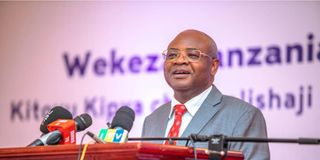
Minister of State in the President’s Office (Planning and Investment), Prof Kitila Mkumbo. PHOTO | COURTESY

Dar es Salaam. Tanzania is sharpening its economic contingency planning as rising instability in the Gulf continues to drive up fuel, freight and input costs, with policymakers warning that the external shock is already filtering through the economy and could intensify if disruptions persist.

Minister of State in the President’s Office (Planning and Investment), Prof Kitila Mkumbo, said the shock was already embedded in key cost structures due to Tanzania’s dependence on imported petroleum products and exposure to Gulf-linked supply routes.

“Tanzania, like many countries in East Africa, remains a net importer of petroleum products, with limited domestic refining capacity and no crude oil production,” he said, noting that a significant share of imports originates from Gulf producers whose exports rely on maritime routes passing through the Strait of Hormuz.

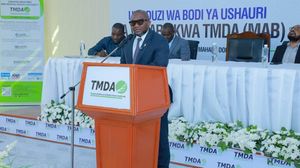
Prof Mkumbo was speaking during a consultative meeting organised by the National Planning Commission (NPC) in Dar es Salaam on Friday, May 22, 2026, bringing together government officials, development partners and private sector stakeholders.

He said the policy response must avoid broad fiscal expansion, warning that untargeted subsidies could destabilise macroeconomic balances.

“Government alone cannot fully absorb a shock of this magnitude through broad and untargeted fiscal interventions without risking macroeconomic stability,” he said.

Instead, the response framework is increasingly focused on targeted protection for vulnerable groups, improved supply chain efficiency and stronger coordination with the private sector and financial institutions.

At the centre of the strategy is energy security.

The minister outlined priority interventions, including strengthening strategic fuel reserves, expanding regional energy integration, diversifying fuel import sources and accelerating investment in renewable and alternative energy systems.

He said Tanzania was already advancing several of these measures, but stressed that the current crisis had heightened the urgency of implementation rather than policy design.

“These include strengthening strategic fuel reserves, expanding regional energy integration, diversifying sources of fuel imports, and accelerating investment in renewable and alternative energy sources,” he said.

“I am pleased to note that Tanzania is already pursuing a number of these initiatives at various stages of implementation. In many respects, the current crisis reinforces the urgency of accelerating these reforms and investments in order to strengthen our long-term economic resilience.”

United Nations Development Programme (UNDP) Resident Representative Shigeki Komatsubara said the crisis was amplifying structural vulnerabilities in developing economies, particularly those dependent on imported fuel and globally integrated logistics systems.

He said the rising cost of living was having the greatest impact on low-income households, informal workers and small and medium enterprises, which have limited capacity to absorb price shocks.

“As Tanzania continues to pursue an ambitious development agenda under the Fourth Five-Year Development Plan (FYDP IV) and the long-term aspirations of Vision 2050, the evolving global context reminds us of the urgent need to strengthen economic resilience, reduce external dependencies, and protect the most vulnerable,” he said.

The NPC said Tanzania’s response framework was being structured around short-term stabilisation measures and medium-term structural adjustments aligned with the Fourth Five-Year Development Plan and Dira 2050.

Permanent Secretary (Planning) and NPC executive secretary Dr Tausi Kida said the commission would institutionalise continuous monitoring of key indicators, including fuel prices, fertiliser supply, foreign exchange movements and household welfare metrics, to improve anticipatory policy responses.

“NPC will continue to work with relevant ministries, departments, agencies, the private sector and development partners to institutionalise periodic assessments of global developments that may affect Tanzania’s economy. The intention is to support timely policy advice, strengthen preparedness and ensure that decisions are guided by reliable data and practical analysis,” she said.

Dr Kida added that policy coherence was critical to ensure that short-term mitigation measures do not undermine fiscal sustainability or long-term development priorities.

Officials said the government’s approach was shifting towards tighter coordination between macroeconomic management, energy policy and trade logistics, reflecting the cross-sector nature of the shock.

Despite mounting risks, policymakers emphasised that the crisis was being treated both as an immediate macroeconomic challenge and as a structural turning point.

The government continues to express hope for a diplomatic resolution to the conflict, although officials privately acknowledge that volatility in global energy markets is likely to persist in the near term, maintaining pressure on import costs and inflation.

For Tanzania, the Gulf crisis is increasingly being viewed not as an isolated external disruption, but as a test of the country’s energy dependence, trade structure and resilience framework under Dira 2050.