Dodoma. The government has outlined an ambitious roadmap to fast-track implementation of Vision 2050, with a strong emphasis on environmental sustainability, climate resilience and coordinated development of the blue economy.
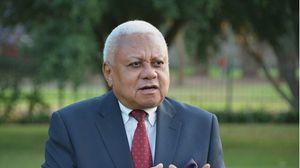
The plans were revealed on Tuesday April 21, 2026 as the Minister of State in the Vice President’s Office (Union and Environment), Hamad Yusuph Masauni, tabled budget estimates for the 2026/27 financial year in Parliament.
The minister asked the House to approve a total of Sh99.98 billion for the 2026/27 fiscal year. This amount represents an increase of Sh18.12 billion, compared to the 2025/2026 budget, which stood at Sh81.86 billion.
Presenting the proposals, Masauni said the government will use the upcoming budget to strengthen institutional coordination and accelerate delivery of strategic priorities under Vision 2050, particularly the third pillar focused on environmental conservation and climate change resilience.
He noted that a new strategic plan for 2026–2030, alongside the Strategic Transformation Programme for Sustainable Environment, will serve as key instruments in translating long-term national aspirations into actionable programmes.
“The initiative is expected to mobilise nationwide participation, elevate environmental protection to a central development agenda and ensure high-level oversight in implementation,’’ he said.
According to him, a central component of the government’s agenda is the structured coordination of the blue economy, which has been identified as a major driver of economic growth and job creation. Mr Masauni said the government will establish a comprehensive coordination framework, including the preparation of guidelines and a Blue Economy Investment Master Plan to guide public and private sector participation.
This effort is aligned with the National Blue Economy Policy of 2024 and is intended to create an enabling environment for investment, innovation and efficient resource use.
Tanzania's Blue Economy Investment Master Plan focuses on sustainable utilization of marine and freshwater resources (2025–2035) to boost GDP, targeting fisheries, tourism, and infrastructure development. Key areas include aquaculture, deep-sea fishing, seaweed farming, maritime transport, and marine energy, aligned with the National Blue Economy Policy 2024 and Zanzibar Development Plan.
In practical terms, he said, the government plans to begin implementation of a national marine spatial planning process covering territorial waters, starting with data collection, ecological assessments and mapping of human activities.
Public awareness campaigns will also be rolled out to build understanding and support for sustainable use of marine resources. The initiative is expected to boost the sector’s contribution to gross domestic product, expand employment opportunities and reduce conflicts over resource use.
The minister further emphasized that public-private partnerships will play a critical role in unlocking capital, technology and expertise needed to implement large-scale blue economy projects. “Capacity building for professionals and awareness programmes targeting government institutions, parliamentary committees and local communities are also planned to ensure inclusive participation.
On environmental management, the government expects to intensify coordination across ministries, regional administrations and local government authorities to implement key policies and laws, including the National Environmental Policy of 2021 and the Environmental Management Act.
“Efforts will focus on improving access to environmental data through digital systems, strengthening public education and enhancing compliance with regional and international environmental agreements,’’ Mr Masauni noted.
Among key notable events according to the minister, Tanzania is set to host the 12th Conference of Parties to the Nairobi Convention on marine and coastal environment protection in October 2026 in Dar es Salaam. The meeting is expected to open new opportunities for investment, strengthen regional cooperation and promote locally produced goods.
In addition, key priority areas for 2026/27 also include large-scale environmental restoration projects, climate resilience programmes in vulnerable regions such as Kigoma, and ecosystem conservation initiatives targeting lakes, forests and coastal zones. The government further plans to plant billions of trees, expand green spaces and implement community-based projects to address climate change impacts while improving livelihoods.
“Other priorities include strengthening carbon trading systems through the establishment of a national carbon registry and improving monitoring, reporting and verification mechanisms,’’ said the minister adding that the government will also expand environmental education, enforce pollution control measures and promote clean cooking energy under the national strategy.
In its 2026/27 plans regarding to union matters, the Vice President’s Office is expected to continue enhancing cooperation between the union government and the government of Zanzibar, including resolving outstanding union issues, promoting public awareness and supporting joint development initiatives.
Mr Masauni told parliament that the combined measures are designed to ensure that environmental sustainability, economic growth and social development move in tandem as Tanzania advances towards its long-term development vision.
He called for continued collaboration from development partners, the private sector and citizens to realise the country’s transformation agenda.
Register to begin your journey to our premium contentSubscribe for full access to premium content