Dar es Salaam. Members of the Presidential Commission of Inquiry into the October 2025 General Election events have issued clarifications on key findings, including the death toll and the authenticity of visual evidence, following growing public debate over what transpired.
The clarifications come as authorities and stakeholders continue to engage the public on the report’s findings and recommendations aimed at fostering accountability, reconciliation and long-term stability.
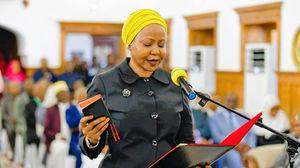
The remarks were made by commissioners, including Ms Radhia Msuya and retired Lieutenant General Paul Ignace Mella, as part of efforts to address concerns and misconceptions after the report’s release.
Speaking on the number of fatalities, Ms Msuya reaffirmed that the commission recorded 518 deaths, as earlier presented by its chairman, noting that the figure was compiled from multiple credible sources.
“As presented by the chairman, the number of people who died is 518. This figure is based on reports from the Ministry of Health, which coordinates both public and private hospitals,” she said.
She said that the commission also relied on testimonies from citizens and witnesses, including families who lost relatives during the unrest.
“There are individuals who reported that they buried their relatives without taking the bodies to hospitals or notifying relevant authorities due to the situation at the time,” she said.
Ms Msuya emphasised that the figure remains subject to change should additional verified information emerge.
“This number may change if new information is received. However, based on the data available at the time the commission concluded its work, the total stood at 518,” she said.
She further noted that while deaths are ordinarily registered through the Registration, Insolvency and Trusteeship Agency (Rita), some cases were not formally recorded.
“Our sources included hospitals and individuals who did not go through official registration systems. The commission’s report is based on submissions from various institutions and members of the public,” she added.
On the issue of visual evidence, Lt Gen (Rtd) Mella said the commission undertook a thorough verification process after receiving numerous images and videos from different sources, including social media.
“The commission’s responsibility was to gather evidence and establish the truth. We received many images—both still and video—from witnesses, mobile phones, CCTV cameras and online platforms,” he said.
Given the technical nature of the task, he said, the commission enlisted experts, including specialists from Ardhi University, to analyse the materials.
“We sought the expertise of professionals, particularly in remote sensing, to assess the authenticity of some of the images, including satellite imagery,” he said.
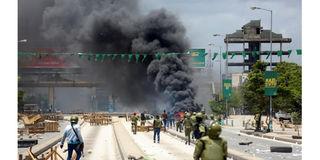
According to Lt Gen Mella, the analysis revealed that while some images were genuine and directly related to the events of October 29 and subsequent days, others were misleading.
“There were images that matched the locations and incidents under investigation, and these were considered genuine. However, some were not from Tanzania at all,” he said.
He added that experts established that certain images circulating online had previously been used in other contexts.
“Some images were traced to places such as Kenya and Gaza, meaning they were not linked to the events in Tanzania,” he said.
The commission also identified instances of digital manipulation.
“In some cases, images were altered using artificial intelligence—for example, increasing the number of people or changing backgrounds to make them appear as if they were taken in Dar es Salaam,” he said.
He said the clarifications were necessary to counter misinformation and ensure the public understands the basis of the commission’s findings.
“In summary, some images were genuine and aligned with the events, while others were either taken from different locations or manipulated. It is important for the public to verify information before drawing conclusions,” he said.