Bagamoyo. Signs of progress are beginning to emerge as government initiatives, community mobilisation and development partnerships gather pace to address the plight of students walking long distances to school in Bagamoyo District.
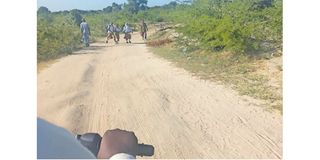
An investigation by The Citizen in Fukayosi Ward has revealed that some students walk between 14 and 30 kilometres each day to access education.
For years, the “one ward, one school” policy was seen as a solution to Tanzania’s education challenges. However, findings show that in expansive rural wards such as Fukayosi, a single school is inadequate.
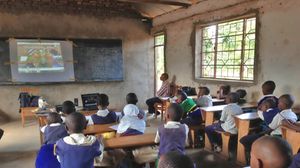
One of the most notable developments in the area is the construction of Mkenge Secondary School, a project highlighting the impact of community mobilisation despite bureaucratic delays. Students from Mkenge village, located about 11 kilometres from the main road, have long faced limited access to secondary education.
Village chairman Saidi Mbwanga said the foundations for the first three classrooms have already been laid.
“Construction is progressing well through joint efforts between residents and the Bagamoyo District Council,” he said.
“By the end of this year, the main construction phase should be complete, bringing to an end the long walks children endure to attend school.”
The school is expected to provide a direct transition for pupils from Mkenge Primary School, reducing the need to travel long and often dangerous distances to the ward’s only secondary school.
“We still need support to complete the classrooms quickly. If possible, dormitories should also be included. This will benefit not only Mkenge but the entire Fukayosi Ward,” Mr Mbwanga added.
Daily hardship persists
Students and families in Fukayosi continue to face significant challenges. For some, the daily journey exceeds 15 kilometres, worsened by the lack of transport and affordable boarding facilities.
One parent described renting a room near the ward secondary school for between Sh10,000 and Sh15,000 per month as a “necessary compromise” due to high hostel fees. Others cited chronic fatigue, missed lessons and declining academic performance.
Mkenge Village executive officer Xavery Mtunze said some parents even encourage their children to underperform in Standard Seven examinations to avoid placement in distant schools they cannot afford.
“It is a quiet tragedy where poverty limits opportunity before learning begins,” he said.
Education experts warn that long walking distances increase vulnerability to exploitation, reduce concentration and contribute to cumulative learning losses.
Bagamoyo Town Council executive director Shauri Selenda said the dispersed settlement patterns in the Coast Region have worsened the situation.
Many residents are farmers and pastoralists living far apart rather than in centralised villages.
“When communities are scattered, it becomes difficult for a single school to serve everyone effectively,” he said.
To address this, the government has adopted a “satellite schools” approach, establishing smaller learning centres closer to remote communities. Two such primary satellite schools are already operating in Fukayosi.
Policy shift under way
Bagamoyo Member of Parliament Subira Mgalu said the government is adjusting its approach to reflect local realities.
“Each district has its own geographical characteristics. While we have not yet achieved a secondary school in every village, priority is given to areas facing the greatest challenges,” she said.
She cited Mapinga Ward as an example, where more than three secondary schools have been constructed to meet demand. In Fukayosi, she said, Mkenge Secondary School is part of wider efforts to improve access.
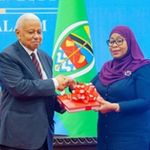
Deputy Minister of State in the Prime Minister’s Office (Regional Administration and Local Government) Reuben Kwagilwa said the government is moving beyond the “one secondary school per ward” model to increase the number of secondary schools in attempt to address challenges such as populated schools and long distances.
“In some areas, wards are too large and geographically complex for one school to be sufficient,” he said. “We are now constructing up to three schools per ward in line with the 2019 School Construction and Maintenance Strategy.”
The strategy sets maximum walking distances of 1.5 kilometres for pre-primary, three kilometres for primary and five kilometres for secondary education. In Bagamoyo, some students exceed these limits by up to 300 percent.
Education researcher Muhanyi Nkoronko said current interventions are a step in the right direction but insufficient on their own.
“After hours of walking, students are physically exhausted and unable to engage effectively in lessons,” he said.
Dr Nkoronko proposed a three-pronged approach: increasing the number of schools in large wards, subsidising boarding facilities and improving rural transport networks.
“Dormitories are the most effective solution, but costs must be reduced to ensure accessibility,” he said.
Improving rural roads to support shared transport such as daladalas and bajajis could also provide an alternative for students unable to access boarding.
Impact on mental wellbeing
Psychologists warn that long commutes also affect students’ mental health. Mr Hussein Omary said exhaustion and anxiety undermine learning.
“A child who arrives at school tired or anxious about the journey cannot perform on equal terms,” he said.
He added that bringing schools closer would improve both attendance and cognitive performance.
The investigation found a strong sense of community resilience, with residents in Mkenge contributing resources towards classroom construction while government efforts to expand school infrastructure continue.
As the sun sets over the dusty roads of Bagamoyo, many students still face long journeys home. However, with new schools under construction and policy adjustments under way, hope is growing.
For Tanzania’s next generation, the goal is to ensure that time is spent learning in classrooms rather than walking long distances. While challenges remain, the path towards equitable access to education is becoming clearer.
Register to begin your journey to our premium contentSubscribe for full access to premium content