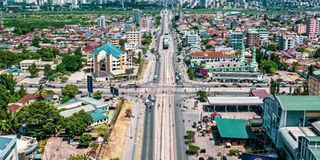
Dar es Salaam. Motorists using Morogoro Road, particularly along the busy Kimara–Ubungo stretch, are being urged to follow designated diversion routes as workers remove old tarmac and lay new surfaces on the critical corridor.
The temporary traffic adjustments are designed to ensure construction progresses safely while motorists continue to move through the area with minimal disruption.
The project, part of Bus Rapid Transit (BRT) Phase I, is being carried out by Sichuan Road and Bridge Group Corporation Ltd (SRBG) under the supervision of the Tanzania National Roads Agency (Tanroads), with funding from the World Bank.
Speaking to The Citizen, Tanroads Project Manager for BRT Phases I and IV, Mr Allan Natai, said the contractor has now reached the milling stage—removing the worn-out top asphalt layer to pave the way for a new, more durable surface.
“This phase involves stripping off the old road surface to make way for a new asphalt layer that aligns with the recently expanded sections,” he explained. “To minimise disruption, one lane will be closed at a time while traffic is redirected to available lanes. This shows the project is nearing completion.”
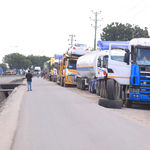
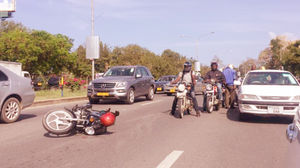
Mr Natai noted that the recent road expansion has already eased congestion along the corridor. However, mechanical failures, particularly involving heavy trucks, remain a leading cause of traffic snarl-ups.
“On average, more than ten trucks break down daily, causing delays and sometimes accidents. We work closely with contractors to promptly remove stalled vehicles. We urge truck operators to ensure their vehicles are roadworthy—cases such as trucks running out of fuel on the road are simply unacceptable,” he said.
Last month, Tanroads acting CEO Mr Ephatar Mlavi confirmed that the Kimara–Ubungo stretch is expected to be completed by May this year, with the official launch planned for September.
He said Morogoro Road serves as a primary gateway to upcountry regions and neighbouring landlocked countries, including the Democratic Republic of Congo, Rwanda, Burundi, Zambia, Uganda, Malawi, and Zimbabwe.
Beyond Kimara–Ubungo, progress across other BRT corridors continues, although at a slower pace due to logistical challenges, including relocating utilities such as water and electricity infrastructure. Currently, the city centre–Tegeta section is 45–50 percent complete, while the Gongo la Mboto–city centre route is nearly finished at 99 percent.
Mr Natai emphasised that strict supervision is key to ensuring quality delivery. “Without proper oversight, a contractor could finish quickly, but quality would be compromised. We are committed to delivering durable infrastructure, even if it takes more time,” he said, appealing for public patience.
The upgraded Kimara–Ubungo section includes enhanced safety features, such as dedicated service roads for pedestrians and cyclists, complemented by improved street lighting.
Persistent traffic congestion in Dar es Salaam continues to affect residents and the economy, with lost productivity, longer commuting hours, and reduced rest time among the major impacts. Environmental concerns are also rising, as idling vehicles contribute to increased emissions.
According to the March 2025 Traffic Time Index, a journey that should take 30 minutes can stretch to 70 minutes during peak hours. On average, commuters lose about 2.5 hours daily—equivalent to nearly three working days every two weeks.
Authorities continue to urge motorists to follow the diversion routes. “Following the diversion routes is critical not just for your safety but also to ensure the project progresses efficiently,” Mr Natai said. “These works are in the final phase, and once completed, motorists can enjoy smoother, safer, and faster journeys along the entire corridor.”
Road users say the improvements are already noticeable. “Traffic flows better,” said taxi driver John Mhando, while commuter Fatma Ally added, “Trips feel much faster and shorter than before.”