Dodoma. National Service (JKT) has called up 60,000 Form Six leavers for compulsory national service training, marking an increase from the earlier 40,000 intake.
The increase follows remarks by the Minister for Defence and National Service during the budget presentation, where he announced the expansion of the programme.
National Service said the long-term plan is to ensure all Form Six graduates proceed directly to training camps.
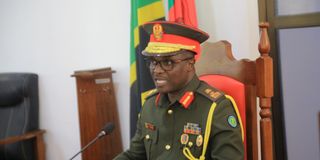
Addressing journalists on Thursday, May 28, 2026, on behalf of the National Service Commander, Major General Rajabu Mabele, JKT Chief of Administration Brigadier General Hassan Mabene said recruits will begin reporting from June 1, 2026.
He said the programme covers students who completed Form Six in 2026 from both Mainland Tanzania and Zanzibar.
“Following this call-up, JKT has assigned camps where recruits will undergo training. They are required to report between June 1 and June 7, 2026,” said Brigadier General Mabene.
He listed several designated camps, including Rwamkoma (Mara), Msange (Tabora), Ruvu (Coast), Mpwapwa, and Makutupora (Dodoma), Mafinga (Iringa), Male (Ruvuma), Mgambo and Maramba (Tanga), Makuyuni, Oljoro (Arusha), Bulombora (Kagera), Kanembwa and Mtabila (Kigoma), Itaka (Songwe), Luwa, Milundikwa (Rukwa), Nachingwea (Lindi), and the JKT Leadership College (CUJKT) in Kibaha, Coast Region.
He added that candidates with vision and physical disabilities should report to Ruvu Camp in Mlandizi, Coast Region, which has suitable facilities to accommodate them.
Recruits are required to carry specific items, including dark blue shorts with elastic waistbands, knee-length green t-shirts, green or blue sports shoes, two sea-blue bedsheets, and black socks.
They must also bring warm clothing for those assigned to colder camps, as well as essential academic documents, including birth certificates and Form Four completion certificates.
JKT said the training is an important national programme and urged selected youths to take part with pride, noting that not all will proceed to university, while others will remain in communities where skills acquired will help them build livelihoods.
National service was reinstated in 2013 after a long suspension, when only 5,000 youths were initially selected, raising concerns that some schools were not represented.