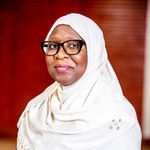
For more than two decades, she has helped to shape policies, training programmes and standards that reduce post-harvest losses and improve food safety across Tanzania
Dar es Salaam. For Pendo Bigambo, agriculture has never been only about what happens in the field.
It is about what happens after harvest-where food security is protected or lost, where incomes are secured or reduced and where women’s invisible labour finally has the chance to be recognised.
For more than two decades, she has worked quietly but consistently behind national agricultural systems, helping shape policies, training programmes and standards that reduce post-harvest losses and improve food safety across Tanzania.
Yet beyond the technical achievements, her deeper contribution lies in ensuring women farmers, who carry much of the responsibility for post-harvest handling, are not left behind in the country’s agricultural transformation.
She currently works as Ag. Director Crop Development and Standard Setting at COPRA.
Her journey reflects the spirit of this year’s The Citizen Rising Woman Initiative theme: Give to Gain, Elevate Her Rise.
Rather than focusing on personal recognition, she has spent her career strengthening systems that allow others to succeed.
“Success has never been about me alone,” she says thoughtfully. “It has always been about building structures that support other people to move forward,” she says.
Her leadership style is shaped less by visibility and more by purpose ensuring policies respond to real farmers’ needs and that women gain equal space within agricultural value chains.
That mindset did not begin in boardrooms or policy meetings. It started at home.
Raised in a family where education, discipline and responsibility were strongly valued, Pendo grew up understanding that achievement carried obligations beyond the individual.
Her parents encouraged curiosity and independent thinking and their home often welcomed relatives pursuing education opportunities.
“I learnt early that growth becomes meaningful when it includes others,” she recalls. “That lesson stayed with me.”
Those values continued to guide her through university and into public service. At the Sokoine University of Agriculture, she built a strong technical foundation in horticulture.
Later, her Master’s degree in International Trade at the University of Dar es Salaam expanded her understanding of markets and agricultural systems beyond production itself.
Together, the two fields strengthened her ability to connect farm-level realities with national-level planning.
But she insists her journey has never been a solitary one.
“I have come this far through support from family, mentors and colleagues,” she says. “No one succeeds alone.”
Since joining the Ministry of Agriculture in 2004, Pendo has played an important role in strengthening Tanzania’s post-harvest management systems, an area that often receives less public attention than production but remains critical for food security and farmer livelihoods.
Across the country, a significant share of food losses occurs after crops leave the field. Poor storage, limited processing capacity and inadequate market preparation can reduce both food availability and farmer incomes.
For women farmers especially, these losses affect daily household welfare directly.
Her work has contributed to the development of national guidelines on post-harvest handling of fruits, vegetables, cereals and pulses, as well as strategies promoting safer storage, improved processing and stronger market linkages.
“When farmers reduce post-harvest losses, they protect both their income and their household food supply,” she explains. “That change is especially important for women.”
Through nationwide training programmes for extension workers and farmers, she has helped strengthen practical knowledge on post-harvest handling, cold-chain management and food safety, including aflatoxin control. These trainings continue to reach communities across the country, ensuring technical information translates into everyday farming practice.
It was during this field work that she began noticing a pattern that would shape the direction of her career.
Women were doing most of the post-harvest work—but they were rarely involved in decisions about technologies, markets or training opportunities.
“I saw women working extremely hard after harvest,” she says. “But they were not always part of the decisions that affected their work.”
That realisation pushed her to look beyond technical solutions and begin integrating gender perspectives into agricultural planning processes.
Her involvement in developing national guidelines on gender mainstreaming in aflatoxin control marked a turning point.
Although she was not initially trained as a gender specialist, her experience working closely with farmers helped her recognise the importance of designing policies that reflected women’s realities.
“That is when I understood inclusion must be intentional,” she explains.
Working alongside gender practitioners and development partners strengthened her ability to translate this understanding into practice.
Training programmes were redesigned to ensure women participated actively and gained skills that strengthened their confidence and bargaining power within markets.
“When women participate equally in training, the benefits reach entire households,” she says.
Today, her influence extends beyond training programmes into national planning systems themselves.
As a departmental budget officer within the Ministry of Agriculture, she contributes to the preparation of annual plans and resource allocations that shape agricultural priorities across the country.
By working with gender-disaggregated data, she helps identify gaps affecting women farmers and advocates investments that respond directly to those needs.
For her, gender-responsive budgeting is not simply a reporting exercise.
“Inclusion must begin at the planning stage,” she says. “If it does not, women remain invisible during implementation.”
Her contribution to strengthening extension systems nationwide continues to improve farmers’ access to safer storage practices, better processing techniques and market-oriented production skills.
Across communities, more farmers—particularly women—are adopting improved handling methods that reduce losses and improve produce quality.
The results may appear gradual, but they are meaningful.
Women who once struggled to preserve produce after harvest are now engaging more confidently in markets and making better use of available technologies.
“These changes take time,” she says. “But when they happen, they transform livelihoods.”
One of the most significant milestones in her career came through the Lishe Endelevu Project implemented with support from Save the Children.
In 2019, she successfully mobilised resources that led to the preparation of eight national guidelines on Good Agricultural Practices and best post-harvest management of fruits and vegetables.
The guidelines were launched during World Food Day in October 2020 and are now supporting improved food handling and nutrition practices across several regions.
“It was encouraging to see communities begin adopting improved practices,” she says. “These changes contribute to healthier families.”
In some areas, schools have started producing vegetables for feeding programmes, while households are gradually diversifying diets beyond traditional staples.
Although nutrition outcomes depend on many factors, she believes improved production and handling practices are helping shape positive change at community level.
Her collaboration with organisations including Helvetas Swiss Intercooperation, the Aga Khan Foundation, FAO and Sokoine University of Agriculture has further strengthened extension training systems across multiple regions.
Through these partnerships, extension workers and lead farmers have gained skills in climate-smart agriculture, maize post-harvest management, vegetable handling and rice quality improvement for better markets.
Such collaboration, she believes, is essential for agricultural transformation.
“No institution can work alone,” she says. “Partnerships make progress possible.”
Beyond training systems, her influence also extends into agricultural standardisation through her role as a technical committee member at the Tanzania Bureau of Standards.
There, she contributes to the formulation and revision of national, East African and continental standards for cereals, pulses and their products—work that strengthens food safety and improves market competitiveness.
Participation in regional harmonisation meetings and international platforms such as the All Africa Postharvest Management Congress and Exhibitions in Addis Ababa has further strengthened her policy engagement beyond national borders.
“International platforms allow us to learn from each other,” she says. “They help strengthen our national systems.”
Despite her policy-level responsibilities, she remains closely connected to farmers themselves through training programmes and nationwide assessments of post-harvest losses across food crop value chains.
Her involvement ensures strategies remain grounded in real experiences from the field.
She has also supported training programmes on fruit and vegetable processing—an area increasingly opening income opportunities for women engaged in small-scale agribusiness.
“When farmers add value to their produce, they strengthen household resilience,” she explains.
Over the years, her dedication has been recognised through several honours, including the Best Worker award in the Department of National Food Security at the Ministry of Agriculture and the Best Student in Plant Protection award at Sokoine University of Agriculture.
Yet she views recognition not as a destination but as encouragement to continue serving.
“These achievements reflect teamwork,” she says. “They motivate me to keep supporting others.”
Mentorship remains one of the strongest pillars of her leadership approach. She believes experienced professionals carry responsibility to guide younger generations, particularly women entering technical careers in agriculture.
“Mentorship creates confidence,” she says. “It helps young women believe they can succeed.”
Through her continued engagement with extension workers, farmers and development partners, she encourages young professionals to see agriculture not as a fallback option but as a sector of innovation, opportunity and leadership.
“Agriculture is transforming,” she says. “Young people must position themselves to benefit from that transformation.”
Looking back, Pendo identifies two influences that shaped her journey most strongly: the values she learnt growing up in a supportive family environment and her close interaction with farmers across Tanzania. Together, they strengthened her commitment to practical solutions that improve livelihoods while strengthening national systems.
Her message to women facing uncertainty in their careers reflects both experience and hope.
“Growth is not always linear,” she says. “Sometimes it is an opportunity to reflect, learn new skills and reposition yourself.”
Through policy leadership, farmer training and gender-responsive planning, she continues to demonstrate that when one woman rises with purpose, she creates pathways for many others to rise with her and in doing so, strengthens the future of agriculture itself.