PM backs rally ban on security grounds, opposition to sue

Dar es Salaam. Fresh political tension has emerged following the government's decision to suspend public political rallies, with Prime Minister Mwigulu Nchemba defending the move as a security measure while opposition parties prepare legal and political responses.

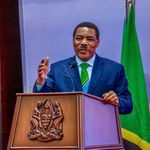
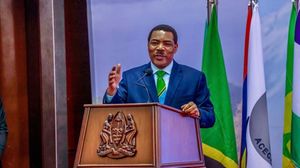
Speaking at a public rally in Ikungi District, Singida Region, Mr Nchemba urged Tanzanians to focus on safeguarding peace and national security rather than debating political freedoms.
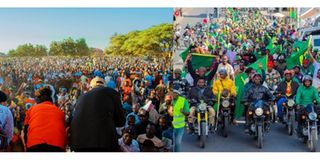
He said the country’s stability and protection of citizens and national resources should take precedence.

"There is no need for arguments over this issue. Our responsibility is to protect the country, its people and its resources," he said.

His remarks come days after Minister of State in the Prime Minister's Office responsible for Home Affairs, Mr Patrobas Katambi, announced a temporary suspension of public political rallies.

The announcement, made in Parliament on June 26, 2026, cited security concerns following reports of possible unrest linked to social media mobilisation ahead of the Sabasaba trade exhibition period.

According to Mr Katambi, authorities had received intelligence indicating potential threats associated with calls circulating online for demonstrations planned for July 7, a date traditionally associated with the annual trade fair.

The decision marks the second major suspension of political rallies in recent years.

The first was imposed in 2016 during the administration of the late President John Magufuli before it was lifted in January 2023 by President Hassan.

The latest move has attracted criticism from political stakeholders and legal commentators, some of whom argue that it conflicts with Article 20(1) of the Constitution of the United Republic of Tanzania as well as provisions of the Political Parties Act and laws governing public assemblies.

Mr Nchemba insisted the government was not acting against political parties but was responding to security concerns.

"The government has no conflict with any political party. However, security issues must come first," he said.

He further claimed that intelligence information suggested attempts to recruit and finance young people to create unrest.

"There are people being paid to mobilise young people to go into the streets. We cannot allow that," he said.

The Prime Minister also warned against what he described as coordinated efforts to destabilise the country, saying authorities would not tolerate actions likely to threaten peace and public order.

Earlier, Mr Katambi defended the government's decision, saying it was based on verified intelligence reports and aimed at preventing disruptions during a period expected to attract large public gatherings.

He said the suspension would remain in place until authorities were satisfied that the security situation had stabilised.

"The government's responsibility is to protect people and property," he said, adding that preventive measures were necessary to avoid incidents of violence and destruction.

However, opposition parties have strongly opposed the decision.

Chadema announced plans for a four-day closed-door meeting to assess the country's political environment and discuss possible legal and organisational responses to the directive.

ACT-Wazalendo also signalled its intention to challenge the decision in court, arguing that public rallies are a constitutional right rather than a privilege granted by the State.

The party said the suspension was unlawful and inconsistent with democratic principles.

Meanwhile, the women's wing of Chama Cha Mapinduzi (CCM) announced the postponement of its 2026 Women's Week celebrations that had been scheduled to take place in Mwanza Region, citing prevailing national circumstances.

In a separate reaction, religious leader Bishop Benson Bagonza questioned both the legal basis and the procedure followed in announcing the suspension.

He raised concerns over why the directive had been delivered in Parliament and questioned whether political rallies should be treated as a constitutional right or as a government concession.