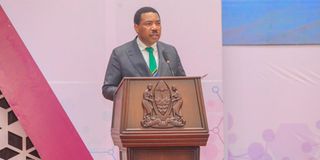
Dar es Salaam. Prime Minister Mwigulu Nchemba has directed the Ministry of Health to prepare a comprehensive national strategy to address the anticipated rise in cancer cases, following warnings that the global burden of the disease is expected to increase in the coming years.
Citing projections by the World Health Organisation (WHO) that cancer cases worldwide could rise by more than 60 percent by 2030, Dr Nchemba said Tanzania must act to strengthen prevention, early detection and treatment services.
He made the remarks during the commemoration of the 30th anniversary of the Ocean Road Cancer Institute (ORCI), saying the country cannot afford to wait until the impact is fully felt. He urged health authorities to improve preparedness through better planning, investment in infrastructure and expansion of specialised services.
“We must respond proactively. The projected increase calls for a clear, well-coordinated strategy that prioritises prevention, early screening and timely treatment,” he said.
The Prime Minister said that the strategy should also focus on public awareness campaigns, vaccination programmes, research and the training of more oncology specialists.
He reaffirmed the government’s commitment to safeguarding public health, noting that effective planning would help reduce preventable deaths and ease pressure on families and the healthcare system.
Dr Nchemba called on stakeholders, including the Ministry of Health, to strengthen public awareness campaigns and promote early screening and preventive measures. These include vaccination against Human Papillomavirus (HPV) and hepatitis, tobacco control and the promotion of healthy lifestyles.
He stressed the importance of early detection, warning that delayed diagnosis significantly reduces survival chances.
Dr Nchemba also cautioned against misconceptions and unscientific beliefs that prevent patients from seeking professional medical care.
“Directing patients towards unfounded beliefs delays diagnosis and reduces their chances of receiving timely treatment. We must continue to educate communities at all levels,” he said.
He commended health experts for progress made over the past three decades, saying the anniversary marked achievements in saving lives and advancing cancer care in Tanzania and across Africa.
Dr Nchemba said the government has put in place a system intended to guarantee access to preventive services, early screening, treatment and follow-up care for cancer, regardless of income.
“Through this system, every Tanzanian will be assured of access to preventive services, early diagnosis, treatment and follow-up for cancer without discrimination based on financial status,” he said.
He noted that improvements in the health financing framework would help remove financial barriers, protect families from medical expenses and enable better planning and funding of cancer services.
On strengthening healthcare infrastructure, Dr Nchemba said more than Sh18.5 billion has been invested in the construction and establishment of specialised cancer services, including the installation of a modern radiotherapy machine.
He added that the availability of cancer medicines has increased to 90 percent, improving access to essential drugs.
The government is also expanding services geographically. Dr Nchemba cited the construction of the Mbeya Cancer Centre, the installation of radiotherapy machines at Kilimanjaro Christian Medical Centre (KCMC), and the construction of a dedicated building for radiotherapy equipment at Benjamin Mkapa Hospital in Dodoma.
“These investments demonstrate our commitment to bringing services closer to the people and reducing the burden of travelling long distances for specialised care,” he said.
The Acting Chief Executive Officer of the Ocean Road Institute, Dr Diwani Msemo, has stressed that as the Institute celebrates 30 years of its existence, it remains deeply grateful to the Sixth Phase Government for the significant reforms that have been implemented.
“A great deal has been achieved, and it is undeniable that the investment made over the past five years has been substantial. This is not merely a celebration; we are proud of our continued commitment to serving and safeguarding the lives of Tanzanians from cancer,” she said.