Policy credibility, not capital alone, defines Africa’s next growth phase

From right: Goolam Ballim, chief economist at Standard Bank Group, Dr Michael Power, managing director at KasKazi Consulting, and Ms Yvonne Mhango, Africa Research Economist at Bloomberg, during a panel session at the African Markets Conference hosted by business broadcaster Ms Gugulethu Mfuphi. PHOTOS | REPORTER

Cape Town. Africa’s economic trajectory is increasingly influenced by geopolitics, trade realignment, and policy credibility, rather than just capital flows, according to business leaders and economists at the African Markets Conference 2026. This shift underlines both the opportunities and risks facing fast-growing regions, such as East Africa.

Luvuyo Masinda, Chief Executive of Corporate and Investment Banking at Standard Bank, opened the discussion on Africa’s position in the changing global landscape. He emphasised that Africa must transition from being a passive recipient of capital to an active player in shaping trade, infrastructure, and industrial capacity.

Mr Masinda pointed out that for economies like Tanzania, Kenya, and Rwanda, long-term growth will depend less on short-term capital inflows and more on developing productive capacity, enhancing regional trade connections, and fostering competitive private sectors that align with national development goals.

“The question before us is not whether capital exists; it does,” Mr Masinda stated. “The real question is whether African markets can consistently access that capital at scale, at an appropriate cost, and with sufficient depth to sustain long-term growth.”

Set against a backdrop of global geopolitical fragmentation, tighter development finance, and increased risk repricing, the African Markets Conference 2026 focused on how African economies can strengthen fiscal credibility, provide regulatory certainty, and enhance institutional execution. These strategies aim to reduce risk premiums and attract more investment.

Mr Masinda noted that Africa’s financing needs are rising rapidly due to demographic growth, urbanisation, energy demand and infrastructure deficits estimated at between $130 billion and $170 billion annually.

Yet he stressed that Africa also holds significant domestic capital, estimated at about $4 trillion in pension funds, insurance assets and bank balance sheets, much of which remains underutilised due to shallow capital markets and weak project preparation.

The themes mirrored strongly developments in East Africa, particularly Tanzania, where the government is seeking to accelerate infrastructure investment, energy projects and industrialisation while maintaining debt sustainability.

Analysts say Tanzania’s push to deepen its domestic capital markets, improve project bankability and strengthen fiscal frameworks will only be successful and sustainable if it focuses on “market design” rather than transactional volume.

Speaking during the Financial Stability Board Regional Consultative Group meeting in Zanzibar recently, Bank of Tanzania Governor Emmanuel Tutuba said countries must remain vigilant against mounting global and domestic risks.

 “Despite these headwinds, Tanzania’s financial sector remains stable and well-positioned to support economic growth,” he said.

However, mobilising capital at scale is ultimately a question of institutional strength.

“Disciplined fiscal management, transparent debt frameworks and independent monetary policy are essential to reducing borrowing costs for African sovereigns and corporates,” he said.

Africa’s rising geopolitical relevance was a recurring theme.

Goolam Ballim, Chief Economist at Standard Bank Group, said economic decision-making globally is no longer driven by data alone.

“We have shifted to a world where power, the weaponisation of economic tools, and even coercion are now the order of international engagement,” Mr Ballim said, adding that Africa is no longer peripheral in global calculations as supply chains, minerals and strategic geography gain prominence.

This shift, he argued, creates both leverage and vulnerability for African economies.

Countries with policy coherence and institutional credibility stand to benefit, while those with fragmented decision-making risk being sidelined.

While capital flows often dominate policy debates, Michael Power, Managing Director at KasKazi Consulting, argued that Africa’s future lies more firmly in trade than in capital accumulation.

“The US-centred world is driven by capital. But China controls the world of trade, and trade is central to Africa’s future,” Dr Power said.

His remarks were echoed by Goolam, who pointed out that trade already accounts for roughly 50 percent of Africa’s GDP and remains the most direct driver of growth and rising incomes.

As a result, Africa’s economic health should increasingly be assessed through the current account rather than the capital account.

Dr Power urged African central banks to rethink reserve management strategies, suggesting diversification beyond the US dollar.

“We are moving out of a world centred purely on US capital,” he said, proposing a dual-currency approach involving the dollar and the renminbi.

He was blunt about Africa’s industrial shortcomings, warning that the continent risks missing the next manufacturing wave.

“The narrative has been about inserting Africa into value chains, moving from shifting rocks to shifting products,” he said.

“But China and others are already establishing themselves in new-age production, and Africa risks being left behind.”

To attract large-scale manufacturing investment, Dr Power said African governments must prioritise regulatory certainty, foreign exchange reforms to improve liquidity, reliable power supply, and predictable policy frameworks, areas that remain central to Tanzania’s industrial ambitions under its long-term Development Vision 2050.

From an investor lens, Yvonne Mhango, Africa Research Economist at Bloomberg, said capital will continue flowing to African countries that demonstrate macroeconomic discipline and credible reform momentum.

“Reform stories present upside for investors,” she said.

“They want to see high growth and diversified growth.”

She noted that East Africa stands out, growing at about six percent compared to the sub-Saharan Africa average of four percent.

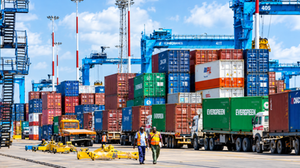
“You will continue to see investment going into logistics, technology and export-based infrastructure in this region,” she said, sectors where Tanzania is positioning itself as a regional hub.

Ms Mhango also highlighted the growing strategic importance of minerals in the new global order, particularly those linked to the energy transition.

Countries with copper, cobalt and other critical minerals, she said, are already benefiting from renewed global demand.

Beyond natural resources, she added that digital maturity is becoming a decisive factor.

“Digital capability increasingly determines the type of capital a country attracts,” she said, pointing to opportunities for governments that invest in digital systems, transparency and efficiency.

Taken together, the views from the conference point to a clear message for Tanzania and the wider East African region: growth in the next decade will depend less on attracting capital at any cost and more on building credible institutions, expanding trade capacity, strengthening industrial ecosystems and aligning private sector investment with long-term development priorities.

As Africa’s geopolitical relevance rises, the challenge for policymakers and business leaders alike is to ensure the continent’s growing importance translates into durable economic transformation rather than missed opportunity.