Dar es Salaam. The government has unveiled a bold strategy to tap into the minds of engineering students as part of a wider push to strengthen innovation, address infrastructure bottlenecks and respond to rising youth unemployment.
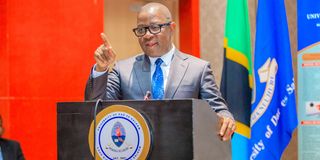
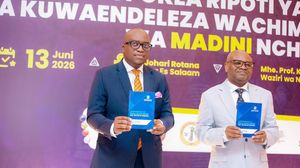
Delivering a Special Address to the Engineering Community organized by the College of Engineering and Technology (CoET) at the University of Dar es Salaam (UDSM) on February 23, 2026, the Minister of Works, Mr Abdallah Ulega, said the ministry was ready to directly engage students in finding solutions to persistent national challenges.
“The Ministry of Works has many responsibilities, but one of the most important is that we are the custodian of engineers in this country,” Mr Ulega said. “That is what has pushed us to come here today to speak about how we can move forward together.”
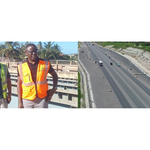
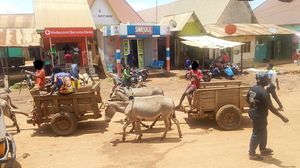
He told students that he carried a message of hope from the government, rooted in a question once posed to him by President Samia Suluhu Hassan. Every year, he said, the country spends billions of shillings rehabilitating rural roads, only for heavy rains to wash them away.
“The President asked me: do we not have any technological innovation that can save us from spending the same amount of money every year on the same roads?” he said. “Why can these roads not last at least three years so that those resources can be channeled into other development priorities?”
In response, Mr Ulega threw down a direct challenge to engineering students at UDSM and other universities nationwide: develop innovative, practical solutions for recurring infrastructure problems and be rewarded.
“I will give Sh10 million to a student or group of students who present a well-written, practical solution to challenges such as these in the construction sector,” he announced. “This should be the seed of new thinking to address the problems facing our country.”
He extended the challenge to other pressing issues, including chronic traffic congestion in Dar es Salaam. While acknowledging that experts are already working on mitigation measures, the minister said students should not wait until graduation to contribute.
“We would be very happy to see innovative engineering students, while still studying, bring forward short, clear proposals that can help us solve problems such as traffic congestion,” he said.
“During my tenure as minister, we are setting aside Sh10 million for the top three young innovators whose ideas we approve at the executive level.”
For a country grappling with graduate unemployment, the move signals a shift from theory-driven education to solution-oriented training.
Deputy Vice Chancellor for Academic at UDSM, Prof Rose Upor, said the initiative aligns directly with the university’s core mandate.
“UDSM has a duty to teach, to conduct research and to serve the community. Today’s engagement enables us to fulfil our community service mission in a very practical way,” she said.
She noted that for more than 55 years, UDSM has led in engineering training, with graduates directly involved in national infrastructure projects.
“This visit has come at the right time. Our students are eager to see how they can contribute more directly to this critical sector,” she added.
“It also builds a bridge between policy and academia, helping young engineers understand national infrastructure priorities.”
The Principal of CoET, Dr Innocent Macha, described the construction sector as the backbone of inclusive economic growth and central to Tanzania’s Development Vision 2050.
“Our national vision places science, technology, research and innovation at the centre of economic and social transformation,” he said. Adding, “As a college, we have reviewed our curricula to ensure our graduates possess the skills demanded by the labour market.”
He revealed that CoET is currently providing consultancy services in more than 40 ongoing projects through its Bureau for Industrial Cooperation (BICO), including strategic national undertakings such as the Mwalimu Nyerere Hydropower Project, the Standard Gauge Railway and major bridge and airport constructions.
For the students gathered at the conference, the message was clear. The future of Tanzania’s engineering solutions may begin with a single innovative idea and the courage to present it.
Register to begin your journey to our premium contentSubscribe for full access to premium content