Dar es Salaam. Tanzania’s land is increasingly becoming an economic asset under pressure, as climate change, population growth, expanding agriculture and weak spatial planning collide to raise the cost of doing business and threaten livelihoods.
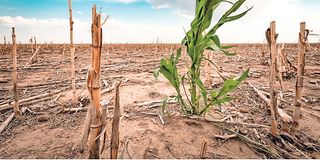
Experts cite more than 80 percent of Tanzania’s land is now classified as degraded, compared with 42 percent in 1980, while mainland Tanzania loses an estimated 469,420 hectares of forest annually.
The government’s own environmental analysis also identifies unsustainable agriculture, livestock keeping, mining, fires and tree cutting among major drivers of degradation.
As such, researchers at the Aga Khan University’s Arusha Climate and Environmental Research Centre (AKU-ACER) are demonstrating how applied research can help close this gap by taking science beyond academic papers and into communities.
The director of AKU-ACER, Dr Emmanuel Sulle, told The Citizen recently that researchers must look at environmental challenges through both scientific evidence and local knowledge.
“You see things through your scientific lens and... through your indigenous lens,” he said, adding that combining scientific evidence with indigenous knowledge is critical for Tanzania to build withstand the growing shocks of climate change.
That approach is particularly important in landscapes where farmers, pastoralists, conservation interests and investors compete for the same resources.
World Bank estimations show that climate variability already causes major economic losses, with individual extreme events costing more than one percent of GDP, while future climate change could impose additional costs equivalent to 1 to 2 percent of GDP every year by 2030.
For businesses dependent on land; from agriculture and livestock to tourism, energy and infrastructure- this means higher production risks, declining productivity, resource conflicts and increasing costs of adaptation.
The problem is compounded by gaps in land-use planning. Of Tanzania’s 12,318 villages, only 2,556 had prepared village land-use plans according to government figures cited in national environmental reporting. That leaves large areas without an agreed framework for balancing farming, grazing, settlements, conservation and investment.
As a result, ACER’s work includes testing climate-resilient fodder, restoring degraded rangelands through native grass seeds and promoting farming practices such as no-till agriculture, which helps retain soil moisture and protect soil fertility.
The centre is also supporting the use of livestock breeds such as Sahiwal, which can produce more milk and have higher market value while requiring less grazing land.
“This intervention demonstrates the business value of applying research. Productivity can be improved without continuously expanding the amount of land under production,” Dr Sulle noted.
Research from Tanzania also increasingly shows that adaptation is not simply an environmental expense but can be an economically rational investment.
A 2025 study of 411 agro-pastoral households found that planned adaptation strategies—including drip irrigation, rainwater harvesting, crop diversification and livestock diversification—outperformed business-as-usual scenarios economically.
A March 2026 performance audit by the Controller and Auditor General found that only 44 percent of priority climate-adaptation actions in agriculture had been implemented, while the figure for water was 43 percent.
The audit attributed the weak performance to inadequate resources, poor reporting, weak coordination and insufficient monitoring.
Financing is another concern. Between 2021/22 and 2024/25, the Vice President’s Office received only 70 percent of the funds budgeted for climate adaptation.
This creates a difficult business equation: Tanzania is expected to protect productive landscapes and adapt to climate change while the resources required to implement adaptation remain limited.
Deputy Vice Chancellor of Aga Khan University, Dr Tania Bubela, argued that research must therefore be built around real community needs rather than remaining detached from the people expected to use it.
“We’re living in an age of misinformation and disinformation... where there’s a distrust of experts,” she said. “We’re going to have to rebuild that trust by working closely with communities.”
Investment confidence
Experts believe that investors need predictable access to land, communities need security of tenure, farmers need productive soils, pastoralists need grazing corridors and conservation requires protected ecosystems.
Without spatial planning that brings these interests together, competition over land can undermine both livelihoods and investment.
For Dr Sulle, research must also be viewed as a long-term investment rather than a one-off project.
“Climate research is not a one-off study,” he said, arguing that decades of evidence and modelling are needed to understand long-term weather patterns and guide decisions.
This is where, he said, applied research becomes an economic infrastructure of its own.
Register to begin your journey to our premium contentSubscribe for full access to premium content