Arusha. Researchers from the University of Dar es Salaam (UDSM) have proposed the establishment of a specialised East African Community (EAC) institution to coordinate refugee and forced displacement issues across the region.
They have also urged member states to fast-track the adoption and implementation of a common refugee policy, saying differences in national approaches continue to hinder access to essential services and weaken regional integration efforts.
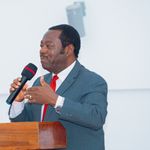
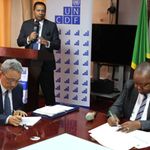
The recommendations were presented on June 22, 2026, by Prof Opportuna Kweka of the Department of Geography at UDSM’s College of Social Sciences and chairperson of the UDSM Research Chair on Forced Displacement (UDSM-RCFD), following a meeting with the EAC Committee on Regional Affairs and Conflict Resolution.
The researchers used the meeting to present findings from studies conducted between 2023 and 2025, and continuing this year, in Tanzania, Kenya, Uganda, Rwanda and Burundi.
Prof Kweka said the proposed institution would coordinate issues relating to education, youth, children, food security, environmental management, employment, and refugee integration within host communities.
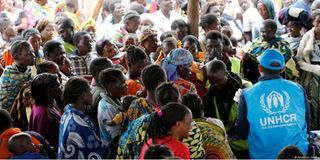
The studies examined the experiences of refugees and forcibly displaced people living in camps, rural areas, and urban centres, including those displaced by conflict, climate change, and development-related factors.
The research covered political refugees, internally displaced persons, and people forced to relocate due to climate change, poverty, and other pressures.
It also assessed conditions in refugee camps, villages, and urban settlements, alongside humanitarian assistance and economic activities.
“There is a need for a common regional framework because the challenges facing refugees are similar across many East African countries,” said Prof Kweka.
“We believe such an institution would focus on education, youth, children, social integration, food access, and environmental concerns. Ultimately, we envision an EAC where the concept of being a refugee becomes unnecessary.”
She said the findings revealed significant differences in how EAC member states implement refugee policies despite sharing similar integration objectives.
According to Prof Kweka, some countries still restrict refugees from living outside camps or fully participating in economic activities, contrary to the spirit of regional integration policies.
“While EAC policy promotes integration, some countries still require refugees to remain in camps and limit their ability to pursue livelihoods independently,” she said.
She noted that declining international support and growing refugee populations require EAC countries to develop sustainable, home-grown solutions that promote self-reliance rather than long-term dependence on humanitarian aid.
“We need to explore how these challenges can be addressed through our own resources and policy frameworks instead of relying entirely on external assistance,” she said.
The research also found that the quality of education in some refugee camps remains inadequate, limiting opportunities for young refugees to access higher education and secure better employment prospects.
Prof Kweka said improving refugee education is critical to regional development, noting that refugees often become part of local communities and can contribute to economic growth, whether they return home or integrate into host societies.
The research coordinator at the UDSM Research Chair on Forced Displacement, Mr Benezet Rwelengera, said the studies were conducted in Tanzania’s Nyarugusu and Nduta refugee camps, Kenya’s Kakuma camp, and several locations in Uganda.
He said refugees living in urban areas face challenges distinct from those in camps, including pressure to conceal their identities due to legal and social barriers.
Mr Rwelengera added that refugees make important social and economic contributions that are often overlooked in official systems.
“We recommend that refugee management should go beyond protection and focus on empowering refugees to contribute actively to local economies and community development,” he said.