Scholars fault global conservation model

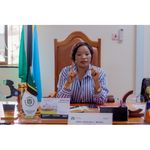
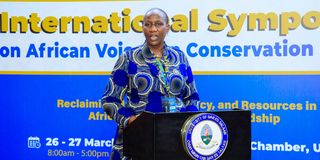
Prof Christine Noe, Principal of the College of Social Sciences at the University of Dar es Salaam, addresses participants during the conservation symposium, emphasising the need for African-led solutions and stronger collaboration between communities, scholars and policymakers. PHOTO | COURTESY

What you need to know:

  • Available testimonies show that across the continent, communities have been pushed out of ancestral lands, labelled as threats to wildlife, or excluded from decisions about resources they manage
Dar es Salaam. For decades, Africa, Tanzania included, has been told how to conserve its own land, forests and wildlife, with policies drafted abroad, research agendas set elsewhere and solutions imported with little regard for local realities, The Citizen has learnt.

The result is a growing crisis: conservation efforts that often protect nature on paper fail people on the ground.

Available testimonies show that across the continent, communities have been pushed out of ancestral lands, labelled as threats to wildlife, or excluded from decisions about resources they have managed for generations.

At the same time, Africa’s vast natural wealth continues to serve global environmental goals, sometimes at the expense of local development.

It is this imbalance that has now triggered a strong response from Africa’s top brains in environment and conservation.

At the University of Dar es Salaam on Friday, some of the continent’s leading thinkers gathered for a two-day symposium, not just for discussion, but to confront what many now see as a broken conservation model.

The urgency was clear: if Africa does not redefine conservation on its own terms, it risks losing both its resources and its voice.

The roots of the problem, they said, stretch back decades. Since global agreements like the 1992 Rio Earth Summit, Africa has been placed at the centre of global environmental campaigns.

Today’s targets, such as conserving 30 percent of the Earth by 2030, continue this trend.

But while these initiatives promise global benefits, experts say they often ignore local needs.

This has given rise to what is commonly called “parachute science”, where researchers and organisations from outside Africa lead conservation efforts, using their own frameworks and priorities.

According to participants, this approach has sidelined African knowledge, weakened local ownership and in some cases worsened conflicts between people and conservation authorities.

A scholar from the University of Cape Town, Prof Maano Ramutsindela, did not mince words.

“We need to reclaim our voices and define what conservation should mean for us,” he said.

He pointed to a deeper issue, one that goes beyond external influence.

“We have been self-alienated… We no longer value the knowledge our forefathers used to live with nature,” he said.

Prof Maano Ramutsindela of the University of Cape Town speaks during the symposium at the University of Dar es Salaam on March 27, 2026, where he called for Africa to reclaim its voice and redefine conservation using local knowledge and priorities. PHOTO| COURTESY

His message struck at the heart of the debate: Africa’s conservation problem is not only about outside control, but also about losing confidence in its own systems.

Experts warned that this has come at a high cost. When conservation ignores local knowledge and excludes communities, it often fails.

In many parts of Africa, people see conservation as something imposed on them, not something they are part of. This weakens trust, fuels resistance and undermines long-term success.

For Tanzania, the issue is especially important. The country is globally recognised for its rich wildlife and natural landscapes, which support tourism and livelihoods.

The Director of Aga Khan University’s (AKU) Arusha Climate and Environmental Research Centre, Prof Emmanuel Sulle, said, “We must ask whether our education and systems prepare Tanzanians to understand and manage their own environment,” he said.

He stressed that real change must start with people. “Citizens are the primary conservers- they must be at the front in deciding how conservation is done and how benefits are shared.”

This idea, putting people first, was a key theme throughout the discussions.

Scholars further argued that conservation cannot succeed without the full involvement of local communities.

They are not just beneficiaries, but key partners with knowledge, experience and a direct stake in protecting resources.

The Principal, College of Social Science at UDSM, Prof Christine Noe, echoed this view, calling for stronger collaboration between scholars, policymakers and communities.

“We want a voice that comes from Africa to drive the conservation agenda,” she said.

But the shift being called for is not about rejecting global partnerships. Instead, it is about changing the balance.

African institutions, scholars and communities must lead, while international partners support rather than dominate.

Participants also pointed to the need to combine indigenous knowledge with modern science.

Traditional practices, often dismissed as outdated, have helped communities survive droughts, floods and environmental changes for generations.

“When combined with today’s technology, they can offer powerful solutions to climate and conservation challenges,” said Prof Maano.

The discussions in Dar es Salaam signal that change is underway. African scholars are no longer content to play a supporting role. They are stepping forward to shape the agenda, define the problems and design the solutions.