Her work is driven by a conviction that sustainable solutions emerge not from imposing ideas, but from listening carefully to communities and supporting them to shape their own paths forward
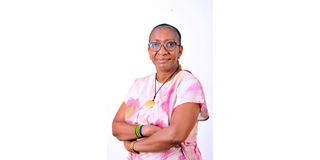
Dar es Salaam. Secelela Balisidya is the founder and chairperson of the private media organisation Environment Media Agenda (EMA). She established EMA in 2008 to amplify the voices of women, especially in rural areas, in adapting to and mitigating the effects of climate change.
Her work is driven by a conviction that sustainable solutions emerge not from imposing ideas, but from listening carefully to communities and supporting them to shape their own paths forward.
With more than 25 years of experience in communication, journalism, and development work, Ms Balisidya has built a career that bridges media, advocacy, and grassroots engagement.
She has worked extensively as a consultant with United Nations agencies, non-governmental organisations, academic institutions, and government bodies.
Much of her professional life has been devoted to communication management, crafting strategies that translate complex environmental and development issues into messages that resonate with ordinary citizens.
Her leadership journey began in journalism, where she was engaged as a consultant by several environment-focused organisations, including the Lawyers Environmental Action Team (LEAT) and the Tanzania Forest Conservation Group (TFCG).
In these roles, she managed the communication components of advocacy initiatives, helping to convey urgent environmental concerns to policymakers, communities, and the wider public.
These experiences deepened her understanding of the gap between awareness and action. While information was reaching people, meaningful change was often slow.
She began to question whether simply delivering messages was sufficient. Over time, she realised that lasting impact required empowering communities to participate directly in shaping and implementing solutions.
In 2005, she co-founded Regalia Media Consult, a media consultancy firm where she served as a director and shareholder.
The company created employment for 15 staff members and secured major assignments from private companies, United Nations agencies, non-governmental organisations, academic institutions, government departments, and international organisations.
From 2010 to 2015, she served as managing director, overseeing administration, coordinating assignments, and guiding the strategic direction of the firm.
Through this work, she gained valuable management experience and a deeper appreciation of the transformative potential of communication.
Yet she increasingly felt that her efforts needed to move beyond informing and persuading. She wanted to support people to act, particularly those most affected by environmental degradation and climate change.
“Some citizens challenged me when I communicated about the dangers of cutting down trees,” she recalls. “They said they understood the problem, but asked what alternatives they had to sustain their families. Many depended on selling charcoal to survive. That question stayed with me.”
The turning point came in 2008, when she attended the eighth United Nations Framework Convention on Climate Change (UNFCCC) Conference of the Parties (COP) in Poznan, Poland.
Exposure to global debates on climate change and the central role of community-driven solutions reinforced her determination to establish an organisation dedicated to practical, inclusive climate action. On her return to Tanzania, Environment Media Agenda was formally launched in December 2008.
From the outset, EMA set out to position women not merely as recipients of development interventions, but as drivers of change. Ms Balisidya believes that women must shift from being the subjects of stories to becoming the owners of solutions.
This approach, she says, empowers women while enabling them to demonstrate how awareness and practical action can be combined to deliver tangible benefits.
Amplifying the voices of rural women has become a cornerstone of EMA’s work. EMA’s interventions have helped lift families out of poverty while building resilience to climate shocks.
“With support from development partners across the world, EMA has reached more than 1,000 women and over 220 schoolgirls and boys as direct beneficiaries of climate-focused projects. Since its establishment, the organisation has implemented 13 projects across Tanzania, each tailored to local conditions and needs,” she says.
Through these initiatives, women have been trained in beekeeping, tree planting, and the cultivation of short-term crops such as cassava and orange-fleshed sweet potatoes.
They have also learned to use solar drying technologies to extend the shelf life of fruits and vegetables, reducing post-harvest losses and increasing income.
“These interventions have elevated not only the economic standards of women, but also their health and social wellbeing at household and community levels,” Ms Balisidya explains. Improved nutrition, greater financial independence, and enhanced social cohesion have emerged as consistent outcomes of the projects.
Beyond climate change, EMA has undertaken awareness and advocacy initiatives on illegal fishing, solid waste management, oil and gas development, and environmental journalism.
The organisation has worked to strengthen the capacity of journalists covering fisheries, forestry, wildlife, and environmental policy, recognising the media’s vital role in shaping public understanding and accountability.
Working across government institutions, United Nations agencies, non-governmental organisations, and local communities has provided Ms Balisidya with profound leadership lessons.
Foremost among these is the importance of leading by serving and responding to people’s real needs rather than assumed priorities.
“Leaders often fall into the trap of thinking they already know what people need,” she says. “My work, especially with women from different backgrounds, has taught me that listening is essential. Only by understanding people’s lived experiences can we design interventions that truly make a difference.”
She cautions against imposing ready-made solutions, which often fail to gain community acceptance and rarely endure. In contrast, when ideas emerge from within communities and are refined collaboratively to meet project objectives, both effectiveness and ownership increase.
This participatory approach, she argues, is fundamental to sustainable development.
Another lesson that has shaped her leadership is patience. Navigating complex social, cultural, and institutional environments requires persistence and empathy.
By embracing diversity and remaining open to adjustment, she has learned to guide teams and communities towards shared goals, even amid uncertainty.
Reflecting on her journey, Ms Balisidya says the most enduring reward is witnessing the transformation of women who once felt powerless. Seeing them actively engaged in economic and environmental initiatives, rather than resigned to hardship, reinforces her commitment to push further.
“The joy and confidence that emerge when women realise their own potential is deeply fulfilling,” she says. “It gives me greater responsibility and courage to continue, because I know this work touches lives and fulfils my purpose.”
EMA’s influence now extends beyond Tanzania. Through a project funded by the Women for Africa Foundation, the organisation has facilitated knowledge and experience sharing among women in Eastern and Western Africa, particularly in Kenya and Ghana.
These exchanges have fostered regional solidarity and strengthened collective capacity to confront climate change. Her academic journey mirrors her professional commitment to continuous growth. She holds an Advanced Diploma in Journalism and Mass Communication, a postgraduate qualification in Entrepreneurship and Enterprise Development from the University of Dar es Salaam, and two master’s degrees.
These include a Master of Business Administration from the University of Dar es Salaam Business School and a Master’s in Strategic Business Marketing from the University of Castilla-La Mancha in Toledo, Spain. She is currently pursuing a PhD in Climate Change and Sustainable Development at the University of Dar es Salaam.
For Ms Balisidya, lifelong learning is not a personal ambition alone, but a professional necessity. She believes that continuous education equips communicators to engage more deeply with evolving challenges and to remain relevant in a rapidly changing world.
“Learning is a lifelong process,” she says. “We grow academically and professionally by acquiring new knowledge. As a journalist and environmental communicator, expanding into fields beyond journalism strengthens our capacity to inform and serve society.”
Her commitment to impactful communication gained international recognition in 2003, when she won first place in the World Bank Award, Radio Category, at the World Water Forum in Kyoto, Japan. The award honoured a radio programme she produced on Tanzania’s water crisis, exploring its social and economic consequences and its contribution to poverty.
The recognition placed her on a global platform and reinforced her sense of responsibility to shape public discourse. It also motivated her to produce further educational and awareness programmes, using radio, print, and feature writing to promote understanding and action on water and environmental issues.
Today, her advice to emerging women communicators and climate advocates is rooted in the principles that have guided her own career. She urges them to seek out and elevate voices that remain undervalued and unheard, particularly in rural and marginalised communities.
“These voices represent a significant proportion of our population,” she says. “They require extra effort to reach and understand. Yet they are essential in informing policy and decision-making for a better Tanzania.”
As communicators, she adds, this responsibility is central to the profession. By performing it with integrity and dedication, journalists and advocates can advance the development of women, strengthen social cohesion, and contribute meaningfully to national progress.
Through Environment Media Agenda, Ms Balisidya continues to demonstrate that leadership anchored in listening, learning, and service can deliver enduring change. Her journey stands as a testament to the power of communication when it is guided by empathy, inclusion, and a steadfast commitment to social justice.