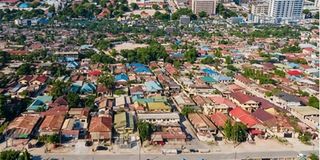
Dar es Salaam. Property owners in Sinza, Ubungo District, have stated their intention to file a court case challenging the draft of the new 2026/2046 redevelopment plan for the entire ward, which is expected to commence this year.
The plan, overseen by the Ministry of Lands, Housing and Human Settlements Development, aims to turn Sinza into an integrated area incorporating commercial and residential high-rise buildings.
Speaking at their meeting on Saturday, September 5, 2026, the property owners said they arrived at this decision after discovering flaws in the 20-year draft plan.
They claimed the draft effectively strips away their property rights and rightful entitlements once they are relocated to pave the way for the project.
Another issue raised is the lack of clarification regarding a memorandum containing their 30 key concerns, including the merging of eight plots into a single block, a provision where the government indicated certain plots would be consolidated, particularly in Sinza A, B and C.
These concerns were previously submitted to the Minister for Lands, Housing and Human Settlements Development, Dr Leonard Akwilapo, a few weeks ago.
The Chairman of the Sinza Property Owners Committee, Mr Lumuli Mwaipopo, made the revelation on Saturday, September 5, 2026, during a feedback meeting organised to outline the steps for finalising court proceedings.
He explained that they decided to pursue legal action to seek a formal interpretation and clarification of the draft, noting that no investor has been specified, leaving property owners in a state of uncertainty.
“We met with Dr Akwilapo on July 1, 2026, and after reviewing our concerns, the Minister decided to halt all previous committee proceedings regarding the draft, ordering the process to restart from scratch,” he said.
“However, there has been resistance from administrative officials who are required to issue an official notice cancelling the initial plan and restarting it as directed by Dr Akwilapo,” added Mr Mwaipopo.
He added that as days pass, troubling developments continue to emerge, including property owners being referred to as 'complainants' rather than 'owners' by a senior government official, a label that causes distress and raises fears that their property rights are being compromised.
“Property owners reject this draft because it contains ambiguities and infringes upon property rights. Our firm stance is to go to court to seek a legal interpretation of this matter and understand where our rights stand under this plan,” he stated.
One of the Sinza property owners, Mr Martine Mchopa, noted that a major point of confusion in the draft is that residents do not know where they will be relocated after vacating their properties for the redevelopment project.
“We don't know where we will go if we are relocated; that is a major problem. Someone owns a multi-storey building, yet today you tell them to merge their plot with an owner of an ordinary house; how will their respective rights be handled?” questioned Mr Mchopa.
Ms Celestina Kibaha expressed her disapproval directly, saying, “I do not support this draft plan because it is unfair to property owners who will be giving up their land.”
A resident of Sinza D, Dr Emmanuel Kopwe, joined the property owners' committee in backing the court case to safeguard their rights amid the ongoing confusion and distress.
“The way this matter was introduced has deeply hurt the owners and residents of Sinza. It feels as though something was dropped on them without proper explanation,” he said.
“Good governance entails engaging all relevant stakeholders to reach a collective decision. But what happened with this plan feels like something imposed on people, causing widespread mental distress,” added Dr Kopwe.
He added that they have initiated the legal process and are currently establishing a solid foundation and proper procedures to ensure the matter is handled effectively through the courts.
During one of the meetings with Sinza property owners, the Ministry of Lands outlined its plan to modernise Sinza by constructing high-rise buildings.
This construction would be carried out either by investors procured by the ministry or by the property owners themselves, should they choose to consolidate their plots and develop them according to the ministry's blueprint.
Furthermore, the ministry explained that owners willing to sell their plots could do so, while those who collaborate with an investor would receive a percentage share as property owners once construction is complete.
However, the arrangement remains poorly understood by many residents, with several demanding full monetary compensation to relocate and make way for investment, citing fears over how land ownership rights will be structured once eight plots are consolidated into one upon project completion.
Register to begin your journey to our premium contentSubscribe for full access to premium content