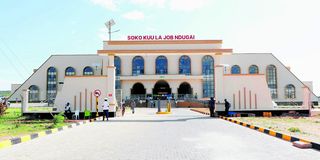
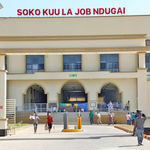
Dodoma. Six years after its launch, the Job Ndugai Main Market in Dodoma City remains largely empty, with the few traders operating there continuing to dwindle, even as streets and inner-city roads are flooded with petty traders, popularly known as machinga.
City authorities, however, say they will not use force to relocate traders to the market, opting instead to improve infrastructure that will naturally attract customers and, in turn, more businesses.
The Ndugai Market, formerly known as Dodoma Main Market, was built in Nzuguni Ward at a cost of more than Sh14 billion. It officially began operations in early 2020 and was expected to accommodate a large number of traders.
Contrary to expectations, many traders who rented stalls and shop spaces left within days, citing a lack of customers and arguing that the market was built too far from the city centre.
The market traders’ chairman, Mr Maulidi Ally, said business conditions are currently tough, with those operating there losing capital and falling into debt, making it difficult to support their families.
He said the market has more than 360 stalls, but fewer than 45 are currently occupied, while the section for larger shops, which can accommodate more than 100 traders, remains vacant.
“In the past two months alone, five traders have left. Today the stalls are full of dust and tarpaulins. People are not selling and have decided to move out because they are going bankrupt and are left with debts. Sometimes city regulations contribute to this situation,” said Mr Maulidi.
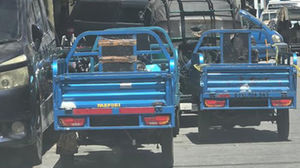
Among the issues he cited was the city allowing cargo vehicles to offload goods in undesignated areas such as Miti Mirefu and Dodoma Inn, despite the availability of a large designated space at Ndugai. He said this discourages traders from operating at the market.
He also admitted that many traders have opted to move to the streets after the Majengo, Machinga and Sabasaba markets became overcrowded and unable to accommodate more vendors.
According to him, if authorities wanted the market to thrive, they should replicate what was done at the Machinga Market, where all vehicles are required to drop off and pick up passengers there. At Ndugai, however, only selected vehicles stop, while others continue to operate in the town centre.
Speaking about the market, Dodoma City Director, Dr Frederick Sagamiko, acknowledged that it is currently underutilised but expressed confidence that it will soon attract traders as the surrounding infrastructure improves.
“The key issue is that we cannot force traders into those areas. The right approach is to provide good infrastructure that will naturally attract them. That is the solution, not arresting people on the streets and taking them there,” said Dr Sagamiko.
He said the city leadership recognises the high number of street vendors in the central business district and has already begun constructing additional markets for machinga in the Umonga area, with plans to build another in Kisasa—locations they believe will attract enough people to stimulate business.
He explained that the market was built in line with long-term urban planning, as the area is expected to have a large population in future, reducing the need for residents to travel to the city centre.
“That ward alone has nearly 67,000 residents. We are expanding the main road, the market is near the regional bus terminal, and you can see public servants building homes on that side as Ihumwa and Kikombo continue to grow. So there is no need to force traders there; soon they will move on their own,” he said.
A shoe trader at Sabasaba Market Mr Godbless Chuwa, said the lack of customers forced him to leave Ndugai, as business remained slow and his capital kept shrinking.
He said Ndugai is among the best-built markets, with modern infrastructure, but traders avoid it because it is located on the outskirts of the city with limited human traffic, despite district buses now using it as their main pick-up and drop-off point.
The trader believes the construction of a nearby football stadium and the expansion of the main road will eventually attract more people to Ndugai Market.
“Once the crowds increase, traders will no longer leave, but it may take some time,” he said.