Tanapa steps up conservation efforts for Gombe chimpanzees
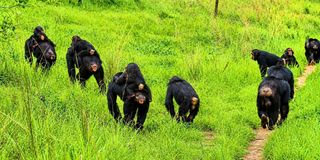
A chimpanzee moves through the forests of Gombe National Park, home to the descendants of the apes studied by Jane Goodall and now the focus of intensified conservation efforts amid a decades-long population decline. PHOTO | FILE
Arusha. The population of Gombe National Park’s chimpanzees has fallen by nearly 50 percent since the early years of research by Jane Goodall in the 1960s, raising concerns about the future of one of the world’s best-known primate populations.
From an estimated 150 chimpanzees recorded during the early years of research, the population had fallen to about 77 individuals by 2024, according to Tanzania National Parks (Tanapa).
Conservationists attribute the decline to disease, habitat pressures and changes within chimpanzee communities, although recent births and expanded conservation efforts have provided some hope.
“Long-term monitoring reveals a population that has experienced both resilience and vulnerability,” said Tanapa veterinary specialist Dr Jane Mwandupe.
Located along the eastern shores of Lake Tanganyika, Gombe National Park covers only 33.6 square kilometres but remains one of the most important sites for primate research.
It was in Gombe that Goodall observed chimpanzees making and using tools, a discovery that changed scientific understanding of animal behaviour and challenged assumptions that such abilities were unique to humans.
Today, researchers say the descendants of those chimpanzees face growing pressures.
According to Dr Mwandupe, population numbers have fluctuated over the years but have generally followed a declining trend. After recovering to the mid-90s in recent years, numbers have since fallen again to around 77.
Among the major concerns is the decline of the Kalande community, once a distinct chimpanzee group within the Gombe ecosystem, which has now been reduced to only a few individuals.
Dr Mwandupe said the decline was linked to the long-term effects of Simian Immunodeficiency Virus (SIV), which affected the community in the 1990s, as well as later influenza outbreaks.
“The remaining females have increasingly integrated with neighbouring communities, leaving the former Kalande range largely unoccupied,” she said.
Disease remains one of the biggest threats to Gombe’s chimpanzees.
Between 2020 and 2024, conservationists recorded 20 chimpanzee deaths, with respiratory illnesses accounting for the largest number of known fatalities. Other deaths were linked to conflicts between neighbouring communities competing for territory, while some causes could not be determined.
Historical records indicate that more than half of chimpanzee deaths in Gombe have been linked to disease, while about one-fifth resulted from conflicts between communities.
Researchers say the park’s limited size contributes to both challenges, as dense populations increase contact among individuals and competition over territory.
Despite the decline, researchers have also recorded signs of recovery.
Between 2020 and 2024, 21 births were documented, mainly within the Kasekela and Mitumba communities.
Dr Mwandupe noted that chimpanzees reproduce slowly, with intervals of up to five years between births.
“As a result, every surviving infant represents an important contribution to future population recovery,” she said.
Tanapa Conservation Commissioner Musa Nasoro Kuji said authorities have also focused on protecting the Gombe-Kagunga corridor, which serves as a key route connecting chimpanzee habitats.
Around seven chimpanzees are estimated to live within the corridor.
Without such links, he warned, chimpanzees could become increasingly isolated, creating ecological and genetic risks.
Mr Kuji said Tanapa has expanded conservation efforts through daily monitoring of chimpanzees, habitat protection, disease surveillance, fire prevention programmes and community education initiatives. Communities living near the park have also been included through alternative livelihood programmes and beekeeping projects aimed at reducing pressure on forests.
Authorities have also increased action against illegal encroachment.
Mr Kuji said a major operation in 2025 resulted in the demolition of 97 unauthorised structures, destruction of 12 livestock enclosures and the arrest of 12 suspects.
Despite the decline, conservationists say continued births, habitat protection and stronger enforcement measures provide an opportunity to stabilise Gombe’s chimpanzee population.
Register to begin your journey to our premium contentSubscribe for full access to premium content