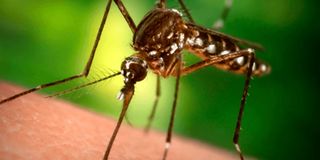
Dar es Salaam. Tanzania has been ranked among the four countries with the highest malaria-related deaths globally, accounting for a significant share of fatalities recorded in 2024, according to the World Malaria Report 2025.
The report shows that out of an estimated 600,000 malaria deaths worldwide in 2024, Nigeria accounted for 30.3 percent, the Democratic Republic of Congo 11.1 percent, Niger 5.8 percent, while Tanzania contributed 4.3 percent.
The findings place Tanzania among a small group of high-burden countries, alongside Nigeria and DR Congo, which together account for more than half of global malaria deaths.
Despite progress in reducing infections over recent years, the report warns that malaria remains a major public health challenge, particularly in sub-Saharan Africa. Tanzania is classified as one of Africa’s high-transmission countries, contributing about 3.3 percent of global malaria cases and 4.3 percent of malaria-related deaths.
According to the report, about 93 percent of Tanzanians live in malaria-endemic areas.
In 2023, the country recorded approximately 3.8 million cases and more than 25,000 deaths linked to the disease. Children under five remain the most affected group, consistent with trends across most malaria-endemic countries in Africa.
The report further indicates that Africa accounts for more than 90 per cent of global malaria cases and deaths.
Eleven African countries together shoulder nearly two-thirds of the global malaria burden, with Tanzania among them.
It also highlights emerging threats undermining progress, including growing resistance to antimalarial drugs, insecticide resistance among mosquitoes, climate change, urban spread of new mosquito species, and declining funding for malaria control programmes.
On April 17, 2026, the Ministry of Health said it would intensify malaria control measures, including the use of new technologies such as gene drive approaches aimed at modifying mosquitoes so they cannot transmit the disease.
The government also continues to promote insecticide-treated nets, seasonal malaria chemoprevention for children, and vaccination programmes as part of its national response.
Commenting on the findings, Chief Scientist at the Ifakara Health Institute (IHI), Brian Tarimo, said malaria cases and deaths have increased globally, with Tanzania recording about 26,000 deaths in 2024.
He said the rise is linked to multiple factors, including resistance by both mosquitoes and malaria parasites to drugs and diagnostic tools.
“This resistance is making early detection difficult. Some patients test negative despite being infected, which delays proper treatment,” he said.
He added that conflicts and flooding have disrupted the distribution of mosquito nets and medicines, while climate change has increased mosquito breeding due to rising temperatures.
Tarimo also noted that reduced international funding is weakening malaria control efforts, urging continued use of treated nets and timely treatment.
Health sociology expert at the National Institute for Medical Research (NIMR) Mwanza Centre, Justina Mosha, said the effectiveness of interventions is being undermined by poor usage and misinformation.
She said some communities still avoid using mosquito nets due to misconceptions, including beliefs that they reduce male strength. “Even where nets are used, they are sometimes not properly hung or maintained, which reduces their effectiveness,” she said.
Mosha said that mosquito behaviour is also changing, with some now biting earlier in the evening rather than only at night, increasing exposure for people outdoors.
She further warned that many people delay seeking treatment, often mistaking malaria symptoms for common fever.
“There is still a tendency to assume malaria is a normal fever, which leads to late diagnosis and treatment,” she said.
Mosha also highlighted growing resistance to insecticides and antimalarial drugs as a major challenge, noting that both mosquitoes and parasites are adapting to existing interventions.
She stressed that economic constraints, low awareness, and poor environmental management continue to hinder progress.
However, she emphasised that malaria elimination requires stronger community involvement.
“People must ensure clean surroundings, eliminate stagnant water, use nets properly, and follow medical advice. Malaria cannot be eliminated without collective effort,” she said.
Despite sustained government efforts, malaria remains entrenched in many parts of the country, particularly in areas with poor drainage and stagnant water that support mosquito breeding.
Health experts warn that without improved funding, stronger community engagement, and more effective use of existing tools, Tanzania will continue to face significant malaria-related deaths.
Register to begin your journey to our premium contentSubscribe for full access to premium content