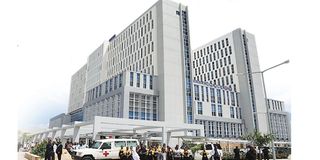
Dar es Salaam. Tanzania is steadily building the foundations of a regional medical hub, with a major shift now taking shape at Mloganzila where a planned “medical city” is bringing together training, research and specialised care under one ecosystem.
At the centre of this ambition is a newly approved $83 million modern teaching, research and treatment hospital at the already built Cardiovascular Centre of Excellence, expected to redefine specialised healthcare delivery in the country.
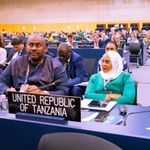
The development came into sharp focus during a recent visit by the Parliamentary Standing Committee on Education, Culture and Sports to the construction site of the Muhimbili University of Health and Allied Sciences (MUHAS), under the Higher Education for Economic Transformation (HEET).
The minister for Education, Science and Technology, Prof Adolf Mkenda, said the government’s approach is deliberate, moving away from conventional hospitals towards integrated centres of excellence.
“The government has already constructed the first phase of the Centre of Excellence in Cardiovascular Sciences. The second phase will involve building a large hospital worth $83 million, already approved by the President. This hospital will be bigger than even the Jakaya Kikwete Cancer Institute (JKCI),” he said.
He added: “Our goal is to establish centres of excellence here in Mloganzila that will be under MUHAS. These are built on three pillars—training, research and service delivery. This is different from ordinary hospitals, which mainly focus on treatment.”
The model aligns with a broader East African Community strategy to establish specialised centres across the region, enabling countries to share expertise, training and services.
Tanzania is among key beneficiaries, with several centres being developed, including in dental sciences and cardiovascular care.
The expansion comes at a critical time. Tanzania faces a shortage of up to 55 percent of required health workers, a gap that continues to strain service delivery and seen as an impediment to the national goal.
Chairperson of the parliamentary committee, Ms Husna Sekiboko, said the Mloganzila project offers a practical solution.
“We visited the campus to assess the progress of the expansion, and what we have seen is more than just expansion. It is indeed a hub of medical excellence in the making,” she told The Citizen. The project will eventually make our country become a hub for specialised medical provision across the region.”
She warned that without such expansion, the doctor-to-patient ratio would continue to worsen as the population grows.
“As we increase the production of health professionals, we will gradually reduce the gap between doctors and patients and this is what makes us a medical hub as a country,” she added.
A growing regional role
Tanzania has already made notable progress in specialised healthcare. Institutions such as the JKCI, the Ocean Road Cancer Institute (ORCI), and the Benjamin Mkapa Hospital (BMH) provide specialised and super-specialised services.
Already, some of these hospitals have become lifelines for patients from neighbouring countries, including Comoros, Burundi, Uganda and parts of southern Africa.
For MUHAS leadership, the vision extends beyond education and healthcare.
Vice Chairperson of the University Council, Ms Marsha Macatta-Yambi, said the project will cement Tanzania’s ambitions.
“The presence of these centres, together with our university, will help realise the vision of a medical city. It will support the government’s goal of strengthening medical diplomacy and positioning Tanzania as a hub for medical tourism in the region,” she said.
“Our vision is to become a modern institution for health education, research and innovation. The Mloganzila campus is designed to be a centre of knowledge that will drive scientific advancement in Tanzania and across East Africa.”
Health experts believe the Mloganzila medical city could significantly expand this role by increasing capacity, improving quality and attracting international patients.
Public health analyst, Dr John Mfinanga, said the integrated model is key to long-term success.
“Centres of excellence create complete ecosystems. You train specialists, conduct research and treat complex cases in one place. That is how sustainable health systems are built,” he said.
The transformation at MUHAS is being powered by the HEET project, which is financing both infrastructure and human capital development.
According to project coordinator, Prof Nathanael Siriri, more than Sh77 billion has been allocated for the Mloganzila campus, with overall construction now about 70 percent complete.
This dual approach is expected to ensure that the expansion is matched by the availability of highly skilled trainers and researchers.
Register to begin your journey to our premium contentSubscribe for full access to premium content