Tanzania gains SADC recognition in disaster management systems
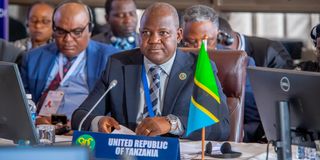
Deputy Minister for Lands, Housing and Human Settlements Development, Kaspar Mmuya attends the Sixth Ordinary Meeting of the SADC Committee of Ministers Responsible for Disaster Risk Management, held in Masvingo, Zimbabwe. PHOTO | COURTESY
Dodoma. Tanzania has emerged as one of Southern Africa’s leading countries in disaster management, earning recognition within the Southern African Development Community (Sadc) for its strengthened systems aimed at preventing, monitoring, and responding to disasters.
The recognition was highlighted during the Sixth Ordinary Meeting of the Sadc Committee of Ministers Responsible for Disaster Risk Management, currently underway in Masvingo, Zimbabwe, where member states are sharing experiences and strategies to strengthen regional resilience against disasters.
The new development was unveiled through a statement issued on Thursday, May 14, 2026, by the Prime Minister’s Office on behalf of Tanzania’s Minister of State in the Prime Minister’s Office responsible for Policy, Parliament, Coordination, and Persons with Disabilities, Prof Palamagamba Kabudi.
Representing Prof Kabudi, the Deputy Minister for Lands, Housing and Human Settlements Development, Mr Kaspar Mmuya said Tanzania’s progress stems from sustained investment in disaster coordination and preparedness systems.
Mr Mmuya said Tanzania has significantly strengthened its capacity to prevent disasters, reduce risks, enhance preparedness, and restore normalcy following emergencies through strategic reforms and technology-driven approaches.
One of the key milestones, he said, is the establishment of the National Emergency Operation and Communication Centre Situation Room, a 24-hour facility dedicated to monitoring, analyzing, and coordinating information on disasters and emerging threats.
“Through this centre, the government has been able to receive early warnings on potential disasters, assess possible impacts, and implement rapid response strategies,” said Mr Mmuya.
He added that the use of advanced technology in collecting and analysing real-time data has improved decision-making efficiency while enabling authorities to communicate timely and accurate information to citizens on disaster preparedness measures.
“We are using both current and historical data to predict potential risks, which helps the government plan effectively for recovery efforts while continuing to protect the lives of citizens,” he said.
The Deputy Minister also invited delegates from SADC member states to visit Tanzania and observe the country’s disaster management systems and the innovations supporting them.
The four-day summit has brought together representatives from 16 SADC member states, alongside national experts and international organisations, to discuss the implementation of regional disaster management programmes and ways to deepen cooperation.
The meeting is also expected to serve as a platform for ministers and development partners to explore increased investment in disaster management systems as the region seeks to build stronger resilience against increasingly frequent climate-related and global emergencies.