Dar es Salaam. When the nominees for the 2026 World Travel Awards were announced, one of the newer names on the list came from Tanzania’s northern tourism circuit.
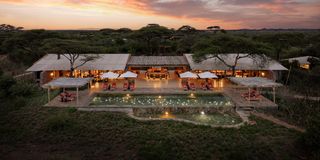
Mapito Safari Camp, located in Robanda village near the Serengeti, had been shortlisted for “Africa’s Leading Luxury Tented Safari Camp.”
For a property that has been in operation for less than a year, the nomination stands out. The camp also carries a broader distinction, it is part of Marriott’s Autograph Collection and is understood to be the first safari camp globally under that brand.
While the recognition has drawn attention within the industry, it also raises a broader question that extends beyond awards: how do new, high-end tourism developments fit into the social and environmental fabric of places like the Serengeti?
Presence and impact
The growth of luxury tourism in conservation areas has not been without debate. In Tanzania, where protected landscapes like the Serengeti are central to both conservation and the economy, developments are often viewed through a dual lens — as potential drivers of growth, but also as possible sources of disruption.
This is particularly so when international hotel brands enter the picture. For nearby communities, however, the question is less about branding and more about what such projects mean on the ground.
In the case of Mapito, its location within Robanda village has shaped much of its engagement. Being physically situated in the village has meant that the camp’s operations and its immediate community are closely linked, with most of its outreach efforts concentrated in the same area.
Building with local hands
Beyond its day-to-day operations, the camp’s development itself has drawn interest locally. According to the developers, roughly 90 percent of the items used in constructing and furnishing the camp were sourced within Tanzania.
Furniture was produced using locally available and, in some cases, recycled materials, while women’s groups and artisans from Robanda and other nearby villages were involved in supplying various items used across the property.
For many of these groups, the scale and expectations of the project were new, particularly given that the camp was being developed under an international hospitality brand.
Despite these challenges, early feedback from visitors and industry observers suggests that the finished product compares well with other high-end camps in the region.
The approach, which leans heavily on local sourcing, is increasingly being seen as one way of linking tourism investment more directly with surrounding economies.
Addressing local health gaps
Like many rural areas, access to healthcare in Robanda has historically been uneven. The local health centre, which serves several surrounding communities, has operated without a resident doctor for extended periods, leaving patients to seek treatment elsewhere.
“For certain services, people had to travel quite far,” said one health worker in the area, noting that basic care could involve journeys of up to an hour.
Recent support linked to Mapito has sought to address some of these gaps. The camp is currently funding the salary of a full-time doctor at the Robanda Health Center.
In addition, the facility has received a supply of essential medicines intended to last for about a year, provided at no cost.
Local officials say the presence of a doctor has begun to ease pressure on referral facilities, although they caution that long-term improvements will depend on consistency in support and broader system strengthening.
Outreach beyond the village
Efforts have also extended beyond Robanda itself. In January, a medical camp was organised at Serengeti District Hospital, bringing in specialists who are not regularly available in the area.
The outreach included a paediatrician and an oral surgeon, and services were offered free of charge. Patients received consultations and medication, while seven surgeries were carried out during the exercise.
Medical camps are periodically held in different parts of the country, often focusing on consultations and basic screenings. However, organisers of the Serengeti outreach say this exercise went further, with all aspects of care covered for patients — from consultations and medicines to surgical procedures.
Employment closer to home
Tourism developments are also closely watched for the opportunities they create. In areas like Robanda, where formal employment options are limited, such projects can become an important source of livelihoods.
Mapito employs 106 people, according to figures provided by the company. Of these, 98 are Tanzanians, including all heads of department, a point that stands out in an industry where senior roles are sometimes filled by expatriates.
Staff members have also undergone hospitality training aligned with international standards, delivered with input from external trainers. For many, this offers exposure to a level of service expected in global tourism markets.
This investment in skills is also reflected in early guest feedback. A review of online ratings, particularly on platforms such as Google, shows that a significant number of visitors highlight staff service as one of the camp’s strongest points. Mentions of attentiveness, warmth and professionalism appear consistently — suggesting that with the right training and support, local employees are able to meet, and in some cases exceed, expectations associated with high-end tourism.
One employee described the transition as demanding but worthwhile, noting that the training has introduced new approaches to guest service and operations.
Industry observers say that while job numbers are important, skills development is often a more lasting benefit, particularly if workers are able to build careers within the sector over time.
Looking beyond early recognition
For now, Mapito’s nomination at the World Travel Awards is likely to remain a talking point within tourism circles. But within Robanda and the surrounding communities, attention tends to focus less on accolades and more on everyday changes.
In the village, those changes are still unfolding. A doctor is now available where one was previously absent. Access to medicines has improved, at least in the short term. A number of local residents are employed in a sector that continues to expand.
Whether these developments translate into lasting impact will depend on how such initiatives are sustained. In conservation areas, where tourism and community interests are closely linked, expectations are evolving.
Increasingly, the measure of success is not only in visitor numbers or international recognition, but in how developments contribute to local wellbeing over time.
Mapito’s early months offer one example of how that balance might be approached. The more difficult task — maintaining it — lies ahead.