Tanzania's October 29 violence was planned, coordinated and financed, says commission
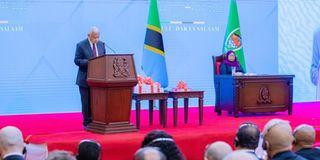
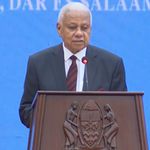
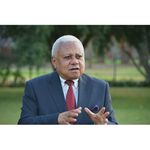
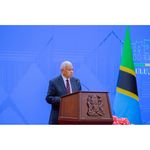
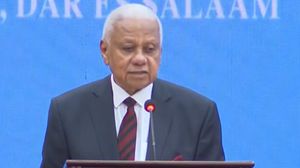
Chairperson of the Presidential Commission of Inquiry into incidents during and after the October 2025 General Election, Retired Chief Justice Mohamed Chande Othman, presents the report of the commission’s report at State House in Dar es Salaam on April 23, 2026. PHOTO | STATE HOUSE
Josephine Christopher is a senior business journalist for The Citizen and Mwananchi newspapers
Mwananchi Communications Limitted
Dar es Salaam. Tanzania’s Commission of Inquiry into the October 29, 2025 post-election violence has concluded that the incidents were not peaceful demonstrations but a chaotic, premeditated operation involving coordinated planning, financing and the deployment of trained individuals, alongside the mobilisation of vulnerable groups.
Presenting the final report at State House on Thursday, Commission Chairperson, retired Chief Justice Mohamed Chande Othman, said the evidence pointed to deliberate organisation and the simultaneous execution of violence across multiple locations.
“The Commission has obtained clear and convincing evidence that the events of October 29 were planned, coordinated, financed and executed by individuals who had received prior training,” Justice Othman said.
He said the operation involved the mobilisation of various groups, including individuals with limited understanding of political processes, unemployed youth and other vulnerable members of society.
“Those involved moved across different areas, mobilising people and ensuring that acts of violence were carried out simultaneously in different locations,” he added.
Justice Othman said some participants were recruited and incentivised in the days leading up to the violence, between October 2 and October 28, through what he described as structured mobilisation efforts.
“We found evidence that bodaboda riders, small-scale traders, street vendors and children living in difficult circumstances were among those approached. Some were given money ranging from Sh10,000 to Sh50,000, while others were promised jobs and better living conditions,” he said.
He said the Commission also established that gatherings were organised in advance, where participants were briefed and prepared for their roles in the events that followed.
Justice Othman was categorical that the events did not meet the legal or constitutional threshold of a peaceful demonstration.
“These were not peaceful protests,” he said.
He cited non-compliance with constitutional and legal provisions governing demonstrations, including Articles 18 and 20 of the Constitution of Tanzania, as well as provisions of the Police Force and Auxiliary Services Act, which require prior notification to authorities.
“Under both national and international legal standards, peaceful assembly requires prior notice to law enforcement authorities. In our system, this is a 48-hour notification requirement,” he said.
He added that failure to comply with such procedures rendered the gatherings unlawful under both domestic and international frameworks governing public order.
The Commission also found that the violence interfered with the constitutional rights of other citizens, including the right to vote and participate in elections.
“Every citizen has the right under Article 5 of the Constitution to participate in elections, either as a voter or candidate. These events effectively deprived others of that right,” Justice Othman said.
Justice Othman further told the President that participants in the unrest were found to have carried a range of weapons, which he said are not permitted in lawful demonstrations.
“Some individuals were armed with stones, iron bars, machetes, sticks, catapults and, in some cases, firearms,” he said.
He noted that such conduct was inconsistent with the requirements of peaceful assembly under both national law and international human rights standards, which prohibit actions that threaten public safety, destroy property or endanger life.
The Commission said its conclusions were informed by national law, regional frameworks and international conventions governing freedom of assembly.
“International and regional legal instruments do not permit assemblies that result in public disorder, destruction of property or threats to national security and human life,” Justice Othman said.
He emphasised that while the right to peaceful protest is protected, it must be exercised within the boundaries of the law and without infringing on the rights of others.
The Commission, established in November 2025 and extended twice due to the scale of its work, was mandated to establish what happened, how it happened and why it happened, and to make recommendations for prevention, reconciliation and institutional reform.
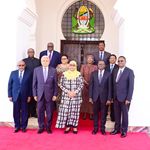
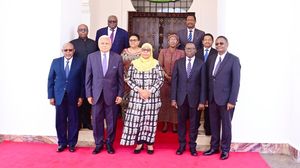
With the report now officially submitted to President Samia Suluhu Hassan, attention is expected to shift to government review and possible policy and legal responses.
The government has not yet indicated when the full report will be made public.