Dar es Salaam. Tanzania’s startup ecosystem could be on course for its first $100 million annual funding milestone, with industry players saying the momentum built during the first half of 2026 has created a realistic opportunity to achieve the target—provided the country sustains investor confidence and strengthens support for innovation.
The optimism follows the country’s strong performance in attracting $52 million in startup funding between January and June this year, according to data published by Africa: The Big Deal, making Tanzania Africa’s fifth-largest startup funding destination during the period.

The first-half performance has already brought Tanzanian startups within touching distance of a record year. Having raised $52 million in six months—almost matching the $53 million secured during the whole of 2024—the ecosystem now needs to attract another $48 million before December to surpass the $100 million mark.
If achieved, it would also represent a sharp rebound from 2025, when startups raised less than $20 million as investors adopted a cautious approach during the country’s election period.
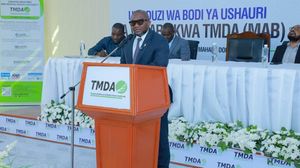
Speaking before President Samia Suluhu Hassan during the launch of the implementation instruments for the Tanzania Development Vision 2050 at State House in Dar es Salaam on Monday, Tanzania Startup Association (TSA) Chief Executive Officer Zahoro Muhaji said the sector expects to reach the landmark before the end of the year.
“According to the latest international data, by June this year Tanzanian startups had attracted nearly Sh60 billion in investment. We expect that by the end of the year we will cross the $100 million mark,” he said.
Mr Muhaji said startups had attracted about $400 million in investment over the past few years, demonstrating that innovation-driven businesses are becoming an increasingly important source of jobs, investment and economic transformation.
Crossing $100 million this year would mean that one year alone accounts for about a quarter of all startup funding raised in Tanzania over the past five years.
He argued that the country’s long-term ambition of building a trillion-dollar economy would require embracing the speed and innovation that characterise startup businesses.
“Today, eight of the world’s ten biggest companies are startups or technology companies. If we want to build a one-trillion-dollar economy, we cannot continue with business as usual. We need to move at the speed of startups,” he said.
The latest rankings also highlight Tanzania’s growing position within Africa’s innovation landscape. Besides trailing only Egypt ($327 million), Nigeria ($254 million), Kenya ($126 million) and South Africa ($83 million), Tanzania outperformed more established startup ecosystems such as Côte d’Ivoire ($45 million) and Morocco ($28 million).
Alongside Morocco and Ghana, Tanzania also became one of only three African startup ecosystems where at least 10 companies raised $100,000 or more during the first half of the year, suggesting investor appetite is spreading beyond a handful of high-profile deals.
While the projection has raised expectations across the ecosystem, entrepreneurs and analysts say reaching the milestone will depend on maintaining investor confidence while addressing long-standing financing and regulatory challenges.
Co-founder of Kilimo Fresh Foods Africa Ltd, Baraka Chijenga, the challenge is no longer proving that Tanzania has innovative entrepreneurs but ensuring more startups are ready to absorb growth capital.
“Tanzania needs only another $48 million to reach the milestone, but that will depend on whether more startups become investment-ready. Many businesses have promising ideas but struggle to scale because access to growth capital remains limited. More investment readiness programmes, stronger links with investors and improved access to regional markets will increase the number of companies capable of closing significant funding deals,” he said.
Mr Chijenga said sectors such as agriculture technology, financial technology, logistics and climate technology continue to present attractive opportunities for investors seeking scalable businesses capable of delivering regional impact.
Plate AI co-founder Janeth-Kareen Kilonzo said Tanzania’s performance shows that international investors are increasingly recognising the country’s innovation ecosystem as a credible destination as they diversify beyond Africa’s traditional startup markets.
“The momentum is encouraging because investors are beginning to look beyond Africa’s traditional startup markets. If that confidence is maintained through policy consistency and continued ecosystem development, there is every possibility of exceeding the $100 million mark this year,” she said.
She said the fact that more than 10 Tanzanian startups had each attracted at least $100,000 showed that investor confidence was broadening across the ecosystem rather than being concentrated in only one or two companies.
She added that expanding innovation hubs, mentorship programmes and technical support would help more startups mature into businesses capable of securing larger investment rounds.
For Startup mentor and entrepreneur Michael Nyamwero said the ecosystem had already demonstrated its resilience by bouncing back from less than $20 million in fundraising last year to $52 million within the first six months of 2026.
“The figures show Tanzania is heading in the right direction, but sustaining this momentum will require stronger collaboration between government, investors, universities and entrepreneurs. Equally important is developing domestic sources of venture capital so that startups are not overly dependent on foreign investors,” he said.
Mr Nyamwero added that simplifying regulations affecting technology businesses and expanding early-stage financing would enable more startups to progress into companies capable of attracting international investment, making record fundraising a consistent trend rather than an isolated achievement.
Register to begin your journey to our premium contentSubscribe for full access to premium content