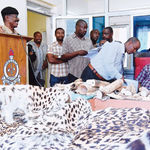
Deputy Permanent Secretary in the Ministry of Natural Resources and Tourism (Tourism Division), Nkoba Mabula, speaking at the 15th International Scientific Conference organized by the Tanzania Wildlife Research Institute (TAWIRI).
Tanzania aims to welcome eight million tourists by 2030, up from five million in 2025
Arusha. The government has unveiled a major initiative to deploy modern technology to combat poaching and safeguard wildlife, as part of broader efforts to protect national heritage and strengthen the tourism sector, which contributes 21 percent of the country’s GDP.
Opening the 15th Tawiri International Scientific Conference, Deputy Permanent Secretary for Tourism Affairs Nkoba Mabula said Tanzania is taking strategic steps to enhance monitoring systems, data collection and statistical analysis through innovative technologies to confront poaching and emerging ecological threats.
“Tanzania is one of the world’s mega biodiversity countries. Over 32.5 percent of our land is designated for conservation. This is a blessing but also a responsibility.
To protect these resources, we need technology, innovation and science-led decision-making,” Mr Mabula said.
He cited drones, artificial intelligence for gunshot detection, GPS wildlife collars and digital data management systems as key tools already accelerating anti-poaching efforts.
Mr Mabula said findings from the upcoming National Wildlife Census will set new benchmarks for identifying high-risk areas, tracking species trends and designing rapid-response interventions.
“This is the power of data. This is the power of science,” he said, urging researchers to ensure their papers offer practical solutions that can strengthen the resilience of the tourism sector.
Tanzania aims to welcome eight million tourists by 2030, up from five million in 2025, and the government says it is prepared to implement recommendations emerging from scientific research, including increased budget allocations for technology.
The government has allocated Sh9.3 billion and approved new positions for conservation officers and rangers to enhance wildlife monitoring and protect critical habitats.
Construction of a new Sh93 billion TAWIRI headquarters has also been approved to support long-term scientific research capacity.
Tawiri Director Dr Ernest Mjingo said evolving poaching tactics demand significant investment in technology and research.
“For conservation to be sustainable, science must be our compass. Technologies such as thermal imaging drones, gunshot detection systems, big data analytics and GPS tracking of elephants and rhinos have already reduced poaching and boosted wildlife populations,” he said.
Dr Mjingo added that stronger anti-poaching systems are not only about conservation but also protecting Tanzania’s economy, noting that tourism contributes 21 percent of GDP, 25 percent of foreign exchange and supports over 1.6 million people.
The conference has attracted more than 600 participants from 24 countries and features over 248 scientific papers, seminars, workshops and discussions focused on tackling conservation challenges such as poaching, climate change and habitat loss.
WWF Resident Director Prof Noah Sitati said 80 percent of Tanzania’s tourists come for wildlife, making research and technology central to policy-making and sustaining the tourism industry.
The conference, themed “Innovations in Wildlife Conservation and Sustainable Tourism: Navigating the Future in a Changing World”, aims to disseminate research findings and strengthen collaboration among researchers, policymakers and conservation stakeholders.