Tanzania urges private investment to strengthen tourism services in Ngorongoro
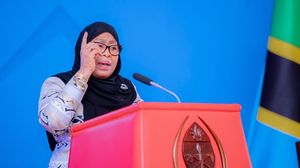
Minister for Natural Resources and Tourism Dr Ashatu Kijaji confers a rank on the newly appointed Commissioner for Conservation, Abdul Razaq Badru, during a ceremony that also marked the inauguration of the new Ngorongoro Conservation Area Authority (NCAA) Board in Arusha. PHOTO | COURTESY
Arusha. The Government has urged the Ngorongoro Conservation Area Authority (NCAA) to deepen its engagement with the private sector as part of a strategic drive to expand tourism services and enhance the area’s capacity to host a rapidly growing number of domestic and international visitors, while safeguarding its globally significant ecosystem.
The call was made by the Minister for Natural Resources and Tourism, Dr Ashatu Kijaji, during the official swearing-in of the newly appointed Commissioner for Conservation, Mr Abdul Razaq Badru, and the inauguration of the NCAA Board of Directors in Arusha.
Dr Kijaji said the Government has put in place a conducive policy and regulatory environment to attract responsible private investment in accommodation, transport and diversified tourism products within the Ngorongoro Conservation Area, underscoring the importance of public–private partnerships in sustaining long-term growth.
She noted that planned investments are expected to increase accommodation capacity from 1,555 beds to more than 2,590, significantly strengthening Ngorongoro’s ability to meet rising demand, particularly ahead of major international events such as the Inter-Parliamentary Union (IPU) meetings and the Africa Cup of Nations (AFCON), which Tanzania is set to co-host next year.
The minister said Ngorongoro received 1,061,620 visitors in the 2024/2025 financial year, up from 908,627 in the previous year, reflecting sustained growth and renewed global interest in Tanzania’spremier conservation and tourism destination.
She added that the growth aligns with the national objective of attracting eight million tourists annually by 2030.
Dr Kijaji further called on the NCAA to work closely with tourism stakeholders, including private investors and affiliated institutions under the Ministry of Natural Resources and Tourism, to design, develop and market new tourism products.
“Product innovation is essential to maintaining competitiveness,” she said, directing that at least one new attraction be introduced to the market each year.
She stressed that the expansion of tourism services must be carefully balanced with environmental protection, infrastructure development and strengthened partnerships with surrounding communities to ensure conservation efforts translate into tangible socio-economic benefits for local populations.
Covering an area of 9,792 square kilometres, the Ngorongoro Conservation Area is a UNESCO World Heritage Site and home to globally recognised landmarks, including the Ngorongoro Crater and the Ngorongoro–Lengai Geopark.
The NCAA is mandated to conserve natural resources, promote sustainable tourism, manage infrastructure and advance community development within the conservation area.
In his remarks, Mr Badru said his appointment carries profound national responsibility, noting that the Authority plays a pivotal role in projecting Tanzania’s conservation and tourism credentials on the global stage.
He said the NCAA has set a revenue target of Sh350 billion from its diverse income streams, including tourism and service provision, building on strong performance in the 2024/2025 financial year, during which the Authority collected Sh269.9 billion,surpassing its target.
Mr Badru said that enhanced revenue mobilisation would support government priorities by increasing foreign exchange earnings and reinforcing tourism’s position as a cornerstone of the national economy, while contributing to the broader goal of attracting eight million international and domestic tourists by 2030.
Meanwhile, the newly inaugurated Board of Directors pledged to provide strategic oversight and policy guidance to management, committing to reposition Ngorongoro more prominently within the global tourism market and safeguard its status as one of the world’s most iconic conservation landscapes.