Josephine Christopher is a senior business journalist for The Citizen and Mwananchi newspapers
Mwananchi Communications Limitted
Dar es Salaam. The acquisition of a controlling stake in Nation Media Group (NMG) by Tanzanian businessman Rostam Abdulrasul Aziz has sparked wide reactions from media stakeholders across the region, after the investor pledged to support the future of African journalism while safeguarding editorial independence at East Africa’s largest independent media house.
Speaking at a press conference in Nairobi after the announcement, Mr Aziz described the deal as both an investment in the future of journalism in Africa and a commitment to strengthening credible regional media institutions. He promised to expand digital platforms, reach younger audiences and build a stronger media organisation.
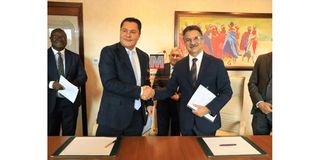
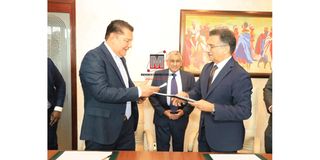
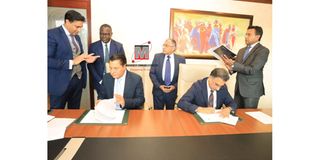
The deal follows an agreement by the Aga Khan Fund for Economic Development to sell its entire shareholding in NPRT Holdings Africa Limited to Taarifa Ltd, a Mauritius-registered company owned by Mr Aziz.
NPRT Holdings Africa Limited owns 92,618,177 ordinary shares in Nation Media Group, equivalent to 54.08 percent of the company’s issued share capital, making it the largest shareholder.
The transaction will end more than six decades of ownership by AKFED, which has held shares in the media house since 1959, long before Kenya gained independence.
Mr Aziz said the acquisition is guided by three core principles centred on strengthening African journalism, regional cooperation and editorial professionalism.
“First, this is an investment in the future of journalism in Africa,” he said.
“Africa’s story is increasingly being written by Africans themselves. Through institutions such as Nation Media Group, we have the opportunity to ensure that the voices, experiences and aspirations of our region are told with professionalism, confidence and clarity.”
He said the partnership also reflects growing economic and cultural ties across East Africa.
“In many ways, investments such as this reflect the broader aspirations of the East African Community to build a region where ideas, enterprise and opportunity move freely across borders, strengthening prosperity for all our peoples,” he said.
Commitment to editorial independence
Mr Aziz stressed that his role as an investor would be to strengthen the institution rather than interfere with editorial decisions.
“My role as an investor is to support the strength of the institution, ensuring that it has the resources, leadership and stability required to continue serving the public with professionalism and integrity,” he said.
He also pledged to invest to ensure the company remains financially sustainable at a time when global media organisations face declining advertising revenues.
“We will strengthen media outlets so they can sustain themselves even when advertising declines. This is not the time to compromise because of advertising pressures — it is the time to expand,” he said.
Mr Aziz added that traditional media organisations must evolve to reach younger audiences.
“We must attract audiences under the age of 30. Traditional media groups have to change the way they operate in order to remain relevant,” he said.
“One thing I can assure you is that we will invest. This is going to be a much stronger media organisation than it has been.”
He said the goal is to build platforms that continue serving existing audiences while expanding digital products for younger consumers.
“It will cater for those it currently serves, but also those it has not fully reached — especially young audiences through digital platforms,” he said.
Mr Aziz also reassured employees that the investment would focus on growth rather than cost-cutting.
“We intend to invest, not to cut down,” he said.
“We want to expand, and that means creating more opportunities and more jobs.”
Media experience and business empire
Mr Aziz brings extensive experience in both media and telecommunications.
He was a co-founder and shareholder of Mwananchi Communications Limited between 2000 and 2006, where he helped establish the Mwananchi, The Citizen and Mwanaspoti newspapers, which were later acquired by Nation Media Group.
He later acquired New Habari (2006) Limited and invested in Africa Media Group, which operated television and radio outlets including Channel Ten, DTV, CTN, Classic FM and Magic FM.
Beyond media, Mr Aziz controls business interests spanning telecommunications, energy, mining, agriculture, real estate and infrastructure across East and Central Africa.
Speaking at the briefing, he also cited his experience in the telecom sector, noting that his investments helped transform competition in Tanzania’s mobile market.
“We took over the third-largest telecom company after it exited Tanzania, and within three years it has become one of the top players,” he said, referring to the transformation of the Yas telecom brand.
Political independence
Mr Aziz also addressed speculation about possible political influence surrounding the transaction, saying his investment decisions were not politically driven.
“I was actually closer to former President Uhuru Kenyatta and even to the late Raila Odinga than I am to the current President William Ruto,” he said.
He added that many of his business licences in Kenya were obtained during the administration of former President Kenyatta.
Positive reaction from media stakeholders
Media stakeholders in Tanzania and the region welcomed the development, saying it could strengthen investment in journalism and media technology.
The executive director of the Tanzania Media Women’s Association, Dr Rose Reuben, said the deal demonstrates the ability of African investors to sustain major regional media institutions.
“It is encouraging to see a local investor showing the capacity to own such a major media house,” she said, adding that journalists must continue to uphold professional standards while ensuring inclusive coverage.
Tanzania Editors Forum (TEF) chairman Deodatus Balile said the acquisition could boost technological investment in the media sector, noting that NMG has historically invested heavily in modern production systems.
Transitional chairperson of the Media Institute of Southern Africa Tanzania (MISA-Tanzania), Ali Bakari Othman, said the deal presents an opportunity to strengthen journalism standards and improve the welfare of media practitioners.
Senior journalist Neville Meena said the move could bring both opportunities and challenges, noting that Mr Aziz’s experience in founding Mwananchi Communications Limited shows he understands the operational and commercial realities of news organisations.
However, he cautioned that the outcome will depend on strong internal governance, editorial independence and effective regulatory oversight in the countries where NMG operates.
Awaiting regulatory approval
The transaction remains subject to regulatory approvals across East Africa and the COMESA region, including clearances from competition and communications authorities such as the Tanzania Communications Regulatory Authority.
The approval process is expected to take between three and four months before the deal is finalised.
Once completed, the investment will mark a new chapter for Nation Media Group, with Mr Aziz saying the focus will be on investment, digital transformation and strengthening the role of independent journalism in East Africa.
Register to begin your journey to our premium contentSubscribe for full access to premium content