Tax relief offered as government revises the Finance Bill 2026

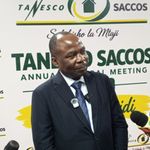
Minister for Finance, Khamis Mussa Omar. PHOTO | COURTESY

Dar es Salaam. The government has introduced sweeping amendments to the Finance Bill 2026, removing the proposed Sh10-per-kilogram levy on locally produced sugar, reducing excise duty on imported used vehicles, and scrapping several contentious tax measures affecting agriculture, betting, and motorcycles.

Presenting the revised proposals in Parliament yesterday, Finance Minister, Dr Khamis Mussa Omar, said the changes followed consultations with the Parliamentary Budget Committee held between June 14 and June 24, 2026, with the aim of improving fairness, predictability, and efficiency in the tax system.

However, the Parliamentary Budget Committee opposed several provisions in the Bill, particularly proposed amendments to the Bank of Tanzania (BoT) Act, warning that they could weaken fiscal discipline, remove key safeguards on central bank lending to the government, and undermine existing public finance management laws.

A key amendment is the removal of the levy on locally produced sugar, with the charge now shifted to imported sugar.

The government said the move is intended to protect domestic producers and support the local sugar industry.

“Instead of taxing locally produced sugar, the levy will be shifted to imported sugar to support local manufacturers and ensure fair competition. The revenue will support universal health insurance,” said the minister.

 In the transport sector, excise duty on imported used vehicles has been revised downwards.

Vehicles aged between eight and 10 years will now attract an 18 percent duty, down from the proposed 20 percent, while those aged between 10 and 20 years will be taxed at 35 percent instead of 40 percent.

Vehicles older than 20 years will attract a 40 percent duty, down from the proposed 50 percent.

The government has also withdrawn the proposed five percent excise duty on motorcycles and a similar levy on betting activities, citing the need to ease the cost burden on citizens and key economic sectors.

In agriculture, the amendments remove the proposed one percent withholding tax on payments for agricultural produce, livestock, milk, fish, and related products, as well as a similar levy on lump-sum agricultural income payments.

The Bill also introduces new provisions targeting foreign digital service providers operating without a physical presence in Tanzania and selling directly to consumers without registration or tax-filing obligations.

“The measure is designed to ensure tax fairness and create a level playing field between domestic and foreign digital service providers,” said Dr Omar.

A new Section 146B has also been introduced, allowing excise duty exemptions for mining investors operating under framework agreements with the government, subject to Cabinet approval.

The exemptions will apply only during the construction phase and will exclude petroleum products.

“These exemptions are intended to promote investment and ensure the timely implementation of mining projects,” said the minister.

In a health-related measure, the government has proposed a 10 percent excise duty on nail polish curing machines under HS Code 8516.79.00, citing potential health risks associated with prolonged exposure.

“Beyond revenue considerations, the measure is also aimed at mitigating health risks linked to the use of such devices,” said Dr Omar.

Committee urges crackdown on smuggling

Presenting the committee’s opinion on the Finance Bill 2026, Chairman, Mr Mashimba Ndaki, said effective implementation of the budget would depend on sealing loopholes exploited by smugglers along border areas.

The committee urged the government to intensify efforts against cross-border smuggling, warning that illegal trade undermines revenue collection and exposes consumers to unsafe products.

It recommended closer coordination between security agencies and the Tanzania Revenue Authority (TRA), including strict legal action such as asset seizure against smuggling networks.

The committee also called for increased funding for the TRA to strengthen staffing and modern surveillance systems at border posts, alongside enhanced digital revenue-monitoring systems and routine patrols in high-risk areas.

“The committee is convinced that if these measures are fully implemented, smuggling will be significantly reduced and government revenue collection will improve,” it said.

The committee also expressed concern over proposed increases in fisheries-related fees, warning that higher charges could push traders into informal cross-border markets, particularly around Lake Victoria.

It opposed proposals to raise annual fishing vessel licence fees to Sh400,000, introduce a Sh75-per-kilogram domestic fish transport fee and increase export levies on fish products to between Sh200 and Sh350 per kilogram.

According to the committee, the proposed rates are too high for small-scale fishermen and could distort the market by encouraging illegal exports to neighbouring countries where enforcement is weaker.

“The committee cautions that if these rates are adopted, fish from Lake Victoria may increasingly be sold in neighbouring countries due to weak border enforcement and cost pressures on local fishermen,” said Mr Ndaki.

MPs call for predictable tax regime

Contributing to the debate, Kinondoni MP, Mr Abbas Tarimba, called for a more stable and predictable tax regime, saying frequent annual changes undermine investor confidence and long-term planning.

“We need a system where the Finance Bill and Finance Act reflect a predictable tax environment, not one where new changes are introduced every year. Investors require certainty,” he said.

He added that repeated amendments, even after committee deliberations, create uncertainty and should be reviewed to improve consistency in fiscal policy.

Tarime Urban lawmaker, Ms Esther Matiko, said the Bill seeks to improve revenue collection without overburdening citizens, noting that better revenue allocation would enhance project implementation.

She said 70 percent of certain revenues would be channelled directly to the Roads and Railway Fund to clear arrears owed to contractors, while 25 percent would go to the Treasury and five percent to the Bank of Tanzania (BoT).

Ms Matiko also welcomed the removal of bodaboda-related tax measures, saying it would ease pressure on transport operators and improve the business environment.